Showing posts with label journal. Show all posts

Sunday, July 28, 2013

The Unjournal of Children's Literature Is Officially Published


The inaugural issue of The Unjournal of Children's Literature has been published! The SDSU-based editors and staff worked exhaustively to get this first installment up and invite you to explore it. With two articles, a book review, two interviews with Dr. Jerry Griswold, and introductory looks at artists focusing on childhood themes, The Unjournal is off to a great start, and we expect to publish new additions to the first issue in the weeks and months to come as well.

Reception has already been positive; we have received numerous words of encouragement and recognition from our mentors and supporters, including Dr. Griswold himself: 
The debut The Unjournal of Children’s Literature presents the surpassing prose and artwork of, for the most part, graduate students at San Diego State University. Besides bringing honor to the university, this publication offers a highly original and new voice in the field of literary studies. Everyone involved is to be congratulated, envied, and admired.
I say this not withstanding the fact that I am the subject of two interviews in The Unjournal where I am presented as a gray-haired eminence and referred to as “esteemed,” “important,” “charming,” etc.  While grateful, please be advised that I will not be coaxed by adulation into respectability. It’s more fun to be a pirate than a decorated admiral. 
You can see why we were so eager to involve Dr. Griswold in the first issue; it's certainly more amusing to work with a pirate than a decorated admiral too.

To learn more about The Unjournal, read the details here.

Monday, July 15, 2013

Recent Children's Lit Publications

Adding to the wealth of scholarly material on children's literature are two recent publications, including a journal issue and an international book title.

1. Newest Issue of The Looking Glass online journal

Vol. 17 No. 1 has just been published, with articles that consider the intellectual elements that readers use to create their meaning from texts.
They have Lemony Snicket, Harry Potter, The Hunger Games, The Pied Piper, history and spirituality all being explored, with plenty of questions for you to ponder.

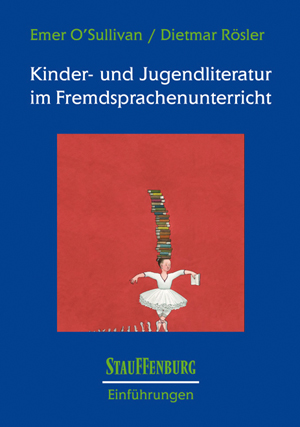
2.  New Book on Children's Literature in Foreign Language Teaching

If you are interested in the role of children's literature in foreign language teaching and if you read German, then you might be interested in this new book:

Kinder- und Jugendliteratur im Fremdsprachenunterricht, by Emer O'Sullivan & Dietmar Rösler
Tübingen: Stauffenburg 2013


Tuesday, July 2, 2013

Call for papers: Barnboken – Journal of Children’s Literature Research

Following are three Call for Papers for Barnboken – Journal of Children’s Literature Research.
For information on any of them, please see www.barnboken.net.

1. For the Spring 2014 issue: “You're Out of Control!” The Unruly Child in Children’s Literature

Unruly, wild and loud children are common in children’s literature. Indeed, there seems to be a need to portray children outside parental control, or even of children who rebel against oppressive adult regimes, as in Shockheaded Peter or Pippi Longstocking. One could argue that children’s and YA fiction establishes a zone of freedom where (fictional) children are allowed a measure of freedom. It is of course true that the unruly and anarchic child can be used as a warning, but more often than not the disobedient and troublesome child saves the day. Both Astrid Lindgren’s Emil and J. K. Rowling’s Harry Potter are rule-breakers who go their own ways, yet they ultimately bring about harmony and redemption.

The unruly child can be seen from different perspectives. Concepts that can open up the notion of the unruly child include: identity, power (not least between adult-child), normativity, body, performativity, animalism, and queer. Some of the questions that beg to be asked are: what is the role of the unruly child in children’s literature? What are the limits of “unruliness”? How close is the state of the wild child to that of animals? Thus, the wild, the loud and the unruly will be the Barnboken – Journal of Children’s Literature Research Spring theme 2014. We welcome proposals and articles in that spirit, and we do so up until:

23 September 2013 (proposals)
25 November 2013 (articles)

2. For the Autumn 2014 issue: Britt G. Hallqvist 100 Years

Britt G. Hallqvist (1914-1997) is one of the most important figures in Swedish children’s literature during the 20th C. Her contribution is at once deep and versatile. From the début with the comic masterpiece Rappen’s på Blåsopp [The Rappens of Blåsopp] in 1950, over numerous children’s and YA-books, several collections of poetry and verse, children’s drama, to children’s songs, hymns and prayers, her work is characterized by a both playful and exact attitude to language. Equally important was her role as a congenial translator of children’s literature. She translated Kipling’s The Jungle Books, Wilder’s The Little House on the Prairie, Milne’s Winnie-the-Pooh and Tolkien’s The Hobbit, to just mention a few. Finally, in her translations just as in her original work, she switched with perfect ease from pose to poetry as can be seen in her indispensable translations of nonsense poetry (Plath, Lear, Eliot, Krüss) into Swedish. Barnboken – Journal of Children’s Literature Research will devote the 2014 Autumn issue to Britt G. Hallqvist and her contribution to Swedish children’s literature. We welcome proposals and articles up until:

25 November 2013 (proposals)
1 April 2014 (articles)

3. For the Spring 2015 issue: The Institutions that Shape Children’s Literature: Schools, Publishers and Libraries

Children’s literature cannot be reduced to the book the reader holds in her hand. The act of reading comes at the end of a long chain of actions, all of which are prompted and supported by different literary, cultural, pedagogical institutions (schools, libraries) as well as by commercial interests (publishers, booksellers). Thus, to understand the conditions that shape children’s literature and children’s reading it is necessary to scrutinize children’s literature as a cultural field with its own infrastructure. Through which channels do children’s books reach the child reader? What is the role of publishers, libraries, reading campaigns, reviews of children’s books, literary prizes? Which discourses about children and childhood shape the institutions of children’s literature? What is the role of new technologies and media forms in creating new arenas for children’s literature? Which tools can children’s literature research bring to bear on the field of children’s literature and the cultural practices of reading? These are some of the questions that Barnboken – Journal of Children’s Literature Research will address in the 2015 Spring issue. We welcome proposals and articles on these and related topics up until:

12 August 2014 (proposals)
25 November 2014 (articles)

For more information, please see www.barnboken.net.

Åsa Warnqvist, editor
Swedish Institute for Children’s Books
Odengatan 61
SE-113 22 Stockholm
SWEDEN
Tel: + 46 8 54 54 20 51. E-mail: barnboken@sbi.kb.se

Wednesday, June 12, 2013

An Unjournal Preview!

After a long and determined journey, the ChildLit GSA is really excited to present an introductory look at our new journal, The Unjournal of Children's Literature. The children's lit grad students at SDSU have worked tirelessly -- especially in the last month -- to pull this endeavor together. Despite setbacks that always seem to pop up at the most inopportune moment, we are thrilled to give you a glimpse into what's in store, right in time for the ChLA Conference this week!

The Unjournal is set to showcase budding voices in the field of children’s literature, hopefully encouraging emerging scholars to pursue their passion of children’s literature, while also attracting a wide readership: established scholars (of children's lit and otherwise), writers and artists, and children's lit enthusiasts of any kind.

Part of the unjournaling process includes a more unconventional system of "publishing" an issue -- pieces will be shared over the course of many months, culminating in a large collection of works. These works will include a diverse assortment of material; articles and book reviews will certainly be featured, but so will notable interviews, lots of artwork (illustrations and child-themed pieces), and down the road some curious eclectic articles as well. It will also be an interactive experience, with a live twitter feed and discussion comments to figure in the mix.

Expect the first batch of the inaugural issue to be published soon, but for now explore the site, at least to take in an excerpt of Dr. Jerry Griswold's interview with the editors. We hope you'll enjoy this unjournal 365 days of the year.


Monday, May 27, 2013

Children's Literature in English Language Education Journal Available in Open Access Format Online

The debut issue of the CLELEjournal (Children's Literature in English Language Education Journal) is available online.

CLELEjournal is a peer-reviewed, biannual, and open access journal dedicated to examining the use of children's literature in teaching English language. The first issue features the following articles:
  • "The World Turned Upside Down: Exploring Alternate History with Young Adults" by Justyna Deszcz-Tryhubczak & Mateusz Marecki
  • "From Reading Pictures to Understanding a Story in the Foreign Language" by Annett Kaminski
  • "Humanizing Teaching English to Young Learners with Children's Literature" by Irma Ghosn
  • "Playing with Nonsense: Toward Language Bridging in a Multilingual Classroom" by Urmishree Bedamatta
  • "Response to 'The Lost Thing': Notes from a Secondary Classroom" by Sandie Mourão
Visit http://clelejournal.org to read these articles and learn more about CLELEjournal.


Friday, March 15, 2013

Call for Submissions: Jeunesse Special Issue on Consumption

Jeunesse: Young People, Texts, Cultures invites essay submissions for a special issue addressing the many interpretations of consumption and their meanings in relation to youth texts and culture(s). We welcome essays that consider registers of race, class, gender, and disability. Essays should be between 6,000 and 9,000 words in length and prepared for blind peer-review.

Consumption is a vehicle through which we come to understand proprietary relationships with people, places, bodies, and identities. If food is the primary signifier when we think of consumption, how might we read metaphoric consumption (of capital, culture, and place, for instance) in light of notions of necessity and survival?

Submissions are requested by: 15 December 2013.

Topics may include:

- representations of food or the ingestion of food and drink
- eating disorders, the stigma of obesity, and fatphobia
- pedagogy of health
- consumption as disease (ie. tuberculosis)
- obsession or fixation
- symbolic acts of devouring/being devoured
- cannibalism or consuming the self (eg. vampires, fairy tales)
- consumption, purchasing, ownership, and material culture
- discourses of consumption (good/bad consumers)
- young people as consumers, advertising for or about young people
- cultural consumerism/tourism

Inquiries may be directed to Larissa Wodtke, Managing Editor: l.wodtke@uwinnipeg.ca

Further information about submission guidelines is available at: http://jeunessejournal.ca

Friday, January 25, 2013

CFP: Journal of Graduate Research in Young People's Materials and Culture

Call For Papers
Journal of Graduate Research in Young People’s Materials and Culture (JGR)

Based at the University of British Columbia the Journal of Graduate Research in Young People’s Materials and Culture (JGR) is a peer-reviewed open-access e-journal publishing graduate student research in the areas of children’s and young adult literature, childhood studies, and cultural studies related to children and young people.

We are currently selecting manuscripts for our winter 2013 issue. Papers on any children’s or young adult genres are welcome as are papers that discuss other children’s materials such as film, virtual texts, or graphic novels. Possible paper topics could include but are not limited to:
  • The child or young adult as explorer/explored, navigator/navigated
  • Navigating (or negotiating) identity, gender, sexuality, race, ethnicity or religion as a child or young adult in an adult world
  • Literary trends such as the history/future of children’s texts
  • Pathways of adaptation such as literary translations of texts to film, games, merchandise, graphic novels, or online spaces
  • Exploring place and spaces of childhood or adolescence
  • Cultural, physical, psychological, ideological, or literary restrictions and barriers to exploration and imagination
  • Childhood and adolescent development as it pertains to literature, new materials, other modalities
  • Children, young adults, and cross-cultural exposure
JGR accepts article submissions by current and recent graduate students relevant to the field of children’s and young adult literature and materials. All submissions will be peer reviewed. To ensure an objective peer review process please submit personally identifying content (such as your biographical sketch and contact information) as a separate document attached to your submission.

Submissions must be completed original manuscripts not submitted elsewhere, written in English, 5,000 – 8,000 words (including Endnotes and Works Cited), and should conform to the MLA Handbook, 7th edition. Please submit essays electronically along with a 150-word abstract and 50-word biographical sketch via Word attachments to jgr.submission@yahoo.ca or online through the OJS system at http://ojs.library.ubc.ca/index.php/ypmc/index.

Deadline for submissions is 15 February 2013. Publication is scheduled for late 2013.

For more information, visit the journal’s website at http://ojs.library.ubc.ca/index.php/ypmc/index
You may also contact the editors Karen Taylor karen.taylor@alumni.ubc.ca or Robert Bittner rob1@sfu.ca.

Wednesday, January 16, 2013

CFP: Special Edition of The Lion and the Unicorn

Call for Submissions

Tove Jansson: A Centennial Celebration 
Special Issue of The Lion and the Unicorn 

This special issue of The Lion and the Unicorn invites submissions on the various aspects of the works by the Finno-Swedish author Tove Jansson (pronounced TOO-vee YAA-nsson; 1914-2001). Among other topics, essays could focus on:

• Tove Jansson as a crosswriter: works for children and work for adults
• Tove Jansson as a multimedial author: word and image in her novels, picturebooks and comics; her illustrations to other children’s books
• Tove Jansson and the concept of canonicity
• Place and space in Tove Jansson’s works
• Echoes of war and trauma
• Queer palimpsests
• Intertextuality and metafiction
• Ecocritical and posthumanist approaches
• Transcultural reception
• Moomin characters as cultural icons
• Epitexts, including transmediations, web sites, social media, games, merchandise, and theme parks

Essays should be 15–20 pages (4,500–6,000 words). Please email your essay as a Word attachment to Professor Maria Nikolajeva at mn351@cam.ac.uk by July 1, 2013. Accepted essays will appear in the April 2014 issue, to mark Tove Jansson’s centenary on August 9. Or, if you prefer, you can mail a hard copy to Maria Nikolajeva, Faculty of Education, University of Cambridge, 184 Hills Road, Cambridge CB2 8PQ, UK.

Friday, December 7, 2012

Newest Issue of Through the Looking Glass available online

The most recent issue of Through the Looking Glass, an online journal featuring scholarly explorations in children's literature, is available for viewing at this link. General Editor David Beagley states that articles in this issue "explore the huge changes that loom in children's and YA literature through the new world of online media."

Articles that exemplify this include Stephanie di Palma's "Blogging or Believing? Do themes presented by scholarly discourse correlate with the casual conversations of people through the world wide web?" and David Beagley's "Blurring the Boundaries: the changing i-Discourse of children's literature."

This issue also introduces a new column, called A Tortoise's Tale, which features school and classroom issues and ideas. In the inaugural contribution, Amanda von der Lohe discusses the consequences of censoring classic literature in an article titled "Old Jim Won’t Be a N*gger No More: Ramifications of Using Censored Versions of Adventures of Huckleberry Finn in the Classroom."


Monday, November 26, 2012

CFP: Comics, Picturebooks and Childhood

Call for Papers: Special issue Journal of Graphic Novels and Comics (http://www.tandfonline.com/toc/rcom20/current)

Special Issue Editors: Dr. Mel Gibson (University of Northumbria), Dr. Kay Sambell (University of Northumbria), Dr. Golnar Nabizadeh (The University of Western Australia).

This special edition will explore links between graphic novels and comics in relation to childhood. Both have been studied in relation to how they work (key examples being Maria Nikoljeva and Carole Scott's How Picturebooks Work and Thierry Groensteen's The System of Comics). The history, specific creators, culture and audiences for these media have also been areas of research. Focusing on the links across illustration, graphic narratives and visual culture, this special issue will offer critical examinations of the field of comics and picturebooks.

Comics and picturebooks are not typically considered together, although some research has done so, including Mel Gibson's article "Graphic Novels, Comics and Picturebooks" in the Routledge Companion to Children's Literature and David Lewis's "Oops!: Colin McNaughton and 'Knowingness'" in Children’s Literature in Education.

In relation to audience, comics and picturebooks have frequently been associated with younger readers, despite the two being very flexible media which can be used to address readers of all ages on any topic. When such assumptions are dominant, this is usually related to perceptions of what might be ‘appropriate’ content.

Sometimes controversy is about an entire medium, as John A. Lent outlines in "Comics Controversies and Codes: Reverberations in Asia." This chapter, in the book Pulp Demons: International Dimensions of the Postwar Anti-Comics Campaign, examined how manga comics were seen as having an impact upon the health and morals of young people in South Korea, Japan, the Philippines and Taiwan between the 1940s and the 1980s.

Equally, controversy might focus on a single text, as was the case in relation to the British publication of Jenny Lives with Eric and Martin by Suzanne Bösche (originally published in Denmark as Mette bor hos Morten og Erik), one of the first picturebooks focusing on homosexuality and family structure. This single text was a key element in Britain in the introduction of Section 28 of the Local Government Act 1988, which forbade the "promotion" of homosexuality by local government.

In both of these cases, what may be seen to underpin controversy relating to these media are social constructions of childhood, a concept developed within Childhood Studies and perhaps best illustrated by Allison James and Alan Prout in the book Constructing and Reconstructing Childhood.

This issue also constitutes an attempt to extend the scope of scholarship on the comic and the picturebook beyond US/UK and European critical frameworks by highlighting Asian and Australian visual cultures and contexts.

Suggested topics for proposals include, but are not limited to, the following:

- Creators who work with both these media, such as Raymond Briggs and Shaun Tan.

- Picturebook creators who are influenced by comics. For example, the ways in which the work of Maurice Sendak is influenced by that of Winsor McCay.

- Comics for children and constructions of childhood

- Controversies around comics, picturebooks, childhood and child readers

- Defining the borders and emerging areas in comic book scholarship

- Manga, comics and picturebooks

- Comic book conventions and avant-garde innovations

- Divergences and intersections between comic books and picturebooks

- When and how does a comic book creator become perceived as a picture book creator?

- In what ways do constructions of childhood as innocent and vulnerable impact what is considered suitable content in a comic or picture book?

Deadline for proposals for 5000-7000 word articles is March 31, 2013 (for issue 5:1, June/July 2014 of the Journal of Graphic Novels and Comics, http://www.tandfonline.com/toc/rcom20/current). Send proposals to Dr. Mel Gibson at mel.gibson@northumbria.ac.uk.


Thursday, November 15, 2012

Current ChildLit Activities around SDSU

Some goings-on around campus...

1. If you've visited the English Lit department's website recently you might have noticed a news item freshly featured on the front page, highlighting the impressive activities of Professor Jenny Minitti-Shippey and students of her Class on Literary Editing and Publishing (ENGL 576).  Her students have created an insightful and creative array of web journals centered around different genres and aspects of young people's literature. From the multicultural (The Playground Diaries) to dystopian (The Dauntless Review) and all that bizarre stuff in between (The Bizarre Assemblage, for example), these new blogs demonstrate the popular and growing interests of the current era. There are seven literary journals listed that all feature book reviews, interviews, event write ups and more, so peruse the sites and see which ones fit your fancy. Speaking of event highlights...

2. The SDSU Childlit GSA held its first event last Thursday, Nov. 8, at Lestat's Coffehouse and it was a great success. We were introduced to some new faces (and even a random passerby who shared his interests with us too!) and spent the evening immersed in various topics intersecting Pop Culture with Children's Lit. We kicked off the event with a pub(lication) quiz created by GSA President Kelsey Wadman, testing everyone's knowledge of kidlit as it exists in movies, music, and beyond. Congrats to super member Megan Parry for taking home the honor of first place accompanied by a ginormous cupcake. From there we delved into discussions on TV shows and the rise of fairy tale adaptations (Phillip Pullman's new book would have been a great asset for this discussion, come to think of it); book-to-movie adaptations, including the pros and cons when Disney gains the production rights; favorite Disney films/characters and why; and the occasional tangent into conference experiences or imaginary friends. It was a fruitful discussion which culminated with reviewing Maurice Sendak's appearance on the Colbert Report, which served as icing on the (cup)cake.

3. Don't forget! The Peter Pan & Wendy theatre performance is almost upon us as well! Performances begin tomorrow (Nov 16) and more news about the Pre-Show Discussion circle should appear shortly. In the meantime, check out the Production Blog for Peter Pan & Wendy.

Wednesday, October 17, 2012

Homelessness in Children's Literature: Call for Articles

Call for Articles

Barnboken journal is accepting submissions on the theme of homelessness.

To be homeless is to be vulnerable. Homelessness implies exclusion, poverty and exile; it conjures up images of rootlessness and marginalization. Yet homelessness does not always lead to exclusion and social deprivation. Seekers and free thinkers who feel “homeless” in contemporary culture can still be part of society. Child homelessness is in this context much more threatening and dangerous. The stakes are higher. But even for the child homelessness can sometimes lead to freedom and growth beyond an oppressive home, community and school. Still, homeless children - whether they are victimized or liberated by it - challenge our conceptions of the good society and the nature of the child. Maybe precisely because of this, homeless children and youth are common in children’s literature. Charles Dickens' Oliver Twist, Laura Fitinghoff’s The Children from Frostmo Mountain, Astrid Lindgren’s Rasmus the Vagabond, and Henning Mankell's Comedia Infantil are just some examples from different periods.

We welcome articles on the topic of homelessness. The purpose of Barnboken’s theme is to identify the various depictions of homelessness in children's literature from different angles and perspectives.

Extended deadline: 1 December 2012. Articles submitted for consideration may not have been previously published or presented in any other context.

Barnboken – Journal of Children’s Literature Research is the only scholarly journal in its field published in Sweden. The main language of the journal is Swedish, but articles written in Danish, Norwegian and English are also welcome. All articles accepted for publication have been peer reviewed by at least two peers and will be published online under an Open Access.

The editorial committee consists of Björn Sundmark, Associate professor, Malmö University, Sweden, Åsa Warnqvist, PhD, Stockholm University, Sweden, and Mia Österlund, Associate professor, Åbo Akademy University, Finland. Barnboken is published with financial support from the Swedish Research Council (Vetenskapsrådet).

Articles accepted will be published in 2013. A guide to our reference and note system may be found at www.barnboken.net.

For more information, please contact:
Svenska barnboksinstitutet/Swedish Institute for Children’s Books
Åsa Warnqvist, editor
Odengatan 61
SE-113 22 Stockholm
SWEDEN
Tel: + 46 8 54 54 20 51. E-mail: barnboken@sbi.kb.se

Thursday, September 27, 2012

Special Research on Children's Literature Collections and Archives Available Online

The editors of Papers: Explorations into Children's Literature have compiled a wealth of archival research on international children's literature. This special issue, titled "Children’s Literature Collections and Archives," is available for free open access online. The table of contents is below. Follow the link to access these articles!

The Osborne Collection of Early Children’s Books: Toronto Public Library’s Research Collection of Juvenile Material
Leslie Anne McGrath

Twentieth century literary and publishing archives: UK research perspectives on children’s literature
Charlotte Berry

Colonial Girls’ Literature and the Politics of Archives in the Digital Age
Michelle J. Smith and Kristine Moruzi

Anthony Arrowroot and Nutty Nutella: Advertising in Children’s Literature
Afsana Khan

The Historical-Cultural Value of the Juvenile Collection: The McLaren Collection at the University of Melbourne and its Girls’ Books
Margaret Lowe

John Mystery and the Australian Book Trade
Juliet O’Conor

Astrid Lindgren and the Archives
Helene Ehriander

A Token to the Future: A Digital ‘Archive’ of Early Australian Children’s Literature
Kerry Mallan, Amy Cross, and Cherie Allan

Digital Archives and Cultural Memory: Discovering Lost Histories in Digitised Australian Children’s Literature 1851-1945
Michelle Dicinoski

The Lu Rees Archives of Australian Children’s Literature
Belle Alderman

Collections of the Swiss Institute for Children’s and Youth Media and their Public Access
Roger Meyer

Growing up Australian: The National Imaginary in School Readers
Jane McGennisken

Books or Toys? A Traveller’s tale: researching early movable books for and by children in material and virtual collections
Jacqueline Reid-Walsh

Clare Bradford and Kerry Mallan, editors, Papers: Explorations into Children's Literature

This issue is available (free open access) at this link: http://www.paperschildlit.com/index.php/papers

Thursday, September 20, 2012

Access to the New Review of Chlidren's Literature and Librarianship


The New Review of Children's Literature and Librarianship is excited to offer FREE access to an article from its recent archives 18(1): "Evolving Tools for Information Literacy from Models of Information Behavior" by Andrew K. Shenton and Naomi V. Hay-Gibson.

The New Review of Children's Literature and Librarianship has established itself as one of the leading publications for the exchange of ideas and the sharing of experiences in the provision of literature for children and young people. The journal is multidisciplinary in nature, providing opportunities for the 'pure' discussion of children's literature, and of issues relating to libraries for young people.

The journal fosters the sharing of ideas between those who study children's literature, and those who provide it. The New Review of Children's Literature and Librarianship welcomes articles covering:

    * Management of library services to children and adolescents
    * Education issues affecting library services
    * User education and the promotion of services
    * Staff education and training
    * Collection development and management
    * Critical assessments of children's and adolescent literature
    * Book and media selection
    * Research in literature and library services for children and adolescents

For more information about the New Review of Children's Literature and Librarianship, please visit the journal's webpage: www.tandfonline.com/RCLL

Editor
Dr. Sally Maynard
Loughborough University

Publication Details
Volume 18, 2012
2 issues per year
Print ISSN 1361-4541
Online ISSN 1740-7885

Monday, May 28, 2012

New ChLA Quarterly, contents, reprint with thanks

Volume 37, Number 2, Summer 2012

Table of Contents

Introduction

Critical Practice

pp. 131-132 | DOI: 10.1353/chq.2012.0021

Articles

The Laws of Nature or Nature’s God?: Penal Authority in Charles Kingsley’s The Water-Babies

pp. 133-152 | DOI: 10.1353/chq.2012.0024

100 Ways to Make a Japanese House

pp. 153-163 | DOI: 10.1353/chq.2012.0026

“Unconditionally and Irrevocably”: Theorizing the Melodramatic Impulse in Young Adult Literature through the Twilight Saga and Jane Eyre

pp. 164-187 | DOI: 10.1353/chq.2012.0014

The Traumatic Revision of Marvel’s Spider-Man: From 1960s Dime-Store Comic Book to Post-9/11 Moody Motion Picture Franchise

pp. 188-209 | DOI: 10.1353/chq.2012.0016

Global Girls and Strangers: Marketing Transnational Girlhood through the Nancy Drew Series

pp. 210-227 | DOI: 10.1353/chq.2012.0018

Books Received

p. 228 | DOI: 10.1353/chq.2012.0020

Book Reviews

Over the Rainbow: Queer Children’s and Young Adult Literature (review)

pp. 229-231 | DOI: 10.1353/chq.2012.0023

Innocence, Heterosexuality, and the Queerness of Children’s Literature (review)

pp. 231-234 | DOI: 10.1353/chq.2012.0025

Contemporary English-Language Indian Children’s Literature: Representations of Nation, Culture, and the New Indian Girl (review)

pp. 234-237 | DOI: 10.1353/chq.2012.0027

History and the Construction of the Child in Early British Children’s Literature (review)

pp. 237-240 | DOI: 10.1353/chq.2012.0015

The Home Schooling of Louisa May Alcott: How Her Father and Her Mother Educated an American Writer (review)

pp. 240-242 | DOI: 10.1353/chq.2012.0017

Heroism in the Harry Potter Series (review)

pp. 242-244 | DOI: 10.1353/chq.2012.0019

Floating Worlds: The Letters of Edward Gorey & Peter F. Neumeyer (review)

pp. 244-246 | DOI: 10.1353/chq.2012.0022

Friday, April 27, 2012

Call for Papers

Edited Collection of Essays on the Intersection of Children’s Literature and the Horror Genre (DEADLINE: Abstracts due May 31)

Jessica McCort (Duquesne University, Pittsburgh, PA)
contact email:
mccortj@duq.edu

(DEADLINE: Abstracts due by May 31, 2012; Submissions due by August 1, 2012)
Editor: Jessica McCort (Duquesne University, Pittsburgh, PA)
In many of the world’s most popular and well-known children’s tales, terrifying characters that belong better in a horror flick often rear their ugly heads. From the child-devouring Baba Yaga in “Hansel and Gretel” to the biting, snatching Jabberwock in Lewis Carroll’s Through the Looking-Glass to R.L. Stine’s Goosebumps series, horror elements are everywhere in the child’s literary world. The knee-jerk reaction to such elements in children’s books is a simple one: frightening things scare children into being good. But in the best children’s literature in which these elements appear, new and old, the world becomes a Wonderland of terror and their inclusion borders on playful. This edited collection of essays will examine the intersection between horror and children’s literature, focusing on various examples of the horror genre infiltrating children’s texts. The book will concentrate on the appeal of horror for children and considers why it has been, and will continue to be, a dominant element in their favorite books.
This collection is intended for publication in the newly established series Studies in Children’s Literature with the University Press of Mississippi (http://www.upress.state.ms.us/).

Topics for the essay submissions may include, but are not limited to:

• Horrific Elements in Traditional Picture Books (i.e. The Monstrous in Maurice Sendak’s Where the Wild Things Are)
• Edward Gorey
• Christopher Pike’s Young Adult/Children’s Horror Literature
• The Domestification of Horror in Twilight and Harry Potter
• R.L. Stine as the “Stephen King of Children’s Literature”: Why have the Goosebumps books been so popular for so long?
• Lee Striker’s Children’s Horror Fiction
• The Creepers Series
• The Haunted Mansion: Horror Elements in Disney Films/Films Targeted toward Children
• Horror Motifs in The Hunger Games Trilogy
• Horror Fiction for Girls (i.e. My Sister the Vampire)
• Neil Gaiman’s The Graveyard Book
• The Lemony Snicket Tales


Send long abstracts (500-750 words) and inquiries to Jessica McCort at mccortj@duq.edu by May 31, 2012. Please include contact information and a short bio that is relevant to the submission. If your abstract is selected for inclusion, you will be requested to submit a complete essay (up to 6,000-8,000 words) by August 1st, 2012.

Thursday, November 3, 2011

Journal Information
Bookbird: A Journal of International Children's Literature

Submission Guidelines


Bookbird: A Journal of International Children’s Literature is the refereed journal of the International Board on Books for Young People (IBBY).

Papers on any topic related to children’s literature and of interest to an international audience will be considered for publication. Contributions are invited not only from scholars and critics but also from editors, translators, publishers, librarians, classroom educators and children’s book authors and illustrators or anyone working in the field of children’s literature. Please try to supply illustrations for your article. Art work should be 200 dpi or higher if possible. (Book covers are sufficient, but other illustrations are also welcome.)

Length: Up to 3000 words

Language: Articles are published in English, but where authors have no translation facilities, we can accept contributions in most major European languages. Please contact us first if you have a translation question.

Format: Word for Windows (Mac users please save your document in rich text format — RTF) as an email attachment; send illustrations as TIFF or JPG attachments.

Style and layout: The author’s name and details should appear in the email only, not in the paper itself. A stylesheet is available with more detailed guidelines.

Deadline: Bookbird is published every quarter, in January, April, July, October. Papers may be submitted at any time, but it is unlikely that your paper, if accepted for publication, would be published for at least six to nine months from the date of submission, to allow time for refereeing and the production process.

Contact details: Please send two copies to: kurkjianc@att.net; kurkjianc@gmail.com and svardell@twu.edu

NB: Please put Bookbird submission followed by your initials in the subject line. Please remember to include your full name and contact details (including postal address), together with your professional affiliation and/or a few lines describing your area of work in the body of your email.