Showing posts with label lessons. Show all posts

Tuesday, September 16, 2014

Roald Dahl, His Day, and Everything He Still Does

"Never do anything by halves if you want to get away with it. Be outrageous. Go the whole hog. Make sure everything you do is so completely crazy it's unbelievable..." - from Matilda

There is something remarkable about a special kind of author that inspires generations for more than 50 years. When someone says Roald Dahl, what do you think of? Is it Charlie and the Chocolate Factory, or maybe it’s The Witches, or The Talented Mr. Fox, or James and the Giant Peach? Which ever it is, there is one thing to conclude: Roald Dahl is a landmark for children books everywhere.

This past Saturday, September 13, 2014, was Roald Dahl Day. Every year on his birthday children and adults in countries all over celebrate the beloved author. (Here’s one United Kingdom press showing pictures from outside the new Roald Dahl Museum on Roald Dahl Day.) It just so happened that this year’s Roald Dahl Day fell on the 50th Anniversary of Charlie and the Chocolate Factory. Considering that this is such a well-known story (in both book and movie form), I would say that Roald Dahl Day can show how much books really bring out some great creativity, but also a sense of community, as I now want to dress up for next year’s Roald Dahl Day. 

Not only are Dahl's mystifying and imaginative stories carrying into future generations and celebrated year after year, but his website is also something to highlight. It is packed full of current news pertaining to charity events, the new Roald Dahl museum, and anything up and coming with our favorite Dahl characters. It also holds an engaging click-through of all Dahl's stories and even lesson plans for teachers.

The teacher lesson plans are something to really admire here. They include a variety of resources and ideas to cover regarding particular aspects of all Dahl’s individual books. Here is an example of The Witches lesson plan. The main goal of this lesson plan is to have students do and present research on witches, through a poster or an interview. Teachers are encouraged to step up the creativity by telling their students that they will be "witchophiles". (And just in case it has been a little while since reading The Witches, a witchophile is someone who studies witches and knows a lot about who they are.) Students then, as witchophiles, must work to inform the world of witches and how to spot one. Research never sounded so fun!

It appears that Dahl has left a legacy behind him. Not only do children in today's generation know and love Dahl's stories but his website furthers creativity by inspiring teachers to use these books and allow students to learn the basics of conducting research in a more creative and fun manner. 


Now of course teaching creatively goes beyond Roald Dahl, but on his special day we should recognize how a child storybook author prevails in developing the imagination and encouraging creativity even today. 

Notes: 
- Photos of Roald Dahl Day: http://bit.ly/1qZYbQL
- Roald Dahl Homepage: http://www.roalddahl.com
- Quote taken from "Ten memorable Roald Dahl quotes" -@nzherald

Monday, February 11, 2013

Five Lessons from Children's Lit

I recently read an article on the five lessons adults can learn from Children's Literature. Consequently that got me thinking about what five lessons I might put out there. Days later, the task still loomed high above me--I've learned so much! How can I wrap that into five measly lessons?? Nevertheless a bit of whittling down resulted in the following. Though they don't encapsulate every important result of ChildLit (which is limitless, of course), they certainly hold meaning for me and explore a handful of lessons worth learning.

1. Curiosity -- How else do nearly all tales, children's or otherwise, unfold? With some healthy dose of curiosity. Alice must follow the white rabbit to Wonderland, Coraline must venture into the miniscule door to discover her Other mother, Harry and his cohorts must figure out what was in Gringott's Vault 713 that's so valuable. Certainly it doesn't always propel the story, but it lets the audience know that a bit of nose-poking and eye-peeking can lead to wild, amazing, even dangerous things, but if you keep your head about you, you'll make it through and straight to your next page-turning adventure.

2. Flight! -- If I took anything away from The Hitchhiker's Guide to the Galaxy books, it certainly was the possibility of human flight. Well, that and 42. But according to Douglas Adams, flight can be achieved simply by falling... and missing the ground. It seems obvious, almost elementary. Why hasn't this been explored yet? Naturally, the physicist in us all will gently put this concept to rest in our heads as impossible, but for me it hints to something larger. Extraordinary feats are simply lying in wait amidst their ordinary exterior.

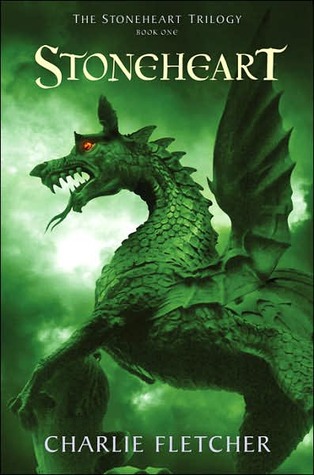
3. Identifying what you really need -- Knowing what you want is not the same as knowing what you want. Harry Potter knows Ravenclaw's Diadem is hidden in the Room of Requirement but actually identifying it is another challenge altogether. Fortunately for the Wizarding World, Harry does just that. In Stoneheart, George wants answers from an enigmatic Sphynx, but he needs to ask the right question, which proves trickier than he expects. Sometimes the biggest challenges are not the villains you chase or the fears you face, but simply puzzling out what matters most... and how to phrase it.

4. Perils (and perks?) of Vandalism -- I imagine it goes without saying that destroying property is wrong. It's disrespectful, harmful, costly and generally indicates violent, dangerous, or imbecilic behavior. In fact, break a stone dragon head off a building's exterior and you might awaken all the beastly statues of the city, inadvertently inviting them to hunt you down, as is George's dilemma in Stoneheart. No matter the consequence, we know that vandalism is punishable... unless it isn't. Being a child carries burdens, especially emotionally when the world lets you down (or you think you've let yourself down). A sudden rage to let out the pain might be needed; consider what Harry experiences in Dumbledore's office after the death of Sirius, and Rosalinda's breakdown upon learning exactly why she was left asleep for 62 years in A Long Long Sleep. We learn coping with trauma takes many forms, and occasionally a broken dish or twenty is necessary.

5. Time Travel -- It's going to happen. Just look at the necessity it breeds in When You Reach Me or A Wrinkle in Time. This life lesson is more of a demanding hope; just hurry up and make it real! Until it is proven impossible, we can still believe in the possibility and hope for its discovery. Above all else, hope allows everything else to blossom; its light sustains our existence.


What lessons from Children's Literature would you share?