Showing posts with label picturebooks. Show all posts

Thursday, September 12, 2013

Links for a Thursday

To liven up your Thursday, here are some curious reads, activities, and discoveries going on around the Web these days:

  1. Actor Jim Carrey joins the growing troupe of celebrities extending their reach into children's books. On September 24, his picture book, How Roland Rolls, will be released and will address the more existential crises of early life -- notably that sudden awareness of life and loss.

  2. Read a cultural examination on why Sci Fi and paranormal YA matters at McGill Daily. A simple look perhaps, but it ultimately focuses on the importance of sci fi to allow readers to think outside the normal conventions and to address social and political issues in exciting new ways, as well as inviting social change. It also tries to justify all the romance. That's a lot of romance to justify.

  3. Evidently one of my favorite current middle grade novels, Reif Larson’s The Selected Works of T.S. Spivet, is being converted to the big screen. Director Jean-Pierre Jeunet (Amelie) is bringing his whimsical, enchanting style to a book that explores the meaning of childhood through an exhibition of love of country and humanity (the amazing conceptual maps that situate the young boy clearly in his regional space, demonstrate his ability to broaden that awareness, and expose his acute sense of what humanness is). I am somewhat obsessed with maps and all that they signify and influence, so anything to do with this story excites me. Until I saw the trailer, and began to fear the changes they would feel obliged to make to a remarkable story about a young cartographer and the transformation of the hold his family has on him. Another time I'll discuss this in detail. For now, take a look at the trailers, and if you have read the novel, let me know your first thoughts!

  4.  Disney is re-imagining what it means to watch a movie in the 21st century with 2nd Screen Live. I'll withhold my comments on this except to say that here is cultural disparity at its best -- enlisting young children to bring an iPad to the movie theatre because of course all children have them, and they should of course be consumed by constant interaction on numerous interfaces at all times. 

  5. Wrapping up on a lighter note, authors around southern California are invited to a book event at the Norman F. Feldheym Central Library, Saturday, Sept. 14, from 1 to 5 p.m. to discuss their books and old book signings. This celebration of authors will involve all kinds, from children's book writers to mystery, sci fi and local history writers.

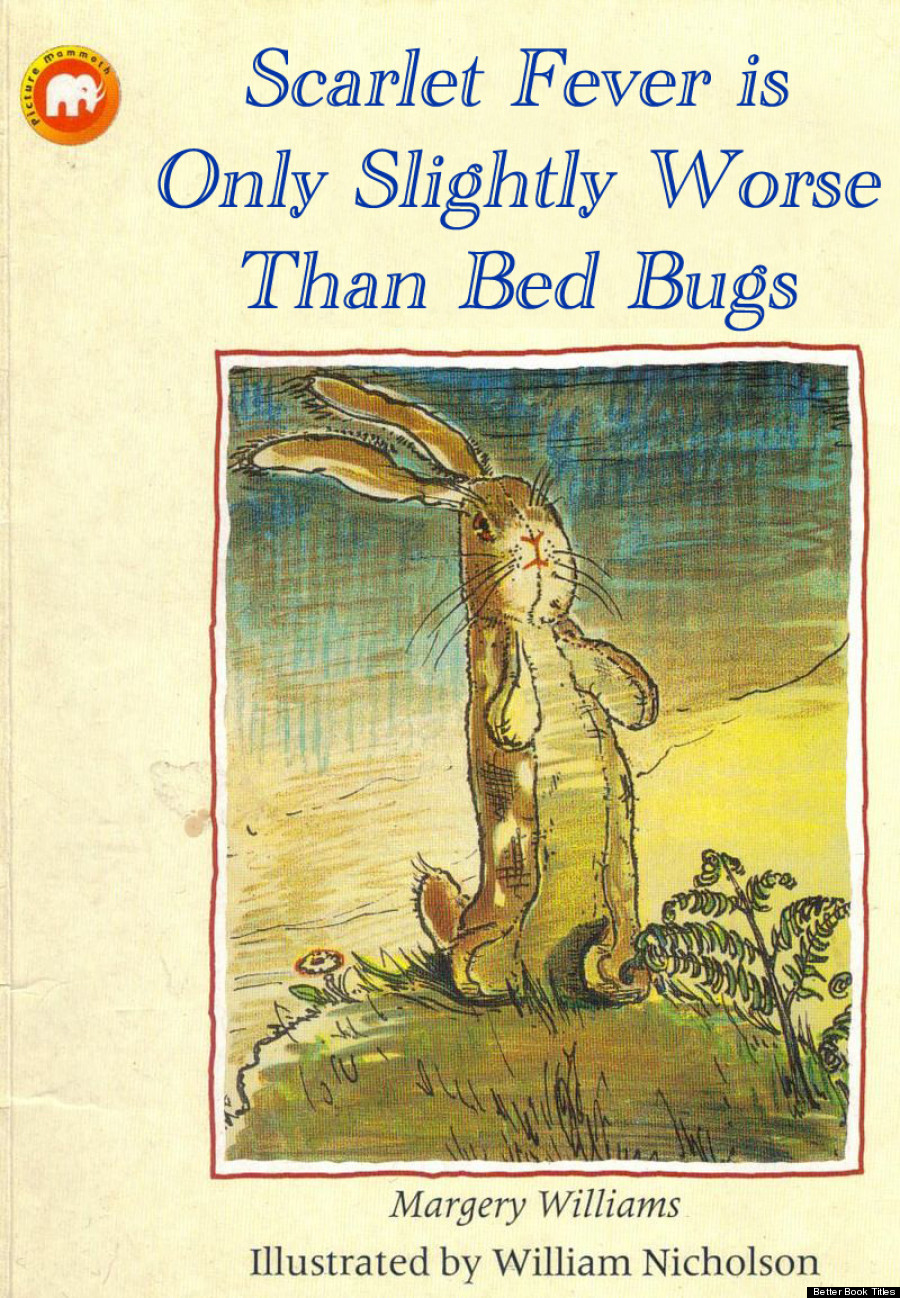
  6. And lastly, a bit of book fun: Better book titles for children's books!

Wednesday, September 4, 2013

The Multicultural and Murderous in New Children's Lit Scholarship


Here are a few new reads to add to your research and collection. 

The first, Reading Diversity through Canadian Picture Books: Preservice Teachers Explore Issues of Identity, Ideology, and Pedagogy, edited by Ingrid Johnston and Joyce Bainbridge, may appeal to those interested in picture book study, multicultural studies (through a Canadian lens) and pedagogical practices. The description from the UTP site explains:

What is the value of picture books in educating a diverse society? This collection of original essays explores how preservice teachers from faculties of education across Canada engage with issues of diversity and national identity as represented in children’s picture books. Based on research drawn from education courses and student teaching experiences, the book illustrates new and culturally relevant approaches to curricula that meet the needs of increasingly diverse student bodies.

In the second book, Bloody Murder: The Homicide Tradition in Children’s Literature, Michelle Ann Abate discusses the long history of violence that prevails in children's books -- not merely an indicator of American obsession with the grim, but also a sign of the complications, severity, and seriousness that children witness and face in reality. You must read Abate's insightful and excellent interview with the Boston Globe as well. Bloody good stuff.

Wednesday, July 10, 2013

Multicultural Picture Books on Ramadan

Around the world, Muslims have begun to observe fasting during the Islamic month of Ramadan. The next four weeks  will include resisting food and water from dawn until sunset, as well as tempering one's lifestyle to be more reflective, charitable, and understanding.

To celebrate this annual experience, here are two recent picture books that convey the rich messages of Ramadan and contribute to the dearth of diverse literature that exists for children, but need only be sought.

Under the Ramadan Moon, by Sylvia Whitman (2011).
The lyricality of this book makes it stand out, and its repeated verses mirror the importance of ritual and tradition that highlight a single day of Ramadan, including waking up before dawn to eat and pray, and breaking fast among family and friends. It serves as an artful introduction to Ramadan.

White Nights of Ramadan, by Maha Addasi (2008)
I reviewed this book earlier this year for the SDSU Book Reviews. For now I will say that the lush colors bring to life a culturally specific holiday (from Kuwait and other Gulf countries) that occurs midway through Ramadan -- Girgian. It's festive and thoughtful, and does a great job of capturing the spirit of month.


Thursday, June 27, 2013

Talk & Book Signing with illustrator/artist Susie Ghahremani in La Jolla, June 27


If you're in San Diego and have some time this evening, consider making a trip to La Jolla to attend this event:
Join illustrator and artist Susie Ghahremani tonight as she shares her work and the secrets behind the making of the artwork for her picture book, What Will Hatch? (written by Jennifer Ward).

When & Where: Thursday, June 27th at 6 pm at the Museum of Contemporary Art San Diego in La Jolla.
The museum is located at 700 Prospect St. in La Jolla, CA and the talk is part of the “Shore Thing” evening event series. The talk will be followed by Q&A and book signing.

Talk begins promptly at 6:30 pm, so arrive early!

Friday, March 1, 2013

10th Semi-Annual Children's/YA Book Review Marathon on March 16th

Announcement:
Professor Alida Allison invites you to come join the NCSCL for the 10th Semi-Annual Children's/YA Book Review Marathon on Saturday March 16th!  It's that time of the year when we tackle as a group the overflowing shelves full of books running amok in our office.

The goal is to get at least 26 reviews done (picture books mostly, so let's aim for even more!) but if the task sounds a bit daunting to you, it comes with some perks: free food will be provided and you will be able to take home up to two picture books that you review. Plus, you get to spend the afternoon with other academics, students and individuals all fascinated by everything that children's literature entails.

Details
When: Saturday March 16th, 12:30 - 3:30 pm
Where: Arts & Letters Building, Room 218

Please RSVP by Friday March 15 by sending an email to Dr. Allison (allison@mail.sdsu.edu).


Tuesday, January 22, 2013

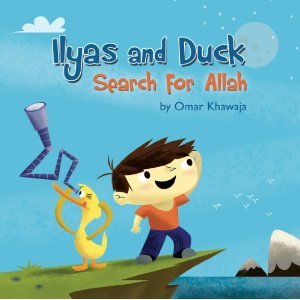
Multicultural Perspectives: Ilyas and Duck Search for Allah

I stumbled upon Ilyas and Duck Search for Allah, by Omar Khawaja, entirely at random (oh the glories of the internet and its mysterious ways). Immediately I was taken in by two things: the title and the duck. I haven't seen many American Muslim picture books, least of all an open and unobtrusively thoughtful one with "Allah" in the title (which means "God" in Arabic, for the unawares), so I wanted to see how this presented itself. And upon reading it, I admit I immediately loved the little sidekick Duck. Ilyas of course is an adorable inquisitive little boy with such profound thoughts but the absurd antics caught in the illustrations of Duck must surely tickle many a funny bone. So overall, the book was a win for me—accessible characters breaching a complex issue with the honesty and curiosity only a child can demonstrate with a touch of humor. Khawaja introduces readers to an Islamic perspective that demonstrates the universality of beliefs in a colorful and educational adventure.

I had the chance to ask Khawaja a few questions about his book, its purpose, and so forth, and am happy to share that exchange here.

Share a little bit about your book. What are the key themes and issues?

Ilyas & Duck Search for Allah
is about a boy's quest to find God. Ilyas is a typical 5 year old boy with an insatiable appetite for questioning the world around him. Duck is fun-loving, goofy and quick to help Ilyas satisfy his many curiosities. Because kids often think in literal terms, the story too begins with Ilyas thinking that he is able to find God in His physical form. This leads the two characters on an exciting adventure to various parts of the world to find Him. Along the way they meet interesting characters who ultimately help Ilyas and Duck understand the concept of God. The clear challenge in the story was to transform kids' literal interpretation of God into a more abstract and philosophical view that is both simple enough for kids to comprehend and consistent with the Islamic faith. 

What was the inspiration and/or motivation behind it?

Young kids ask the most simple yet profound questions about the world around them. Asking about God then is a natural part of this innocent wonder especially if God is referenced in the home over the course of a typical day. My three young kids are no different and ask more questions than I am equipped to effectively answer. So when my kids presented me with the question about God, I initially struggled to deliver an adequate response.  But as I thought about it I realized that a response to a profound question like this could only be meaningful to young minds if it was delivered in a way that they can relate to. I couldn't think of a better way to do that than through a storybook. So I can safely say that my own kids inspired me to write the book.

As part of my Multicultural Perspectives series, do you feel that Ilyas and Duck addresses or attempts to transcend cultural boundaries? In what ways?

In writing the story my goal was simply to help young kids understand the somewhat abstract concept of God.  And being a Muslim parent, I used "Allah" to refer to God because I was mainly directing the story to other Muslim parents. By using "Allah" in the story however, my intention was not to distance the Islamic view of God from that of other faiths. Rather I believe that given the universally applicable idea around the existence of our "creator" across all monotheistic religions, Ilyas and Duck do cross cultural boundaries by showing that we all believe in the same God regardless of how we refer to Him.  In that sense, my hope is that people will realize that if they simply replace "Allah" with "God" or "Hashem" for that matter, that the message in the story about the existence of God remains consistent with their own belief.

What audience do you hope to reach? Why is a book like this important for the greater American and worldwide audience? What does it contribute?

I think there is such a huge gap in the market for quality books for young kids that communicate Islamic themes and values that I hope Ilyas and Duck will help fill this void and be appreciated by the tremendous global Muslim population. Beyond books though, I believe Ilyas and Duck has the [global] potential... This is especially true considering the vast majority of cartoons that dominate television networks in the Middle East and other Muslim countries today originate mainly from the US, Europe and Japan. There is nothing wrong with that but I think there is room and demand nonetheless for characters that appeal more directly to the local cultures in these markets.
I have had conversations with people that clearly have very little understanding about the Islamic faith. Some believe that Muslims pray to a different God than do Christians and Jews. So to the extent that the use of "Allah" in the story sparks conversations that help dispel some of these misconceptions I think contributes in a positive way to a wider American and global audience.

Did you do any kind of research for the development of the story? 


I had to make sure that the core message in the story was appropriate and widely acceptable to my target audience. I started with my own simple understanding of what I thought Islam said about God. I summarized this in a rhyme within the story the ends with "But you can't see Allah like you can see me." The idea was to position the story through the understanding that you can't see God like you can see others but rather we see God through his amazing creations, and through them we believe Him to be true...  However, it wasn't enough to just have a good message if the delivery of that message was weak. This is where the many nights I spent reading wonderful storybooks to my kids played a role. Over time I had come to appreciate the finer points that made children's books effective for both children and parents and tried to apply this understanding when developing and writing this story.

Will Ilyas and Duck have other adventures?


I currently have two more stories in the works in the Ilyas and Duck series. I also am translating the current book into an interactive storybook app that I'm really excited about which should be available sometime in 2013.

Monday, December 24, 2012

New Reviews: Holiday Picturebooks

Happy holidays to all! This blog will be quiet for a little while as its writers eat cookies and read for pleasure, but I wanted to pop in and direct you to a couple of new reviews on our sister site, SDSU Children's Literature Reviews. Last week saw reviews of Polar Slumber, The Golden Christmas Tree, and Deck the Halls. Additionally, see this link for an archive of holiday-themed picture books. If you have any holiday favorites, please feel free to share in the comments!

Monday, November 26, 2012

CFP: Comics, Picturebooks and Childhood

Call for Papers: Special issue Journal of Graphic Novels and Comics (http://www.tandfonline.com/toc/rcom20/current)

Special Issue Editors: Dr. Mel Gibson (University of Northumbria), Dr. Kay Sambell (University of Northumbria), Dr. Golnar Nabizadeh (The University of Western Australia).

This special edition will explore links between graphic novels and comics in relation to childhood. Both have been studied in relation to how they work (key examples being Maria Nikoljeva and Carole Scott's How Picturebooks Work and Thierry Groensteen's The System of Comics). The history, specific creators, culture and audiences for these media have also been areas of research. Focusing on the links across illustration, graphic narratives and visual culture, this special issue will offer critical examinations of the field of comics and picturebooks.

Comics and picturebooks are not typically considered together, although some research has done so, including Mel Gibson's article "Graphic Novels, Comics and Picturebooks" in the Routledge Companion to Children's Literature and David Lewis's "Oops!: Colin McNaughton and 'Knowingness'" in Children’s Literature in Education.

In relation to audience, comics and picturebooks have frequently been associated with younger readers, despite the two being very flexible media which can be used to address readers of all ages on any topic. When such assumptions are dominant, this is usually related to perceptions of what might be ‘appropriate’ content.

Sometimes controversy is about an entire medium, as John A. Lent outlines in "Comics Controversies and Codes: Reverberations in Asia." This chapter, in the book Pulp Demons: International Dimensions of the Postwar Anti-Comics Campaign, examined how manga comics were seen as having an impact upon the health and morals of young people in South Korea, Japan, the Philippines and Taiwan between the 1940s and the 1980s.

Equally, controversy might focus on a single text, as was the case in relation to the British publication of Jenny Lives with Eric and Martin by Suzanne Bösche (originally published in Denmark as Mette bor hos Morten og Erik), one of the first picturebooks focusing on homosexuality and family structure. This single text was a key element in Britain in the introduction of Section 28 of the Local Government Act 1988, which forbade the "promotion" of homosexuality by local government.

In both of these cases, what may be seen to underpin controversy relating to these media are social constructions of childhood, a concept developed within Childhood Studies and perhaps best illustrated by Allison James and Alan Prout in the book Constructing and Reconstructing Childhood.

This issue also constitutes an attempt to extend the scope of scholarship on the comic and the picturebook beyond US/UK and European critical frameworks by highlighting Asian and Australian visual cultures and contexts.

Suggested topics for proposals include, but are not limited to, the following:

- Creators who work with both these media, such as Raymond Briggs and Shaun Tan.

- Picturebook creators who are influenced by comics. For example, the ways in which the work of Maurice Sendak is influenced by that of Winsor McCay.

- Comics for children and constructions of childhood

- Controversies around comics, picturebooks, childhood and child readers

- Defining the borders and emerging areas in comic book scholarship

- Manga, comics and picturebooks

- Comic book conventions and avant-garde innovations

- Divergences and intersections between comic books and picturebooks

- When and how does a comic book creator become perceived as a picture book creator?

- In what ways do constructions of childhood as innocent and vulnerable impact what is considered suitable content in a comic or picture book?

Deadline for proposals for 5000-7000 word articles is March 31, 2013 (for issue 5:1, June/July 2014 of the Journal of Graphic Novels and Comics, http://www.tandfonline.com/toc/rcom20/current). Send proposals to Dr. Mel Gibson at mel.gibson@northumbria.ac.uk.


Tuesday, November 13, 2012

Jerry Griswold Writes Introduction to Illustrated Beauty and Beast Reissue

Laughing Elephant Press has reissued an 1894 edition of "Beauty and the Beast," lavishly illustrated by H.M. Brock. Jerry Griswold, professor emeritus of SDSU's children's literature, played a part in bringing this classic back into print and wrote the Introduction. 

The book is available on Amazon here, or at the Laughing Elephant website here.


Thursday, May 24, 2012

Research book now in paperback, forwarded announcement and link

Dear colleagues,

The edited volume "New Directions in Picturebook Research", co-edited
with my colleagues Teresa Colomer and Cecilia Silva-DĂ­az, is now
available as paperback edition. I attach the flyer for your
information.


Prof. Dr. Bettina KĂĽmmerling-Meibauer
Eberhard Karls-Universität Tübingen
Deutsches Seminar
Wilhelmstr. 50, D72074 TĂĽbingen
bettina.kuemmerling-meibauer@uni-tuebingen.de
http://homepages.uni-tuebingen.de/bettina.kuemmerling-meibauer
New Directions in Picturebook Research_v2.pdfNew Directions in Picturebook Research_v2.pdf
886K View Download

Thursday, May 17, 2012

SDSU's Jerry Griswold's Talk at the Eric Carle Museum, July 6

Programs Events - Upcoming - The Eric Carle Museum of Picture Book Art

The Visual in Children’s Literature

July 6, 2012
1:00 pm
Free with Museum Admission

Jerry Griswold, Emeritus Professor of Children’s Literature (San Diego State University), critic, author of seven books and more than 200 essays, and past director of the Center for the Study of Children’s Literature will discuss “visualness” in children’s books. The presentation will take up such topics as: reading as visualizing, how picture books work, the text as object, and picture book design. This presentation will open your eyes and your mind.

Saturday, February 25, 2012

Enid Blyton's Books to be Re-Illustrated, The Guardian, excerpt

Famous Five 70th anniversary marked by star illustrators

Quentin Blake and Helen Oxenbury among artists to reinterpret Enid Blyton's classic children's characters for a new generation

Five Run Away Together
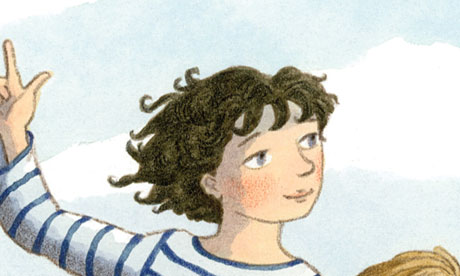
Famous Five at 70: Detail from Emma Chichester Clark's take on Five Run Away Together. Photograph: Hodder Children's Books

Much-loved illustrators including Quentin Blake and Helen Oxenbury have reimagined the Famous Five to mark the 70th anniversary of the adventurous quintet's first appearance, bringing new looks to Enid Blyton's classic characters.

Friday, February 24, 2012

Maria Popova on the History of Picturebooks, excerpt

24 FEBRUARY, 2012

A Brief History of Children’s Picture Books and the Art of Visual Storytelling

by

From cave paintings to Maurice Sendak, or what modern ebooks can learn from mid-century design icons.

Back in the fifteenth century, Leonardo da Vinci made an eloquent case for visual storytelling:

And you who wish to represent by words the form of man and all the aspects of his membrification, relinquish that idea. For the more minutely you describe the more you will confine the mind of the reader, and the more you will keep him from the knowledge of the thing described. And so it is necessary to draw and to describe.”----

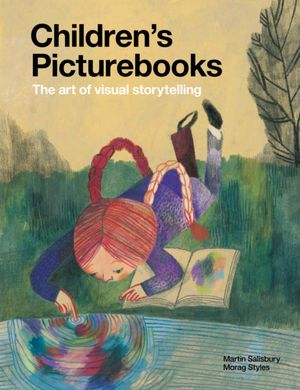
In Children’s Picturebooks: The Art of Visual Storytelling, illustrator Martin Salisbury and children’s literature scholar Morag Styles trace the fascinating evolution of the picturebook as a storytelling medium and a cultural agent, and peer into the future to see where the medium might be going next, with case studies of seminal works, a survey of artistic techniques, and peeks inside the sketchbooks and creative process of prominent illustrators adding dimension to this thoughtful and visually engrossing journey.

For full text:
http://www.brainpickings.org/index.php/2012/02/24/childrens-picturebooks/