Showing posts with label cool stuff. Show all posts

Wednesday, February 4, 2015

Long Awaited Material Now Published on the Unjournal!

Hi all, this is Alya checking in from the alumni realm to share a quick update regarding The Unjournal of Children's Literature. The new year has brought new vigor to the editorial staff (most of whom graduated last year and have been scrambling to make order in our lives outside of graduate school now).

But here we are, extremely proud and honored to present the first batch of new material slated for 2015, including a valuable and timely interview with Dr. Katharine Capshaw! (You may have already seen the announcement making the rounds on Twitter and Facebook.) During a visit to SDSU last year, Dr. Capshaw spent a delightful and relaxed afternoon with us talking about everything under the sun, a conversation which resulted in this interview. Please do check it out, there is just so much to enjoy and learn from in there.

We've also finally published the video of the Edible Books Festival held last year in its entirety. You may remember we blogged about it; now you can watch the four fabulous speakers (and one awesome emcee) we engaged to talk about the beauty, prevalence, and value of food in children's literature, as well as the necessity of exploring children's lit in general.

Stay tuned for articles to come soon on The Unjournal. If you're interested in joining the team, you can email us at childlitunjournal@gmail.com, or find us on twitter (@chlunjournal) or facebook.

Thursday, May 8, 2014

Links for a Thursday

We've entered that unbearably busy and hectic time of year, "the end of the semester" (*insert shudder of fear*). So here are a few lighthearted and stimulating links to liven up our energy for the rest of this week.
  1.  Cats, bears, pandas, so many animals get attention in children's books, that a kidlit collection becomes a veritable menagerie. But how many demand the kind of respect that all but requires you to look up to them than the giraffe? (Perhaps the elephant.) Nevertheless, here's a list of top ten Giraffe books in children's lit--to reminisce or explore for the first time. Whatever you do, don't dance with them.
  2. Are we finally running dry on our love for werewolves, vampires, and female-centric dystopias? This author seems to think so, identifying upcoming trends in YA Lit, from universal lovelessness to male-centered dystopias. Fair enough, but I'm not sure her argument that fairy tale reimaginings are a NEW trend is a valid one. Nor do I think the conflation of "YA" with "Dystopia" does either category justice. 
  3. A quick read from the LA Times in opposition to the rumor going around that books are dead. Because they aren't. Otherwise, such movements like the Children's Literature Festival would be unheard of, anyway. 
  4. Lastly, a video of Sandra Cisneros from the LA Times Festival of Books, talking about her newest picture book, border crossings, and more.

Monday, February 24, 2014

Nerdy, Adventurous Childhood Artwork

Just a drop of nostalgia to jumpstart your week here:

I recently came across a blog post presenting the works of artist Craig Davidson, who has captured what it was like to be a child of the "Star Wars"-verse, all imaginative light sabers, jedi mind tricks, and laser blasters galore.


His art shows exactly how the child interacts and manipulates the environment in order to bring the world to life. This is what kids do. It's precisely what I did, so to see the shadowed backdrop of iconic characters given life by these young kids felt like a mirror into my own adventures. It reminds me of countless children's books where kids do create their own worlds and have to fight to defend it (my own favorite Bridge to Terabithia comes to mind).
I do wonder, of course, about the gender roles being blatantly spelled out here. Can we only be inspired by, excited about and act out characters of our own sex?  (No.)
I checked out Davidson's collection and was startled to see his artwork concretely categorized as "Boys" and "Girls." I haven't looked through everything yet, but admit I do love the ferocious energy and contemplative outlooks his depictions of kids have. On my quick exploration, one collection did stand out:

The "Chums" series (look under Sea). I think my Gothic in Children's Lit class would have a lot to say about the association of the feminine with sharks. What do you think of all his art?

Friday, February 14, 2014

Pop-Ups from Prague -- an Eye-Popping Exhibit

As a child I dabbled in designing pop-up creations with construction paper--primarily rudimentary books and curious city-scapes. A star architect was born! (And resided in my cosmically themed "Star City") But eventually that fizzled, though the fascination with the pop-up itself never left, and why should it? The tangible depth given to illustrations, rising from the very medium of the book itself--just minutely crafted paper!--can be mesmerizing. That's why I found this recent article in the New York Times on an exhibit of a Czech artist's pop-up books and artwork so captivating. It is (not so) simply a demonstration of art and engineering intermingled -- the architecture of artwork.

The animated, movable book had started for an adult audience, but shifted gears to appeal more to children during the 18th century (as is the history of much of "children's literature"). The featured artist, Vojtech Kubasta, was a Czech architect, artist, and children's book illustrator who revitalized the pop-up book movement in Europe in the mid twentieth century. I found it particularly interesting that:
Kubasta produced his complex, tightly integrated scenes with a minimalist’s touch. “What’s astounding about Kubasta, as opposed to many pop-up artists today working with multiple layers of paper, is that he achieved his effects using a single piece of paper,” Mr. Sabuda said. “That is the real magic of Kubasta. Look at one of his pop-ups from the side, and it looks like a staircase. The positive space is missing from the background, because it has been cut out, but you don’t notice it. The simplicity of it, from a paper engineer’s point of view, is simply amazing.”
 How that artwork integrates with the storytelling itself would be a worthy point of examination. If you are in New York any time until March 15th, you can see the gallery of his work at the Grolier Club:   JANUARY 23-MARCH 15, 2014: SECOND FLOOR GALLERY EXHIBITION, “Pop-Ups from Prague: A Centennial Celebration of the Graphic Artistry of Vojtech Kubašta (1914–1992) from the Collection of Ellen G. K. Rubin.” Open to the public free of charge Monday-Saturday, 10 am to 5 pm.

On a similar note, this The Little Prince Pop-up is also worth checking out. I'm sure it would even make a nifty Valentine's Day present if you're so inclined...

Tuesday, February 4, 2014

ChildLit Cartography: The Glass Puzzle

With winter break firmly behind us, it's time to dive right into a new year and a new semester. I for on would like to recommence with my exploration of maps found in children's literature. Since I basically posted about it ONCE last semester, I think it deserves a bit more attention this time around, particularly because of the underscored prevalence of these images throughout children's books.

Many maps in literature, children's or otherwise, fall under a typical structure meant literally to map a terrain, to guide a reader visually, and to give concrete value to the intangible world emerging from words. For some, this is a burden of information, but for others, this is a necessary element to understanding the story. When we consider that reading includes much more than words on a page, but can address and appeal to all the senses, then the visual stimulation of a map unfolds numerous interpretations and significances.

And yet, admittedly, I do find that a number of texts seems to include maps solely because of the genre they fall under: fantasy. In fact, I came across a blog post by fantasy author J.S. Morin concerning Amateur Cartography, or how to conceive of mapmaking for a fantasy story. In it, he traces the two general mental processes engaged in the creation of a fantasy map: "writing to the map" or mapping as you write. This is all hunky and dory, but what struck me most was what he dubbed the "Reader's Bill of Rights": what a reader can and should expect of an included map.  Legibility, consistency with the text, physical sensibility, and relating to the story are perfectly understandable, but I wondered about one issue he raises, specifically in relation to a novel I read last year, The Glass Puzzle, By Christine Brodien-Jones.

The story itself suffers from an incessant need to explain every characteristic of the young heroine, Zoe Badger. It also takes on too much, leaving the author overwhelmed by the end to wrap up too many threads and details. In brief, the young girl and her cousin visit their grandfather in the town of Tenby, Wales, and unwittingly stumble upon a glass puzzle that opens a portal to a parallel universe (or rather, an alternate timeline). Blunder after blunder result in their homeland overrun by possessing spirits and a damaging force hellbent on domination. Much like the author's previous book, The Scorpions of Zahir, this story relies on the redemptive powers of the young girl; though the story struggled to engage me fully, I did appreciate the author's attempt to create a worthy girl role model. But I was honestly most engaged by the map. 

My first reaction to it: It looks like a claw! The map seems to grown out of the upper left corner in an attempt to unfurl and grab the far reaches of the scroll itself. Roads widen, shorelines tremble and dig into the sea. The perspective it offers is almost threatening, or at least ominous. A welcome change from the standard issue of maps.

And yet, it's so packed with information, only forty percent of which I think exists within the story itself. Trying to find a location while reading led me to scour the entire map over and over again, sometimes getting completely lost. So when Morin says that a map should include more information than is included in the story, does he imply that the map should overwhelm the reader's senses? Does this map fail in that regard? Or is this case of inundation intentional, much like the suffocation that the town suffers when overrun by threatening forces? Does the city therefore invite what it displays? And if I take this one step further, are we then complicit in our own near-destructions? Certainly I'm reading too much into this, but I can't help but wonder about the ethics and implications of the map.

Wednesday, December 11, 2013

Cool things in the Blogosphere

It sneaks up on you sometimes, a sudden anxiety. In such a large place, you can at times feel like a microbe journeying across the universe. Where to go? What to see? Who to read?
Well, that's how I feel about the world wide web in all its enigmatic, amorphous beauty. There is too much to imbibe and learn, so where to start? Children's literature is exceedingly beloved by so many, and as a result I have stumbled on numerous not-so-noteworthy blogs. By that I simply mean I am looking for something new, but, just like the mass of pop music and blockbuster movies, I only find more of the same.
But here are some worthy reads, from the newly formed to the established:

1. Seven Impossible Things Before Breakfast (7-imp): One of the very best children's literature blogs focused on illustrations. I know you all know about this one already, but it just had to be shared. Her interviews and reflections on the artistry of children's books are impossibly fun to read.

2. Swampish: University of Florida's new blog for the Center for Children's Literature and Culture.
 From their site: "The blog features reviews of children’s materials as well as examinations of children’s culture on a global, national, and local scale.  Speaking of local, Swampish is very fond of our home here in Gainesville, Florida, and will be sure to highlight the many people, places, and things that make our community so rich in children’s culture."

3. Medicine and Health in Children's and YA Lit: A rather self-explanatory title, but this doctor-turned-writer offers some useful and insightful examinations and thoughts into the role, influence, presence, or lack thereof, of health and medical issues in children's lit. 

4. Asia in the Heart, World on the Mind: Okay, so I just found this one, but I'm all about discovering literatures from across the globe (specifically non-Western ones) so this looks very promising. I particularly love the inclusion of all of Asia, South to East, and just clicking through the tags I've already learned about some beautiful books from the Philippines and a deliciously rich picture book from Malaysia.

5. First Second Books (Publishers blog): Graphic Novels for all readers!  After reading American Born Chinese, I came across this blog from the folks that published it. A graphic novel novice myself, it's fun to see what goes on in that genre. I have since found a bunch of resources, but I like the appeal of this blog (touted to all!).

6.  I.N.K.--Interesting Nonfiction for Kids: Because Non-Fic matters too! And it does. These guys have been around for a while, and have compiled a list of some very extraordinary books. Plus, they take on the Common Core Standards head-on, offering a lot of really helpful guidance.


Monday, December 2, 2013

Visual Stimulation -- Minimal and Visionary

I've come across some striking visuals in the past month or so that deserve some sharing. Whether offering new visions of firmly established children's literature or an entry point into the perspective of children themselves, these images can be delightful, unsettling, and provocative.

Firstly, The Unjournal of Children's Literature currently features the work of Christian Jackson, whose minimalist approach to children's stories remind the viewer of the emotion of certain elements in each story, while occasionally twisting our understanding of it as well, with provocative texture and muted but engaging colors. He has recently added a new collection of children's story-inspired works, including Beauty and the Beast, the Frog Prince, and Chicken Little. My favorite of this collection is Peter Pan, though.
 
The muddy green backdrop evokes the natural wildness of Neverland along with the greenness of youth. Golden granules of sand depict iconic fairy dust as well as the essence of time--a hidden, undisclosed source that offers ceaseless life with no boundaries. The dust pops from the background in a vivid combination that illustrates eternal youth. Pretty cool, in my opinion.

Continuing this exploration of minimalist renderings of stories, I came across a collection of animated, minimal-style gifs for each of the seven Harry Potter books. Graphic Artist Jeca Martinez takes on the same challenge as Jackson by transforming well-known children's stories into condensed images (her blog demonstrates a fascination with Disney film versions of many fairy tales too). Her Harry Potter renderings evoke a sense of the magic in the books themselves, but I wonder what the effect would be without the animation. I find it noteworthy that the classic versions of fairy tales lend themselves to a distanced kind of minimalism by Jackson (the color and textures feel much older in time, just like the stories themselves) whereas these contemporary stories are ensconced in an art more evocative of technology, from the animation, bright bold color, and sharp lines.

Finally, a mother collaborates with her daughter to create a synergized view of adults in a child's world. Artist Mica Angela Hendricks draws expressive faces and lets her 4-year-old daughter add life and limb to the heads. Mica adds color once her daughter is done, occasionally listening to her daughter's recommendations, to create wondrous visions that make one wonder exactly what it is children think, imagine, and feel.

You can read the artist's blog to discover the lessons learned from collaborating with her child. Ultimately, who is the real visionary here?

Wednesday, November 20, 2013

Links for a Wednesday

A few links and the potential for discussion they inspire, to inspire your Wednesday and lead you into the rest of the week...
  1. The place and future of the children's book app for e-readers has been debated and questioned for a long time now. Recently, it has popped up in discussion at the Festival of Australian Children's Literature, touching such topics as extended play as a health concern and the "slush pile" that is the iTunes children's book store. This debate will only continue as scholars, authors, and doctors of all fields consider how to even define or categorize e-books and whether children "just to do visuals and play, rather than think about words and constructing meaning."

  2. At the Miami Book Fair International, Sherman Alexie shared his thoughts about the role of book fairs specifically in this age of e-readers. Alexie notes that books are individual experiences, but book fairs capture a much older tradition of storytelling in a group, something that can't yet be replicated by the "cruddy" experience of e-books. He also talks about the value he finds when a book is banned, understanding that, "I wrote the book that needs to be read. Percival Everett, the writer, always says that if you’re getting banned, then you’re offending the right monsters."

  3. Apparently Donald Sutherland wants the new Hunger Games film, Catching Fire, to stir a revolution. Whether this is just a marketing ploy or a sincere call to the youth, Sutherland has chosen to focus on one of the more valuable aspects of the series -- its political critique and the effects that may have on its readership and viewership. That the text can be read in numerous ways and applied to many larger and smaller political arenas (global conflicts to students' rights, for example) is what Sutherland harnesses in having this discussion. Unfortunately, I don't see this film franchise as the transformative experience he claims it to be, but I could be wrong.

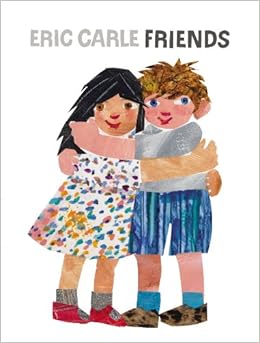
  4. Eric Carle's newest book, Friends, has just been published, and the site Brain Pickings gives it and the acclaimed author-illustrator a very well-deserved and vivid spotlight.

  5. Lastly, an infographic travel guide to Middle Earth, since there's always room for a fantastical adventure in our very real lives.

Friday, November 8, 2013

A 'Marvel'ous Muslim Teenage Comic Superhero

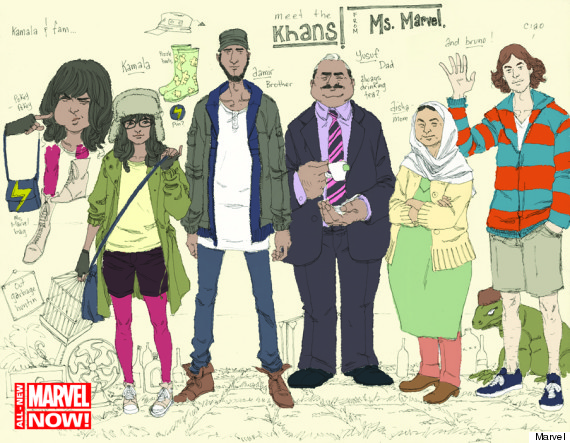
Back in September I talked about the rise of a new cartoon series in Pakistan, the Burka Avenger. It now looks like the female empowerment movement has rubbed off on the world of US Comic-verse. Marvel Comics is introducing a new teenage superhero, who happens to be Muslim-American.

Kamala Khan, aka Ms. Marvel, emerged from amusing life-experience stories of Sana Amanat, an editor at Marvel. She and a peer approached acclaimed graphic-novel and recent novel writer G. Willow Wilson to pen the character. I've never read any of Wilson's works (I'm largely unfamiliar with comics in general, but I have been wanting to get my hands on her debut novel Alif the Unseen). Still, I always perk up at the revelation of a new multicultural text, particular a Muslim-American girl-centered one. While some cultures can attest to an enormous amount of literature including, addressing, or focusing on them (whether or not they get recognized by the mainstream public), the Muslim-American identity still exists on the fringe. It has only been in the last decade or so that children's/YA books have been coming up from Western countries dealing with kids of various Islamic backgrounds. And even of those, not too many from the US as yet.

So this is exciting news! And since she is Pakistani American, I feel a second step closer to the experience meant to be exposed. People who exist in some capacity "on the outside" usually want to find a way to fit in, and to see that unfold via the nature of the superhero should be interesting, and an excellent opportunity to connect with teens searching for an identifiable subject in literature. Still, one hopes it does not stray too far into stereotyped territory. According to the New York Times article linked above:
Kamala will face struggles outside her own head, including conflicts close to home. “Her brother is extremely conservative,” Ms. Amanat said. “Her mom is paranoid that she’s going to touch a boy and get pregnant. Her father wants her to concentrate on her studies and become a doctor.” Next to those challenges, fighting supervillains may be a respite.
But Wilson is quick to point out:
"It was really important for me to portray Kamala as someone who is struggling with her faith.” The series, Ms. Wilson said, would deal with how familial and religious edicts mesh with super-heroics, which can require rules to be broken.
My concern lies in how authentic these struggles remain, if they can consistently ring true as the general isolation felt by teenagers all over, and if at some point the character's story becomes more than just a plot device. In other words, of course this girl's tale will unfold as a battle within her own heart and mind as much as with villains and her parents, but I'm most excited to see when a Muslim-American identity will eventually become a steady presence, such that it doesn't need constant defining and centrality to a text (can it ever be viewed as part of the 'norm'?). But I'm really getting ahead of myself here. For now, I think I'll just live vicariously through this young woman who gets to shape shift and startle evil doers with her amorphous identity.

Monday, October 7, 2013

ChildLit Cartography: The Death of Yorik Mortwell

A recent book review by Philip Nel on The Expeditioners and the Treasure of Drowned Man's Canyon by S. S. Taylor reminded me instantly of two things: how much I enjoyed the mystery and wonder of that story, and how enraptured I was with the artistry of the book.  If you haven't read or even seen it, I highly recommend you explore this adventure novel; each visual aspect of it (illustrated by Katherine Roy) -- the illustrations, the cover, the sketches hidden on the inside of the cover -- deserves attention because of how cunningly it tricks the reader into exploring the heartiness of the book itself. My eyes feasted on this novel, especially upon the map included on the inner flap/binding (I need to brush up on the jargon of book parts, I know). Beautifully rendered and an integral part of the story, the map for me was the most exciting feature to the point that I actually felt frustration at not being able to hold it myself.

Hmm, I was going to differentiate this frustration from that of wanting a Marauder's Map, which DEMANDS interaction, play, and clandestine exploits. However, I really did want to play with this one as well, for reasons I won't share lest I spoil the story for you. That is, in fact, how much I enjoyed the role of the map and the book itself. It invites the reader into the tale and allows us to explore with the characters in ways that I haven't experienced in a long while, if ever.

Perhaps I just need to read more books with maps. This shall be my new endeavor. 

I don't exaggerate either; most of my peers could tell you how invested I have become in the role and influence of the maps that pop up in children's literature. Thus, I have decided to share some of these cool features as I discover them -- sometimes playful, sometimes morbid, often misleading, always provocative.

So I begin with a spotlight on the map from The Death of Yorik Mortwell, by Stephen Messer, illustrated by Gris Grimly.


Without knowing the novel itself, you could examine this map and cultivate your own story. Maps have a history after all; the cemeteries would certainly indicate as much here. Perhaps you might wonder why the servants' cemetery is placed outside the boundary of a river or consider how many servants would have died on this property. Well, I'm not spoiling anything by saying that young Yorik dies (his titular death is just the beginning of a haunting adventure!) but he's just one.

When I see maps I wonder about what I might glean from it (e.g., shooting range next to the aviary glade? How convenient). Sometimes I wonder about who is envisioning this map within the textual universe itself -- which character do I perceive to have potentially conjured this up? And does that shape the map? A resident of the manor would not necessarily include the run down cabin, for example. But by existing, it suddenly plays a part and we hopefully will recognize that.

Thus, on the surface this seems a map like any other. But the curiosities emerge when you force yourself to question why a lovely topiary garden would be so far removed, but a dreaded hedge maze exist right next to the manor. Curious questions can lead to deeper understandings. 

Friday, October 4, 2013

Comics Overload with Comic Fest and Comic Day

The first weekend of October is all about superheroes, villains, and the graphic wonder of comic books. First, the Second Annual San Diego Comic Fest starts today and runs all weekend long (Oct 4-6). I talked about it last year, as an endeavor to reconnect with the folks who created what has now become the SD Comic Con (though this event is not affiliated with Comic Con). For a more "friendly, intimate" experience, you really should consider checking this out. I was happy to see that among the artists to participate in Artist Alley is Eric Shanower, who Dr. Griswold mentioned in his interview with The Unjournal this summer.

Secondly, evidently the first Saturday of October has been dubbed "24-Hour Comics Day", wherein people around the world accept the challenge to create a full 24-page comic in 24 consecutive hours. First dreamed up by Scott McCloud, this event has spawned into a global phenomenon. The very idea of it astounds me. In fact, those who in some way succeed in these timed challenges to create work, such as NaNoWriMo, humble me in their confident and determined purpose; I simply cannot find the time to write a novel in a month, or even conceive a full comic in a day. It's the process that must be so invigorating, and I'm sure allows people to then reflect on what they've created to see if it can be developed beyond that time. Anyway, it's cool stuff, so I'm sharing.

Thursday, September 12, 2013

Links for a Thursday

To liven up your Thursday, here are some curious reads, activities, and discoveries going on around the Web these days:

  1. Actor Jim Carrey joins the growing troupe of celebrities extending their reach into children's books. On September 24, his picture book, How Roland Rolls, will be released and will address the more existential crises of early life -- notably that sudden awareness of life and loss.

  2. Read a cultural examination on why Sci Fi and paranormal YA matters at McGill Daily. A simple look perhaps, but it ultimately focuses on the importance of sci fi to allow readers to think outside the normal conventions and to address social and political issues in exciting new ways, as well as inviting social change. It also tries to justify all the romance. That's a lot of romance to justify.

  3. Evidently one of my favorite current middle grade novels, Reif Larson’s The Selected Works of T.S. Spivet, is being converted to the big screen. Director Jean-Pierre Jeunet (Amelie) is bringing his whimsical, enchanting style to a book that explores the meaning of childhood through an exhibition of love of country and humanity (the amazing conceptual maps that situate the young boy clearly in his regional space, demonstrate his ability to broaden that awareness, and expose his acute sense of what humanness is). I am somewhat obsessed with maps and all that they signify and influence, so anything to do with this story excites me. Until I saw the trailer, and began to fear the changes they would feel obliged to make to a remarkable story about a young cartographer and the transformation of the hold his family has on him. Another time I'll discuss this in detail. For now, take a look at the trailers, and if you have read the novel, let me know your first thoughts!

  4.  Disney is re-imagining what it means to watch a movie in the 21st century with 2nd Screen Live. I'll withhold my comments on this except to say that here is cultural disparity at its best -- enlisting young children to bring an iPad to the movie theatre because of course all children have them, and they should of course be consumed by constant interaction on numerous interfaces at all times. 

  5. Wrapping up on a lighter note, authors around southern California are invited to a book event at the Norman F. Feldheym Central Library, Saturday, Sept. 14, from 1 to 5 p.m. to discuss their books and old book signings. This celebration of authors will involve all kinds, from children's book writers to mystery, sci fi and local history writers.

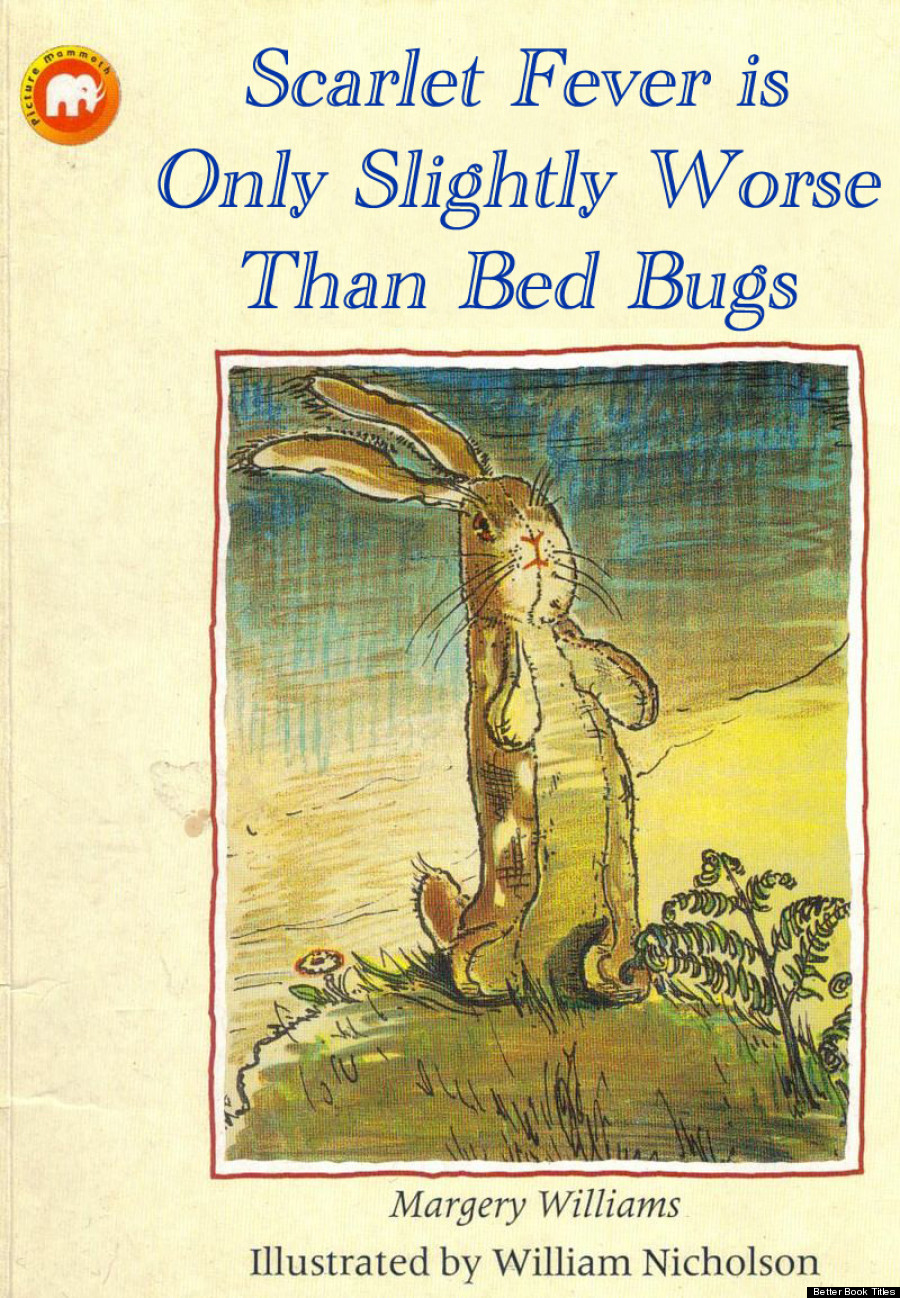
  6. And lastly, a bit of book fun: Better book titles for children's books!

Saturday, June 8, 2013

Quick Link: Annotations by Famous Authors

Check out Flavorwire's fascinating slideshow of famous authors' annotations of classic books. There are many links to view more annotations, as well. Not surprisingly, Mark Twain's comments are hilarious.

(Semi-related note: Mark Twain is the only person I would desperately want at my dream dinner party.)

Thursday, June 6, 2013

A Little Bit of Diversion

The end of the semester has come and gone, but the thrills of summer freedom seem to have skipped over a head or two. At least, that is how I and some of my peers have been feeling the past few weeks what with relentless projects that continually evolve (soon to be shared here!). In the meantime, it's nice to take a short break and enjoy a few lighthearted discoveries vis a vis the web:

If you're interested in picture books, in illustrating, or in award winning artists, check out Jon Klassen's guide to drawing/painting a bear in deep thought. Klassen was awarded both the 2013 Caldecott Medal for This is Not My Hat and a 2013 Caldecott Honor for his illustrations in Extra Yarn. I warrant a lesson or two from someone who can work in a rabbit being eaten off-page in a darkly humorous fashion could go a long way...

If you need another reason to love libraries (really? you do?) or you grew up playing Domino Rally, this video from the Seattle Public Library's Summer Reading Kick-Off is definitely worth the view. And then just imagine what reshelving must have been like after the fact...


Tuesday, May 7, 2013

Healthy Reading before Children's Book Week

One enticing diversion of mine is to scour the food blogosphere. Sadly I've been neglecting that lately, what with the end of the semester nipping at my toes and obligations that come with it. Still, when the chance avails I catch up on what I've missed and sometimes stumble on a delight. Yesterday was no different, as I came across the following post about some healthy pickin's for the young foodie from North Atlantic Books (located in Berkeley, CA, lest that name fools you). I had the opportunity to intern with them many, many moons ago, and am not surprised by this conscious collection of wholesome reads. I wonder what presence the "food revolution" has in youth culture, and if books like this are becoming more abundant.
As an aside: if I might suggest a delicious read myself, I'd recommend Hot, Hot Roti for Dada-Ji, by F. Zia--not so much for the healthiness than for the utterly mouthwatering visions of delicious Indian bread cooked fresh at home for many generations to enjoy.

Really, I don't even have the book and I still get excited by what lies within it.

But this first discovery led me to another--I was unaware that next week is Children's Book Week, the longest-running national literacy initiative (since 1919). As someone who hopes to get more involved in literacy movements locally and globally, I always get excited about these programs and checked out if any local events were happening. Apparently events will occur in La Jolla at Warwicks Books, including a reading/signing event with local author/illustrator Salina Yoon.

These initiatives make me reflect on the balance between being children's lit scholar and children's lit(eracy) advocate -- where they share ground and where they diverge. I'll have to hash that one out later. For now, I need some roti...

Thursday, April 18, 2013

Art, Inspiration, and Adaptations

First, a brief announcement that the Museum trip with the ChildLit GSA has been cancelled, but if you want to check out the Maurice Sendak exhibit on your own, you have until April 28th! And if you do, feel free to share your experience and review of it.

In fact, there are always interesting exhibits and events going on all over the place, if you know where to look. Case in point, the Gallery Nucleus in Alhambra has had some really intriguing exhibits in the past. It's always frustrating to learn about these after the fact, like the Tribute to Wizard of Oz collection; however, one can at least view the pieces and artwork online to get a taste of the exhibit. Their upcoming gallery exhibit, starting oh-so-coincidentally on May 4th, is "A Saga in the Stars: a Tribute to a Galaxy Far, Far Away," featuring artwork inspired by the Star Wars franchise. I wonder what this exhibit will have transformed into once Disney's own life force reincarnates the saga into a never-ending series?

Speaking of Disney, a short piece of Huffington Post today discusses the malleability of fairy tales in every generation, mentioning the domination of Disney in children's minds. Liesl Shurtliff writes, "Fairy tales have survived for generations, not just because of their symbolic nature, but because they are flexible. We can shift point-of-view, draw different conclusions, and even change the events of the tale to make them more meaningful to our current social, political, and moral points-of-view." What follows are a series of "successful" adaptations... Do you agree with the arguments for these adaptations? What would you include?

Friday, April 12, 2013

Links for a Friday morning

I've been hoarding some particularly interesting links to share here. Read on for news about celebrity authors, 19th-century comics, gay characters in YA, and more.

Just because they can, does that mean they should? Apparently Jason Segel ("How I Met Your Mother," "Freaks and Geeks", various Judd Apatow films) has written a series of three YA novels that are "about kids facing their biggest fears." I dunno. I generally feel skeptical about literature written by actors.

The last decade has seen a surge in children's books about "non-traditional" families. This article from Jezebel takes a look at some of the most significant.

This website houses a digital collection of British comics from 1873-1939. I'm especially fascinated by the Tramps & Oddballs category.

The Atlantic Wire has a wonderful piece exploring queerness in YA literature. The article, "A New Way for Gay Characters in YA," briefly traces the history of gay characters in YA and asks for recommendations in the comments for books they may have missed.

And speaking of authors featured in the aforementioned Atlantic Wire piece, David Levithan wrote a thoughtful essay reflecting on writing Boy Meets Boy in the early aughts.

This is an interesting slideshow of famous authors as teenagers. Almost all of them look preternaturally mature to me. Is that a trick of vintage photography or old souls shining through?

I am really bummed about this tepid review of Strands of Bronze and Gold by Jane Nickerson. It's a retelling of Bluebeard, and y'all know how I love my fairy tale retellings. But this reviewer found it lacking, and considering that I generally agree with Leila's reviews, I am now less excited to read this. Hmmm...

Okay, this one isn't really child lit related, but you have to take a look at this "where are they now?" slideshow of 31 child stars. Atreyu and Sebastian are on here!


Monday, March 18, 2013

International Edible Book Festivals on the Menu!

Keep your eyes, ears, and tastebuds open--International Edible Book Day is close upon us (April 1st) and festivals are popping everywhere to celebrate.

April 1st was the birthday of french gastronome Jean-Anthelme Brillat-Savarin (1755-1826), well-known for his book Physiologie du goût, a witty meditation on food. The celebration--which includes creative perspectives on books through food--began in 1999 and has grown to be a worldwide phenomenon. In the US, universities, libraries, and an assortment of "book art" groups are putting on events. Take a look at the Facebook page for Books2Eat, the organization responsible for spawning the Edible Book Festival, to find event announcements and photos from recent events. Traditionally, these events are held on or around April 1st, which seems like the most appropriate day to have fun and play with your food. And the ideas people come up with, from elaborate artwork recreating a scene or character to punny plays on titles, are both mouth watering and awe inspiring.
Scroll through some images here.

Unfortunately, the only San Diego event I know of, hosted by San Diego Book Arts, already passed. And the SDSU ChildLit GSA has plans of hosting our own event, though not until the fall (consider it a half-birthday celebration, if you will). But there are festivals all over (I believe UCLA's event will be held on April 5; check out details here!). Find an event or hold your own!

Wednesday, March 13, 2013

From Sleeping Beauty to Dystopian Heroines: Vulnerable Badasses

The New Yorker recently posted an article by Maria Tatar called "From Sleeping Beauty to Gonzo Girls: A New Generation of Modern Heroines?" In the article, Tatar, chair of Harvard's mythology and folklore program, examines the rise of the female trickster archetype: "women who are quick-witted, fleet-footed, and resolutely brave." Using pop culture examples such as Lisbeth Salander, Buffy the Vampire Slayer, and Carrie Mathison, Tatar posits that the placid Sleeping Beauty archetype has given way to the spunky, intelligent, and formidable female trickster.

But there's a catch: even in our I-am-woman-hear-me-roar contemporary culture, the problematic aspects of Sleeping Beauty never really disappear. As Tatar writes, these tough-girl characters have moments of "[seeming] utterly lost. There is clearly something compensatory in the psychological fragility of these women warriors: their gains in intellect and muscle are diminished by moments of complete emotional collapse. Vulnerability continues to attract." Tatar proceeds to look closely at Hildy in the movie "Django Unchained" as an example of this Sleeping Beauty stereotype.

Using Tatar's analysis and looking at the Sleeping Beauty archetype as a symbol for vulnerability, I can see numerous other examples in the contemporary young adult books I so love to read. In the plethora of dystopian YA novels that have come out in the last several years, the female trickster is readily apparent. There's Katniss in Suzanne Collins' The Hunger Games (which Tatar mentions), whose cleverness and survival skills keep her alive in a competition to the death; there's Tris in Veronica Roth's Divergent, who wills herself to be tough and uses her small stature to her benefit in hand-to-hand combat; and, most recently, there's the titular character in Marissa Meyer's Scarlet, who embodies a version of the Red Riding Hood character with a gun in her waistband and a chip on her shoulder.

But beneath the bravado and the intense desire to fight and win, all three of these characters have moments of extreme vulnerability. Mockingjay, the final book in Collins' trilogy, finds Katniss dealing with post-traumatic stress. Gone is the kick-ass warrior of the first two books. In her place is a new Katniss, one full of doubt and a desire to retreat from the political war for which she has become a symbol. Her emotional breakdown overshadows her previous accomplishments. She is no longer the actor; instead she has to be prodded to action by outside influences. Similarly, in the first two books of the Divergent trilogy (the third will be released in October 2013), Tris grows in strength both physical and mental. But she still relies on her boyfriend, Tobias, to buoy her through her battles. Furthermore, the mere fact that she is physically small gives her a vulnerability that no amount of trickster skills can overcome. Finally, while Scarlet maintains a single-minded focus on her journey in the second book of Marissa Meyer's Lunar Chronicles, she is accompanied by a strong, brutish street fighter named Wolf, whose hulking strength saves Scarlet's hide on more than one occasion. Additionally, her single-minded focus leads her to be emotionally crushed when her mission does not go as planned.  

Why is it that even when the female trickster character is colored with shades of strength and cleverness, the damsel-in-distress lurks beneath? Maria Tatar's assertion about the Sleeping Beauty archetype is that it "invite[s] riskless voyeurism in both [its] cinematic and [its] fictional incarnations" and that "the upright, brainy female, physically commanding and a bit unhinged, is less of a crowd-pleaser." So even though the spirited heroine in a contemporary YA dystopia is prevalent, it seems that the cracks in her armor are what really make her pleasing and accessible to the crowd.

While the characters in the dystopias I mentioned are not Sleeping Beauties in the sense that they are idle and mute, they do still require outside influence to spur their actions. They may be strong, but their vulnerability links them to their Sleeping sisters.

Read Tatar's full post here: http://www.newyorker.com/online/blogs/books/2013/03/sleeping-beauty-lady-gaga-hunger-games-heroines.html

Wednesday, March 6, 2013

Children's Literature Conference in Bologna, Italy

While most of you who are reading this blog will not be able to take an impromptu trip to Italy at the end of the month, you should still take a look at the conference line-up for "Children's Literature: Fifty Years of Books for Children's Around the World," scheduled for March 28 at the University of Bologna.

SDSU Professor Emeritus Jerry Griswold is presenting a panel titled "10 Landmarks in U.S. Children's Books in the Last 50 Years," and many other notable scholars from around the world are presenting on fascinating topics. If I could attend this conference, I would definitely check out "Revisualizing Little Red Riding Hood over the Past Fifty Years" and "Realism, Surrealism, and Hyperrealism in American Children's Book Illustration."

Click on the images below to see the program. Also, be sure to note the illustration, which is Maurice Sendak's interpretation of the Grimm tale "The Juniper Tree." The image is the perfect amount of creepy for a tale in which a stepmother feeds her stepson to his father.