Showing posts with label Discussion. Show all posts

Tuesday, April 29, 2014

Jungle Book Production and Pre-Show Discussion

Jungle Book is currently appearing on the stage until May 4 as part of the SDSU's Theatre, Television and Film season of plays. This Friday (May 2) at 6:30 pm, you can join the National Center for the Study of Children's Literature in "Conversations with Children's Literature," a pre-show discussion on Rudyard Kipling’s stories as well as the process of adapting them to the stage. Building on the tradition forged by a similar discussion held last year for Peter Pan & Wendy, this conversation will be led by Director Margaret Larlham, Dramaturg Megan Abell, and a panel from the NCSCL: Dr. Joseph T. Thomas, Jr., Dr. Mary Galbraith, and Graduate students Alya Hameed, Paloma Hoyos, and Alixandria Lombardo.

Discussion Info:
Friday May 2, 6:30 pm 
Dramatic Arts Building, Room 101
Open and Free to the Public
Plan to join our discussion and continue the experience by attending the play directly after!

 About Jungle Book:
Margaret Larlham has created an action-packed version of Rudyard Kipling’s Jungle Books stories performed in the Don Powell Theatre. The story is set in a secret jungle in our own Balboa Park, a magic place between the leaves and vines bounded by park, zoo, and the freeways. Here Mowgli, a lost child, has many adventures and learns the “laws” of the jungle from a pack of wolves, Bagheera the panther, Baloo the bear, and the unscrupulous tiger, Shere Kahn. Larlham’s updated version sets the adventure in a modern jungle where the impact of global warming escalates the danger of drought and disaster for the animals. 

Remaining Performance Dates:
Thursday May 1 - Friday May 2 at 7:30 pm
Saturday May 3 - Sunday May 4 at 2:00 pm

More details and ticket information can be found on the SDSU Theatre Website
You can also check out the production's blog: http://junglebooksdsu.com/

Thursday, December 5, 2013

Children's Lit versus "Great" Lit


So the University of Kent Creative Writing program decided they knew what great literature was, and had no problem pointing out that children's literature surely is not. What transpired was a fierce debate over Twitter (of course!) that has since led to the removal of the challenging statements toward children's lit. The debate, not a new one by any means, has been repeatedly addressed by children's literature advocates and belittlers alike. My favorite (ha!) has been Jonathan Myerson's reduction of children's literature as simply too black & white, just plain ol' simple to the immense complexities of adult fiction. Children's literature contains "worlds where evil was uniformly evil and good people were constantly good." Indeed. That's totally the lesson I took from the world of Hogwarts -- that good is good and evil is evil, and you can always distinctly see the difference. Or from Tolkien's world, or a universe that would allow the Hunger Games, or Ender's, for that matter. What does Myerson make of Pullman's His Dark Materials trilogy, I wonder.

Children's literature deals just as much with the messiness of life, in ways that most "adult" books can't address. What's more messy than childhood anyway? What kind of traumas affect Harriet the quirky, stubborn spy that are never addressed in the text but exist within the complex web the story weaves? Many, I tell you, many.
SF Said addresses this directly, stating,
"In the work of such authors, we found stories that were compelling and readable; that had depth, risk and originality; that offered all the imaginative space and possibilities we wanted from literature. Garner and Cooper made connections between ancient myth and contemporary reality; Dickinson dealt with human origins, with politics and war; Le Guin with the interconnectedness of all life. These books were tackling the biggest ideas and questions imaginable."
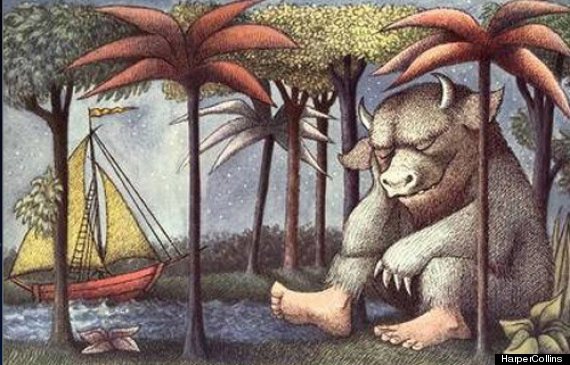
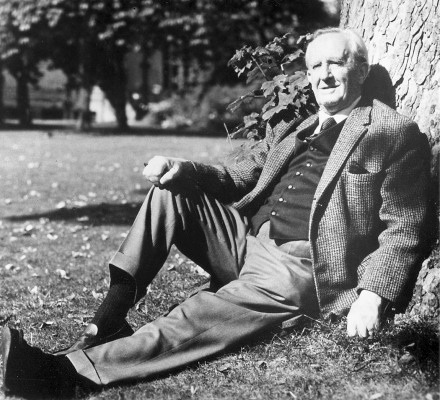
The main question that looms for me is, "Why are programs, institutions, academics continually resistant to the treatment of children's literature as Literature at all?" I have had the encounter multiple times myself, that subtle eyebrow-raise, or roll of the eyes, the condescending chuckle or snort that indicates the peer or acquaintance with whom I speak cannot believe studying children's literature could be real! What I have come to understand, through my own experience, that children's literature is only that which the adults designate as such. Maurice Sendak famously stated that he did not write for children. Tolkien as well wrote an essay, "On Fairy-stories," that itself touches on the fact that there is no writing for children. We give them just what we think they can take, and they develop their own tastes much like anyone else at any other age does (his essay can be found in many collections, but you can also read about it here).

So the writing of children's literature, on the one hand, is no different from any other literature and we subsequently decide where it fits later. On the other hand, the freedom and exploration that exists within children's lit (ironic on many levels, come to think of it) allows for ingenuity and demands a great amount of skill to seamlessly include struggles, politics, social issues quietly, under the surface, so that the unskilled adult eye can pass the "safe" text to the child eager to see what the adult cannot.

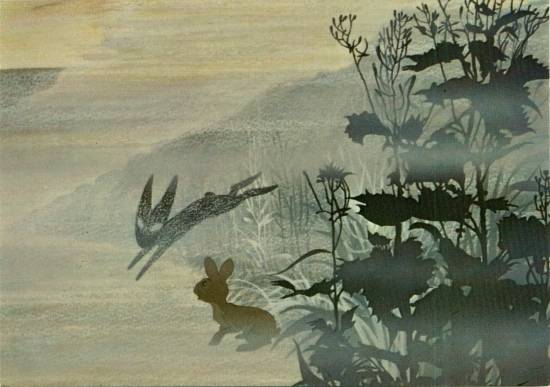
Black Rabbit of Inle
And by the way, children's literature also makes some of the coolest, weirdest, most memorable creatures in literature, in case you didn't know. (#10, by the way, is directly related to a short story written by Gabriel Garcia Marquez -- "A Very Old Man With Enormous Wings" -- which he subtitled "A Tale for Children.")

Sunday, September 29, 2013

Recent Children's Lit Books of the Critical Nature

Given The Unjournal of Children's Literature's soon-to-grow book review section, my recent project has been to keep up with new scholarly books in the field of children's literature. Finding some intriguing titles, I'd like to share some of my discoveries. In our burgeoning field there are several amazing new books to discuss, so I first have to apologize for only highlighting a few this time around:

Second-Generation Memory and Contemporary Children's Literature: Ghost Images by Anastasia Ulanowicz published by Routledge in March, 2013. This book, declaring that second-generation memory "is characterized by vicarious, rather than direct, experience of the past," caught my eye because of my curiosities about the impact of memory on children's literature at large. Usually stuck on notions about how an author is in touch with their own childhood memories and how this may impact their writing, Ulanowicz's book promises to challenge my own assumptions about memory itself by claiming that memories can be adopted instead of formed from personal experience. Dedicated to examining how child protagonists adopt the memories of their elders, "this study shows how novels such as Lois Lowry’s The Giver (1993) and Judy Blume’s Starring Sally J Freedman as Herself (1977) — both of which feature protagonists who adapt their elders’ memories into their own mnemonic repertoires — implicitly reject Cartesian notions of the unified subject in favor of a view of identity as always-already social, relational, and dynamic in character." Ulanowicz is an Assistant Professor at the University of Florida.

The Children's Table: Childhood Studies and the Humanities edited by Anna Mae Duane, published by The University of Georgia Press in June, 2013. Always a fan of interdisciplinary work, The Children's Table had immediate appeal for me. Referencing the image of children relegated to a separate table at holidays and other adult-run events, this book's organizing principle embraces this image and claims a space for scholars to discuss childhood and its place in various adultcentric fields and at the same time challenges this "seating arrangement." Essays feature scholars from fields such as architecture and law as well as children's literature and cultural studies. Well-known in the field of children's literature is Robin Bernstein, who wrote an essay for this collection titled "Childhood as Performance." Duane is an Associate Professor in the Department of English at the University of Connecticut.

Bloody Murder: The Homicide Tradition in Children's Literature by Michelle Ann Abate, published by The John Hopkins University Press in February, 2013. As a passionate advocate that children's literature is no genre of mere sugar-coated fantasies, it's exhilarating to see a new book that not only blasts this misconception, but also promises to examine and tease out meanings of the killing trope in children's lit. Abate's book was released in a climate of Hunger Games hysteria, including protests about the trilogy's violence. Using this hysteria as an introduction, this article in the Boston Globe interviews Abate about her book. Abate is an Associate Professor at Hollins University.


Friday, September 27, 2013

Banned Book of my Week: Bridge to Terabithia

Despite knowing that this is Banned Books Week, I completely overlooked the fact that my children's literature graduate seminar had actively discussed a frequently challenged book this week: Bridge to Terabithia. And what a wonderful experience that was, since this was one of my all time favorite books as a child; reading it as an adult, I can easily say it remains high up there.At any rate, it did not dawn on me until now the status of Bridge and its relevance to this week.

Now that I've had time to ponder it, I can't help but feel perplexed by the reasons to ban such a novel. Having read it as a child, I latched onto the imaginary dreamscape the children concoct and make into a near-reality; the power of imagination felt like the most amazing gift of all and I constantly rooted for Jesse to bring the breadth of his artistic potential to life (while also yelling at him for not inviting Leslie. Just take her to the museum too, for goodness sake!). Ah, but I see that I've lightly touched upon one of those troubling "challenge-able" notions: power of imagination that can equate to magic. Because naturally that implies a disregard and turning away from faith and turning toward the occult. Naturally.

Viewing it through critical eyes now, I have a deeper appreciation for the purpose of that imagination, and the limits to its power. I can comprehend the conflict struck between the awesomeness of Nature -- the marker of rural, regional life -- and the cosmopolitanism the Burkes symbolize (as they hail from "the city"). I can see how we might break down the barrier between adult and child behavior and identify the wisdom that comes from forging a physical, tangible relationship with Nature in order to keep on going. Maybe the city identity acts as invader of the regional world, but hey, maybe not. Regardless, I see doorways leading to enormous ideas, challenging ideas, ideas that redefine what we might instinctively consider childhood, maturity, human development.

But THESE are hardly ever the reasons why certain peoples challenge these books. It goes back so often to the danger of exposing kids to profanity, to "magic" and blasphemous respectable characters, to issues of identity that don't coincide with the beliefs of some (here's an oversimplified list of reasons). These are so insubstantial though, and therein lies the truth of so many instances and issues of censorship -- a fear and loathing for the superficial characteristics of a novel that leave room for ghastly misinterpretation and vilification to enforce one's own agenda. In the case of children's literature, the excuse comes from wanting to shelter children, to guard them from the reckless perils of ungodly behavior. I for one loved the difficult books most, the ones that make your heart ache and then sing and then scream and then sigh.

And one blogger discusses this situation: the very things that get focused on are harmless and misunderstood and in fact, the very reasons one MIGHT ban a book like this are totally untouched. Of course, she jokes about the misleading title of Bridge to Terabithia (fair point) but the end result is that the novel offers so much more than the trouble-seeking eye permits. And children deserve the choice to decide for themselves if they want to take what it offers, what any book offers, for their own personal benefit. 

Saturday, April 13, 2013

ChildLit GSA Forum: Field Trip!

Next Week: Final ChildLit GSA Forum of Spring 2013 

When: Saturday, April 20, 10:00 am
Where: Bowers Museum, 2002 N. Main Street, Santa Ana, CA 92706
Topic: "Maurice Sendak: 50 Years, 50 Words, 50 Reasons"

The SDSU ChildLit GSA is at it again, transforming our Discussion Forums into a fun and stimulating excursion for all. This time, we are planning our own little field trip! If you have ever read (and consequently loved) a book written or illustrated by Maurice Sendak, then you really will want to join us this coming Saturday.  We are going as a group to visit the Bowers Museum in Santa Ana to see the Maurice Sendak art exhibit: 50 Years, 50 Words, 50 Reasons (it ends April 28th! Not much time left!).

I blogged about the exhibit recently, so you can find all the details about it there. The GSA plans to visit the museum and then have a light lunch in the area to talk shop about Sendak, picture book illustrations in general, and the next wild thing in the horizon.

If you are interested in joining us, please comment on this post or email sdchildlitgrads@gmail.com ASAP; we hope to obtain funding for travel and tickets (looking forward to a fun train ride up the Amtrak possibly!). We do need to know by Wednesday April 17th if you will come with us so we can have tickets arranged and finalize meeting times. Of course, you are welcome to come separately and meet us there too.

For more Information about the ChildLit GSA, please visit us at:


Monday, February 4, 2013

Tolkien Forum and a Few Thoughts

Last Monday the ChildLit GSA held our public discussion forum centered on all things Tolkien. For those of us peripherally interested in, entranced by, and in awe of the monumental library that is J.R.R. Tolkien's comprehensive spectrum of works, this was an ideal opportunity to come clean about our general unawareness of Middle Earth and to openly explore its themes, roots, purposes, and more. Special thanks to Jacqui Yawn, Jill Coste, and Professor Alida Allison for joining us.

The evening started with another rousing Pub(lication) Quiz, highlighting the pop cultural influences of Tolkien's works and general Lord of the Rings and The Hobbit trivia. Basically it served as the perfect primer for discussion before we began our journey into Middle Earth, a balanced dose of fun, challenge, and revelry leading into illuminating discussions. Having spent time researching on various aspects of Tolkien and his works, we were able to put forth a fair number of questions to one another, beginning with topical pop culture issues like the apt or incongruent comparison between Tolkien's works and the Harry Potter Series,the cultural phenomenon that his works have spawned and how that has impacted the fantasy and science fiction genres, and Tolkien's potential opinion of the current films. By the way, if you can make it to Indiana on March 1-3, Valparaiso University is holding a Tolkien Conference.

Conversation moved into more critical issues, including one raised by critic Jared Lobdell questioning whether these works should be categorized as fantasy or not. That led into Tolkien's own perspective of his works, which we gleaned from The Letters of Tolkien, a fascinating and worthwhile read for anyone wanting to see the inner workings of the author and witness his stories unfold and develop. As a philologist, it was no surprise to read how invested and devoted he was to the construction of languages, but we did not anticipate learning that he built the stories literally around the elvish language. In some ways, Tolkien described the point of the books as a "linguistic aesthetic" before moving on to issues of life, death, immortality and the makings of a hero. He argues against critics who claim the apparent lack of religion in the texts, stating that they exist in a "monotheistic world of 'natural theology.'" All in all, I would recommend Letters for insight into his dynamics with his peers, his editors, and his fans; the ramifications of the World Wars on his writing; and classic lines about the nature of graduate student work (would helping us with research really be robbing us of our excuse for existing? He seems to think so).

In a nutshell, the evening sparked debates over many areas of his works and challenged us to consider the purpose of fantasy, of "fairy stories", and the many motivations and inspirations behind writing. We wrapped up with riddles reminiscent of The Hobbit, as well as a few written by Tolkien himself (originally in Old English, no less!). Eventually these will be shared on the ChildLit GSA website, so keep an eye out for that. And finally, for a sweet treat, we shared some sugar cookie "Lembas Bread" to sustain our journeys home. Hopefully all forums will be as fruitful in company, discussion, and baked goods.

The discussion did leave me with some larger questions about language, primarily in fantasy literature. I was particularly awed by the notion of building a story around a language (rather than vice versa as would be expected). I understand that for someone so invested in the lifelong pursuit of understanding languages, this would almost be second nature; nevertheless, the term "linguistic aesthetic" continues to play in my mind. Do The Hobbit and The Lord of the Rings reflect the craft and beauty of Elvish or does language seem supplemental? Can or does all high fantasy require such treatment and focus on words? Is that how we construct myth? I would welcome any thoughts on your views of the linguistic aesthetic.

Finally, a parting thought: Tolkien once wrote on the possibility of an animated film as a welcome idea, finding the risk of vulgarization less painful than the sillification of the BBC. What do you think he means?

Monday, January 21, 2013

ChildLit GSA Forum on Jan 28th: "Talking Tolkien"

Next Week: First ChildLit GSA Forum of Spring 2013 

When: Monday, January 28 @ 7:00 pm - 9:00 pm
Where: Living Room Cafe @ 5900 El Cajon Blvd 
Topic of the Night: "Talking Tolkien"

The GSA Discussion Forums reconvene for the new semester, hoping to bring energetic peers together for lively and fun-filled discussion on the epic J.R.R Tolkien.

The GSA Forums are a chance to engage with like-minded folks on all realms and levels of Children's Lit. This month we want to delve into the fascinating life and works of J.R.R. Tolkien. We will converse about everything circling around the man and his universe: the books, the movies, his development of languages, influences on and from history, fan fiction, the cult followings, and really anything else you can think of. Feel free to bring anything to share, whether on or off topic--the forum is meant to be a welcoming and casual gathering. But don't worry! The GSA officers are coming prepared with topics too, as well as a treasury of fun activities... and who knows, maybe another prize cupcake or more.

This Forum is open to all folks interested. That means faculty, grad students, undergrads, and you! So whether you have tons to discuss or you just feel like listening in, please drop by! It also provides an excellent opportunity to meet like-minded peers and scholars of the field.

We'll be holding the event at The Living Room Cafe from 7:00 pm to 9:00 pm.

Looking forward to meeting up, hanging out, and Talking Tolkien

For more Information about the ChildLit GSA, please visit us at:
The GSA Website: http://sdchildlitgsa.wordpress.com/
On Twitter: @SDSUChildLitGSA

Tuesday, November 27, 2012

Details for Peter Pan & Wendy Discussion Circle, Thursday Nov 29

This Thursday (Nov 29) at 6:30 pm in the SDSU Black Box Experimental Theater, The National Center for the Study of Children's Literature, in collaboration with director Margaret Larlham, SDSU's School of Theatre, Television, & Film, and our own Children's Literature Graduate Student Association, will be leading a discussion circle about J.M. Barrie and Peter Pan. This discussion can be part of your experience of seeing the production of Peter Pan and Wendy now showing at the Don Powell theatre or simply for your own edification (attending the show is not mandatory, and the discussion circle is FREE). Please tell your students and friends, and plan on attending yourselves. It should be a wonderful event, with or without (though especially WITH) the added delight of Peter Pan and Wendy.

Participants include Joseph Thomas, the director of the NCSCL, children's literature scholar Mary Galbraith, the director Margaret Larlham, and SDSU English graduate students (and ChildLit Grad Student Association members) Kelsey Wadman, Alya Hameed, Alix Lombardo, Lauren Benard, and Jill Coste.

Please attend! For more information, follow the link above to the School of Theatre, Television, & Film's Peter Pan & Wendy site, or contact Joseph Thomas at jtthomas@mail.sdsu.edu.

Thursday, November 15, 2012

Current ChildLit Activities around SDSU

Some goings-on around campus...

1. If you've visited the English Lit department's website recently you might have noticed a news item freshly featured on the front page, highlighting the impressive activities of Professor Jenny Minitti-Shippey and students of her Class on Literary Editing and Publishing (ENGL 576).  Her students have created an insightful and creative array of web journals centered around different genres and aspects of young people's literature. From the multicultural (The Playground Diaries) to dystopian (The Dauntless Review) and all that bizarre stuff in between (The Bizarre Assemblage, for example), these new blogs demonstrate the popular and growing interests of the current era. There are seven literary journals listed that all feature book reviews, interviews, event write ups and more, so peruse the sites and see which ones fit your fancy. Speaking of event highlights...

2. The SDSU Childlit GSA held its first event last Thursday, Nov. 8, at Lestat's Coffehouse and it was a great success. We were introduced to some new faces (and even a random passerby who shared his interests with us too!) and spent the evening immersed in various topics intersecting Pop Culture with Children's Lit. We kicked off the event with a pub(lication) quiz created by GSA President Kelsey Wadman, testing everyone's knowledge of kidlit as it exists in movies, music, and beyond. Congrats to super member Megan Parry for taking home the honor of first place accompanied by a ginormous cupcake. From there we delved into discussions on TV shows and the rise of fairy tale adaptations (Phillip Pullman's new book would have been a great asset for this discussion, come to think of it); book-to-movie adaptations, including the pros and cons when Disney gains the production rights; favorite Disney films/characters and why; and the occasional tangent into conference experiences or imaginary friends. It was a fruitful discussion which culminated with reviewing Maurice Sendak's appearance on the Colbert Report, which served as icing on the (cup)cake.

3. Don't forget! The Peter Pan & Wendy theatre performance is almost upon us as well! Performances begin tomorrow (Nov 16) and more news about the Pre-Show Discussion circle should appear shortly. In the meantime, check out the Production Blog for Peter Pan & Wendy.

Thursday, November 8, 2012

Reminder: First ChildLit GSA Forum Tonight!

Don't forget! Tonight is the first discussion forum/meet up hosted by the SDSU Childlit Grad Student Association. If you're in San Diego and want to meet other fabulous folks who  get as excited, enthralled, and ebullient over children's/middle grade/young adult literature as you do, then please join us tonight!

We're meeting at Lestats on Adams at 7:30 pm. Find all the details here!

Looking forward to meeting your friendly faces as we chat about all things Kidlit and Pop Culture... and more! And just to remind you, the possibility of a free cupcake (or similar sumptuous treat) awaits... Not that I need to entice you with a prize, right?

Tuesday, October 30, 2012

Reminder: Brown Bag with Kenneth Kidd tomorrow!

Don't forget! Tomorrow, October 31, we are holding our brown bag discussion event  with Professor Kenneth Kidd of the University of Florida. The event will be held at 12 p.m. in room 105 of the Arts and Letters Building and we encourage all interested folks to join. Professor Kidd will lead a discussion of Chapter II of his book, Freud in OZ: At the Intersections of Psychoanalysis and Children’s Literature.

If you still need a copy of this chapter, please email Professor Joseph Thomas and he will share the document with you. 

Poetry International Literary Publishing Salon Featuring Kristy King

Next week is the third installment of Poetry International's Literary Publishing Salons, featuring Kristy King.

King, literary agent and founder of Serial Press, will be speaking on campus Monday, November 5th at 5 pm in PSFA 310 (Professional Studies and Fine Arts). 

After working with Writers House agency for seven years and collaborating on an assortment of children’s and young adult literature, King left the literary agency and started Serial Press, an e-book publishing company focusing on adult and young adult literature. King has taken advantage of the current e-reader trend and developed a site that will produce serialized novels in e-book format over a 6 to 8 week period, allowing the authors to play with the narrative structure of the story. This is not an event to miss out on! Attend the event and learn the ins and outs of publishing, as well as how to start your own company, from a woman who has done it all over the past eight years. There will also be a free snack provided after the event. Don't miss this opportunity to gain insight into the world of publishing!

Monday, October 29, 2012

First ChildLit GSA Forum on November 8th

First ChildLit GSA Forum! 

Where: Lestat's Coffee House @ 3343 Adams Ave 
Topic of the Night: "Children's and Young Adult Lit in Pop Culture"

The first event of the new ChildLit GSA is just around the corner! Come join us as we spend an evening in lively discussion over all things Children's Lit!

The SDSU ChildLit Grad Student Association was recently formed to further the cause of cultivating a lively and engaged community of Children's Lit Enthusiasts. One of our many goals for the coming year and beyond is to hold open discussion forums on general topics concerning Children's Lit. On that note, November 8th marks our first ChildLit Forum, and the general topic of the night will be "Children's and Young Adult Lit in Pop Culture." It's a superb chance to converse about all those cool things you see flying around on TV, the movies, or general media that relate to or emanate from Children's Lit. Feel free to bring anything to share, whether on or off topic--the forum is meant to be a welcoming and casual gathering. But don't worry! The GSA officers are coming prepared with topics too, and possibly a prize cupcake or two.

This Forum is open to all folks interested. That means faculty, grad students, undergrads, and you! So whether you have tons to discuss or you just feel like listening in, please drop by! It also provides an excellent opportunity to meet like-minded peers and scholars of the field.

We'll be holding the event at Lestat's Coffee House on Adams from 7:30 pm to 9:30 pm.

Looking forward to meeting up, hanging out, and chatting up on KidLit! 

For more Information about the ChildLit GSA, please visit our Facebook Page 
And follow us on Twitter (you know you want to!): @SDSUChildLitGSA


Friday, October 26, 2012

Location for 10/31 Brown Bag Session with Kenneth Kidd

We're getting very excited about our brown bag discussion event next Wednesday, October 31! All who are interested are invited to join us at 12 p.m. in room 105 of the Arts and Letters Building. University of Florida professor Kenneth Kidd will will lead a discussion of Chapter II of his book, Freud in OZ: At the Intersections of Psychoanalysis and Children’s Literature.

If you plan to attend and need a copy of this chapter to read, please email Professor Joseph Thomas and he will share the document with you. 

Wednesday, October 24, 2012

Reminder: Brown Bag Session with Prof. Kenneth Kidd on October 31

One week from today at noon in Arts and Letters room 105, the National Center for the Study of Children’s Literature, in collaboration with the Department of English & Comparative Literature, will be holding a brown bag discussion session with University of Florida Professor (and Friend of the Department!) Kenneth Kidd. We’ll be reading Chapter II of his fabulous book, Freud in OZ: At the Intersections of Psychoanalysis and Children’s Literature (“Child Analysis, Play, and the Golden Age of Pooh”). Read more about Professor Kidd and this event here.

If you are interested in joining us and would like a copy of Chapter II, please email Professor Joseph Thomas and he will share the document with you. 

Friday, October 19, 2012

Brown Bag Session with Prof. Kenneth Kidd on October 31


On Wednesday, Oct. 31 at noon (location to be announced) the National Center for the Study of Children’s Literature, in collaboration with the Department of English & Comparative Literature, will be holding a brown bag discussion session with University of Florida Professor (and Friend of the Department!) Kenneth Kidd. We’ll be reading Chapter II of his fabulous book, Freud in OZ: At the Intersections of Psychoanalysis and Children’s Literature (“Child Analysis, Play, and the Golden Age of Pooh”). We’ll make the chapter available to those who are interested next week: details to be announced! (Or go out and buy a copy of the whole book: it’s super duper totes great!)

The Center asked Professor Kidd to write up a little introductory piece, and he kindly obliged us! So we’ll turn things over to the dear doctor K: 

A Few Words by Kenneth Kidd on Kenneth Kidd

In graduate school I had no idea one could specialize in children's literature, so I started out as a nineteenth-century Americanist with side interests in gender/queer studies. I wrote my dissertation on (mostly American) discourses of boyhood from the nineteenth century forward, and that eventually became my first book, Making American Boys: Boyology and the Feral Tale (U of Minnesota Press, 2004). The book explores how the pseudo-science of "boyology" intersects with and draws energy from what I call the "feral tale", the story of a "wild child" raised by animals or otherwise away from human culture. By that point I had gotten active with the Children's Literature Association and also the MLA's Division on Children's Literature. I had also moved from my first faculty appointment at Eastern Michigan University to the University of Florida, where I now teach. Both universities have excellent programs in children's literature and so I've had the benefit of interacting with other like-minded scholars locally as well as through my professional networks. I've published on a number of topics, and have coedited two essay collections that reflect particular interests – Wild Things: Children's Culture and Ecocriticism (Wayne State U Press, 2004) and more recently Over the Rainbow: Queer Children's and Young Adult Literature (U of Minnesota Press, 2012). Both are the first such collections on their respective topics.

My most recent book is Freud in Oz: At the Intersections of Psychoanalysis and Children's Literature, a portion of which I've suggested as reading for the brown bag session (we’ll be reading chapter two, “Child Analysis, Play, and the Golden Age of Pooh”). I had a lot of fun researching and writing this project, which I would describe as intellectual and cultural history rather than literary criticism. It is most definitely not applied psychoanalytic criticism; rather, it's a study of the many relays and exchanges between psychoanalysis and children's literature. Freud in Oz continues some themes and emphases from Making American Boys but is more comprehensively concerned with children's literature. Both projects are basically "history of ideas" scholarship.


I chose the second chapter for our brown bag discussion for several reasons. First, it showcases my general strategy in the book, namely to historicize the relation between psychoanalysis and children's literature while also theorizing new ways of thinking about both. I suggest that the attention of child analysts to the play and "forms" of childhood amounts to a kind of "children's literature" all its own. The chapter makes clear my fascination with the play of tropes (including the trope of play) across multiple discourses and professional registers. Also, the chapter is concerned with a canonical children's book, one of the so-called classics of the so-called Golden Age of Anglo-American children's literature. I'm interested in the uses to which such books are put, how they are mobilized in service of various aims and ends. Finally, Chapter 2 is connected to two book projects now in progress, The Children's Classic, and Philosophy, Theory, and Childhood. The former explores the children's literary classic as a cultural formation and fantasy; the second takes up theory "for beginners" and philosophy "for children," making the case that philosophy and theory depend upon childhood and children's literature more than has been recognized. I'll be reading from a chapter in progress from Philosophy, Theory, and Childhood when I visit next Spring,and I'm very much looking forward to that visit, and to the brown bag discussion on Halloween!

Kenneth's Book Picks (with the understanding, of course, that there's no such thing as Essential Books):

Pierre Bayard, How to Talk About Books You Haven't Read

Lauren Berlant, Cruel Optimism

Jacques Derrida, The Animal That Therefore I Am

James F. English, The Culture of Prestige: Prizes, Awards, and the Circulation of Cultural Value

Emer O'Sullivan, Comparative Children's Literature

Eve Kosofsky Sedgwick, Touching Feeling: Affect, Pedagogy, Performativity

Susan Stewart, On Longing: Narratives of the Miniature, the Gigantic, the Souvenir, the Collection

Wednesday, October 17, 2012

To Never Grow Up! Peter Pan & Wendy Production and Pre-show Discussion Circle


Peter Pan & Wendy will appear onstage this fall as part of the SDSU's Theatre, Television and Film season of plays. Professor Joseph Thomas, the director of SDSU's National Center for the Study of Children's Literature is helping to organize a pre-show discussion about J. M. Barrie's play and novel in collaboration with production director Margaret Larlham, dramaturgs Shelley Orr, Erica Paulson, and Jamie Gillcrist, and members of the ChildLit Graduate Student Association on Thursday Nov 29 from 6:30 - 7:00 pm.

Peter Pan & Wendy is a bold, imaginative retelling of the magical tale about a boy who never grows up, and his fantastical adventures with Wendy, her brothers and the Lost Boys in Neverland despite the attempts of the vengeful Captain Hook and his pirates to thwart their plans and hasten their demise. Fairies, pirates and mermaids sing and dance to music provided by a live band - “Tiger Lily and the Brave Ones”. Grassroots magic and puppeteers play out onstage as a love letter to the original story and to the creative theatrical process.

Performance Dates:
Friday Nov 16 at 7:30 pm
Saturday Nov 17 - Sunday Nov 18 at 2:00 pm
Thursday Nov 29 - Friday Nov 30 at 7:30 pm
Saturday Dec 1 - Sunday Dec 2 at 2:00 pm

More details and ticket information can be found on the SDSU Theatre Website