Showing posts with label teaching. Show all posts

Saturday, October 16, 2021

Being Both “Teacher” and “Student”


Education has always been an essential part of my life, even at a young age. I’ve always looked forward to going to school, as it felt like a safe space for me. I also looked at my teachers and professors in absolute awe as I saw them as the pinnacle of knowledge, the holder of all truths, and I wanted to be that. 


This semester I had the remarkable opportunity to hold the title that I felt so fondly of. During my final year as a graduate student, I was offered a TA position, in which I built my schedule and syllabus from scratch to teach English 220: Introduction to English. I quickly learned that I now hold two titles: teacher and student. It’s a strange phenomenon because from eight in the morning until lunch I am the teacher. I make lesson plans, email students, grade assignments, and am front and center in the classroom to lecture with curious eyes on me. But then my role is reversed once I attend my grad seminar and make my way to my desk. Often, my roles may intertwine, such as when my students ask insightful questions and inform me of things I haven’t heard of or considered. 


Being a full-time graduate student while teaching my very first course is a constant rollercoaster of emotions. One moment, I love what I’m doing; I enjoy attending my classes and giving my students help and resources, but then the next, I feel burned out, overwhelmed, and frustrated because I put myself on the back burner. Finding a balance between work, school, family, friends, and yourself is difficult, but it’s mandatory. Otherwise, you’ll end up feeling like your work is burdensome, but it isn’t; it’s simply a lot, and that’s okay. Being honest with myself, my peers, professors, and even my students has been a huge relief for me, and it reminds you that this feeling of chaos and distraught isn’t just a “you” thing. Having those open and honest conversations reminds me of how far I have come and that I should be proud of the progress I have made. Whether I am the teacher or student, it is all a learning experience, and I’m thrilled that at least I am fortunate enough to have this significant memory in my lifetime. 


-LA


Friday, September 17, 2021

New Graduate Assistant


 Hello everyone!


My name is Lara Amin, and I am currently a second-year graduate student pursuing a master’s in English at SDSU! My specialization is in Children’s Literature, and I’m most interested in literary nonsense like Lewis Carroll’s Alice’s Adventures in Wonderland. Other scholarly interests include gender and sexualities studies and feminist and queer theory.


This fall semester, I am also a TA for English 220: Introduction to Literature. In my course, I strive to help students understand literature on a deeper level, close read various texts using different mediums, and provide a safe space to learn and grow as critical thinkers. 


When I’m not in the classroom, I spend my free time studying astrology and tarot. Astrology has always been a particular interest of mine, and it’s essentially my love language. I utilize astrology with tarot readings to give advice and guidance to others, especially when they need it. To me, astrology and tarot are other forms of close reading, just like with literature. When I’m not studying astrology, I write poetry and post my photography on Instagram


All in all, I am grateful for the opportunity to be a Graduate Assistant at the National Center for the Study of Children’s Literature. ​​I can't wait to see what I will learn from this deep dive into the scholarly conversations surrounding children's literature!


-LA

Monday, May 10, 2021

Looking Back and Looking Forward at the End of my M.A. Experience

The title of “scholar” was one that intimidated me since before I began my graduate studies -- it felt as though I would never be able to achieve it. Yet the final question asked during the defense of my culminating project for this M.A. in English degree was “how do you feel now that you have joined the scholarly community with your own unique intervention?” To hear that question of recognition and welcome was truly an honor. I can honestly say that I achieved what I had hoped to over the course of my two years in this grad program. Along the way, I’ve learned that becoming a scholar is less about being inherently intelligent and more about learning scholarly conventions in order to make a contribution to the conversations that already exist. I can definitely attest to the fact that hard work, humility, and perseverance made it possible.


The Culminating Experience:

To provide some context for my journey, I thought it would be helpful to share a little bit about the M.A. process at San Diego State. I chose the portfolio option, meaning I revised my star paper to the point that I might feasibly submit it for publication. The portfolio workshop began in January. It was truly a rigorous and demanding process. I was able to engage with children’s literature seriously and had very high standards to meet regarding the quality of my research and writing. One of the biggest takeaways was certainly my development of endurance. While I hadn’t really ever had a problem with working hard, I was used to completing and then submitting assignments -- done. Though I taught revision in my composition classes, I didn’t actually have to do it myself as a student. In the workshop, however, I had to submit section after section of my paper for the weekly assignments, then go back and revise based on the feedback I received from my peers and professor while also preparing another section for the following week. It got to the point where I dreaded reading my own words, and did all of my other assignments to avoid having to revise.

My main support throughout this process was the peers who endured it with me. We were all on the same schedule, which meant that we had to meet the same deadlines. Even so, the chance to chat in casual breakout room conversations at the beginning of class allowed us to destress. It is easy to complain about the detriments of online learning, but I believe having to undergo the portfolio workshop on Zoom while still in a global pandemic gave us the opportunity to be more vocal about all of the other things that affect the writing process. We were able to be vulnerable about impostor’s syndrome, about the struggle of researching, and about losing sight of what we had loved about our papers. Through it all, we supported one another emotionally and intellectually so that we all had intensely revised portfolios to submit by the beginning of April.

The portfolio was comprised of the star paper, a secondary paper, and an annotated bibliography, all of which I had to be prepared to discuss during my defense. My advisor and an examiner read the portfolio two weeks in advance, during which time I prepared for the questions I would likely receive. We practiced answering questions aloud in the portfolio workshop, and all too soon, it was time for the defense. Upon beginning, I was immediately overwhelmed with gratitude for the generous, thoughtful engagement of my advisor and examiner with my work. They expressed their interest in my subject matter even though Asian American children’s literature is a niche in the field of children’s literature. Their questions were specific to the content of my paper, indicating that they had read it thoroughly and could see new directions in which my ideas could expand. They were also curious about my overall journey as a student throughout my two years in the program. The conversation was very enjoyable. Terrifying at first, but ultimately very fun. It was an experience I will always be grateful for, and I expressed that sentiment in response to that final question I was posed. I feel confident taking this paper to present at ChLA 2021 to test out its readiness for eventual publication. My scholarly journey has only just begun.


Graduate Assistantship:

The rigors of graduate-level literary study were certainly rewarding, but I also had other opportunities outside of the classroom for which I am thankful. The graduate assistantship that allows me to write these blog posts has been a fun, informal way to engage with the scholarly community. I had the chance to read and write on hot-off-the-press books, learn about the use of social media, correspond with leading intellectuals in the field via email and Twitter, attend a conference, join professional organizations, and be involved in lectures by notable scholars. More importantly, being a graduate assistant allowed me to see and validate passion for the study of children’s literature. I am forever grateful to Dr. Joseph Thomas, our Director, as well as my fellow graduate assistants, Sofia and Natalie, for sharing this space with me.


Teaching:

As I’ve written about before, SDSU gives graduate students the opportunity to teach first-year composition and literature courses. I won’t take up too much space reiterating it here, but thanks to those opportunities, I can pursue teaching as a career with confidence. I received extensive pedagogical training before and during the courses I taught, and professional development events were frequent and timely. I am certain that I can take all that I learned at my time at SDSU to whatever campuses I am at in the future!


A final word:

It’s hard to not get sentimental, as this is likely the last blog post I will write for the National Center for the Study of Children’s Literature. If even one person reads to the end, I will always be grateful that my words were worth your time. Thank you for this space, and I truly look forward to ongoing engagement with the study of children’s and young adult literature as a newly minted scholar.

 - (A.N.)


Thursday, December 3, 2020

Professionalizing Percy: Teaching a Childhood Favorite


Professionalizing Percy: Teaching a Childhood Favorite


Cover of The Lighting Thief by Rick Riordan

As mentioned in a previous blog post, I had the opportunity to teach Introduction to Literature for the first time this semester. One of the most challenging aspects of this opportunity was creating a course reading list. As I settled on a course theme, “The Hero(ine)’s Journey,” I immediately included a classic 21st century children’s literature text: The Lightning Thief by Rick Riordan, which details the journey of a modern-day Greek demigod living in New York. This book was placed in juxtaposition to the previous unit of canonical male and female heroes, comparing the intersections of youth, weakness, learning disability, and gender with traditional definitions of heroism. I was aware of, yet consciously brushed aside, my concerns of including a text that I had such a nostalgic pull towards. It was relevant to my course theme, but what if this middle-grade wasn’t challenging enough for university-level education? Though I claim to specialize in children’s literature, I fell prey to the fear that analyzing a middle grade that I liked would stray from the professionalism that this teaching position would require. Even so, I kept it on the reading list, which was approved.

As the course progressed, I relished the chance to reread The Lightning Thief and invite critical discussion of its successes and failures. I had never revisited this novel in a scholarly context and was excited to do so with students who never read it before, as well as with those who had the same cultural nostalgia for it as I do. However, I also felt a lingering desire for approval, more for this text than for others. Would the students like it? Is it too childish, or is Percy’s voice still likeable in 2020? These concerns led to careful lesson plans that drew attention to Riordan’s specific details in characterization and the definition he posits of “hero.” Student engagement seemed to be strong in these classes, with students participating in a variety of formats such as polls, group discussion, and class conversation. The result was that several students chose to write on The Lightning Thief for their literary analysis essays: some chose to analyze one or two of the female characters for the feminine strength prompt, while another chose to use Percy as an example of how the Hero’s Journey template fails to account for some significant heroic traits.

The discussion and critical work that arose from The Lightning Thief was all successful, and yet, what lingers as I reflect on this course is my sense of relief that students liked the book. Not that the book was challenging, or that it offered a complex and nuanced representation of heroism in middle grade novel, but did they like it? I had already known that this novel would provide excellent content for challenging the definition of heroism without eschewing tradition entirely. Yet putting this on the syllabus, I wanted students to appreciate the novel for the affective response it provokes, whether on a first read or a fifth. Perry Nodelman and Mavis Reimer write on this topic extensively in The Pleasures of Children’s Literature, which I encourage you to read at your convenience.  

I rely on my own fledging experience as an instructor-scholar to conclude that it isn’t  wrong to be attached to certain books. I don’t think that the impulse to share a book that I find valuable needs to be justified. And yet it’s healthy to recognize flaws in books that are pristine in my memories. After a year and a half of graduate study, and after having taught it to students who love it and to students who never read it before this class, I still think of The Lightning Thief fondly. A treasured book will still be treasured whether or not others feel the same. In the midst of a pandemic, it doesn’t hurt to be reminded that people who are grieving can change the world for the better. We don’t have to use books to escape into another world and find heroes. Maybe like Percy, even with all of our flaws, we already are heroes in the world we live in currently. We just need the reminder.

-       (AN)

Works Cited

Nodelman, Perry and Mavis Reimer. The Pleasures of Children’s Literature. Pearson, 2003. 

Riordan, Rick. The Lightning Thief. Scholastic Inc., 2006.


Friday, November 13, 2020

Teaching Literature Online


This semester, I taught a section of Introduction to Literature for the first time. I had been looking forward to this opportunity since I had heard of it, but creating my own syllabus was more difficult than I had imagined. My literary interests are scattered, so nothing I could come up with was a broad enough theme to trace across a survey of literature. Thankfully, I had support for this brainstorming process and for the theme I eventually came up with during my Introduction to Graduate Studies course.

My course is titled: “The Hero(ine)’s Journey.” Unsurprisingly, most of the texts ended up falling into the category of children’s literature. We began the semester by reading a section of Joseph Campbell’s The Hero with a Thousand Faces to introduce “The Hero’s Journey,” as it would be the foundational theory from which we would begin our analysis of heroes in literature. Campbell was followed by a poetry unit on the characters of Beowulf and Psyche to compare older notions of heroes with heroines. Those texts were then examined in contrast to the contemporary novels The Lightning Thief and Children of Blood and Bone.

Truth be told, I can hardly remember what the first day of class was like, though it was evident that the students and I were both cautious about the new virtual environment we were learning in. The pressure to make a good first impression was both compounded and eased by Zoom. As the host of the meeting, I felt in control about how I would present myself – but at the same time, I had no experience with the format of a hybrid online course. I could see how I appeared to students, but it was much harder to tell how they perceived me. I was upfront about my position as a graduate student specializing in children’s literature, and the students seemed to respond favorably. There was more shuffling during the add/drop period than I had experienced when teaching rhetoric and writing studies last semester, but I took nothing personally as I knew that academic advising was difficult to access. As the class roster settled, we fell into a routine that the students and I felt comfortable with.

            Here’s a look into a regular week of our hybrid online course! On Mondays and Wednesdays, we meet via Zoom for fifty minutes. Before class, students read the assigned text and then submit a short meeting prep/reading quiz. This is a small-stakes assignment meant to assess reading comprehension or prepare students for the topic of that day’s class. During our Zoom time, I often begin with a plot check for the more complicated texts, then introduce whatever concept I have planned for the day. Occasionally, I squeeze in a video, poll question, or article relevant to our topic. We spend most of our time on the discussion questions I have prepped ahead of time. Discussion takes various forms: verbal conversations, chat quick replies or detailed responses, and breakout groups.

I found that it was difficult to build a sense of community on Zoom, particularly when students were not able or willing to turn their cameras on. As a result, group work has been awkward and generally results in lackluster responses. What seems to work best with this group of students is for me to lead them through the concept or article for the day, converse with discussion questions, and then assign some individual work to be completed and sent in the chat box. Fifty minutes is a short amount of time to get this done, but I have been impressed with how students engaged with the text and the concepts I threw at them. On Fridays, students submit a discussion post on Canvas responding to a question or on whatever free-write topic they would like to bring up. This is a chance to think deeply about the text, elaborate on topics briefly discussed, and to practice MLA citing. They can also “like” each other’s posts.  

Having just finished our “reading half” of the semester after Children of Blood and Bone, we paused reading and discussing texts to begin the “writing half.” Their first major assignment was a literary analysis essay. A couple of weeks were dedicated to the writing and conferencing process, and students submitted a three to four-page paper on one of three prompts. Online peer review was something of a nightmare: if one student submitted late or in the wrong place, the other students would not have access to their peer’s paper. Canvas closed the peer review deadline a day early, so we had to work around it by using email. Conferencing, on the other hand, was much more efficient with Zoom. I made a simple sign-up sheet and hopped into Zoom when I knew a student was coming. I was able to share my screen to point students to where I had left feedback on their rough drafts, and could affirm whether or not they could see it on their end. It also seemed to work better for people’s schedules; they could open up the Zoom app during a work break and didn’t have to worry about commuting.

Once the literary analysis essays were successfully submitted, we took a “break” with a picture book and graphic novel section analyzing ethnicity and disability through Super Cilantro Girl and El Deafo. The conversation about representation that these texts engendered led into the research essays that students are currently developing as I write this. The prompt is quite open-ended: “What kind of representation should we see more of?” Students are tasked with selecting a topic and genre – for example, an essay that focuses on Chicanas in picture books could use Super Cilantro Girl as the main text – to argue that representation is lacking or insufficient. I am excited by the range of topics and genres that students have expressed interest in, and hope that the writing and research process will be enjoyable because of how flexible the prompt is.

I cannot end this blog post without mentioning the fantastic internship course, ENGL 796, that is paired with the first semester of teaching as a graduate student in SDSU’s English department. ENGL 796 is guided by an associate professor and, this semester, is comprised of two M.A. students teaching Intro to Literature and two M.F.A. students teaching Intro to Creative Writing. This course has kept me abreast of current issues and innovations in pedagogy as well as gave me the chance to prepare a portfolio for future hiring. Most importantly, I can share my concerns and successes with peers as we use Zoom to teach our first ENGL classes.  

I am very grateful for the opportunity to teach an introductory course during my time as a graduate student. So far, despite the less-than-ideal online format, it has been wonderful to delve deeply into topics in literature that my non-English major students would rarely discuss otherwise. Though varied in academic year, all of them are taking the study of children’s literature seriously and have shared profound insights in class and in their written work. It is a bit sad to look back at how much we have completed, knowing that there are only four weeks left until the semester ends. Yet I can already see students making connections between their lives and the texts we read, which I hope they will take away with them even after they move on to other courses. My goal as a novice teacher is to encourage students to do this critical analytical work, discovering its relevance to their lives so that they can enact the change they want to see in the world. With this first class, I hope that analyzing “The Hero(ine)’s Journey” will lead to students becoming the hero(in)es they themselves need no matter where they go. 

Thursday, September 26, 2019

Interview with Tishna Asim, Lecturer


Interview with Tishna Asim, Lecturer

September 24th, 2019


The National Center for the Study of Children’s Literature at SDSU had the wonderful opportunity to sit down with Tishna Asim, a lecturer in the Department of English and Comparative Literature. We spoke about the ways that her background has influenced her literary and teaching interests, and spent time discussing how Dr. Mary Galbraith’s teaching and mentoring informs Tishna Asim’s work in the classroom.

What Tishna Asim would look like as a Disney character!


Can you share with us your educational background? How did you get to where you are professionally?

I did my undergraduate Bachelor of Arts at Revelle College, University of California San Diego. I went to law school, and I got my law degree from University of San Diego. I practiced law for ten years as a trial attorney, mostly in criminal defense but also in dependency defense. And then in 2013, I hit pause on the law stuff mostly because I was tired of looking at autopsy photo – I wanted a break from some of that gruesome reality – and I enrolled here at SDSU in the Masters program in 2013. I got my Master of Arts with a British Literature specialization in 2016 and started teaching as a lecturer in fall of that same year here at SDSU. My research focus in the graduate program was Victorian crime fiction specifically, and then even more specifically it was on Sherlock Holmes, and that’s probably because of my former career – you know, law and literature. You can take the girl out of the courtroom but you can’t take the courtroom out of the girl.


And you’ve been a lecturer at SDSU since?

Since the fall of 2016 so this is my fourth fall semester.


What are your research interests? 

I’m really interested in the Gothic; I’m really interested in the horror genre to the extent that it overlaps with the Gothic and how it overlaps – all of those overlap – with crime fiction. I’m really interested in mystery and the detective genres as well. But I also really like fantasy. So Tolkien, and C.S. Lewis, and of course Harry Potter. So to the extent that the children’s literature sometimes is represented in those specifically fantasy genres, I’m really interested in that. And other YA literature as well.


You teach English 306A, a children’s literature course for Liberal Studies students. What is it like working with students who will use children's literature in their own classrooms?

The theme of the class has varied a tiny bit over time. Right now, it’s evolved into examining Gothic within children’s literature, so Gothic themes, Gothic subtext, Gothic tropes in a place that you wouldn’t necessarily expect to find it: i.e. children’s literature. But I’ve also been interested in framing how child detectives work, in examining their world, so I’ve had a detectives class within children’s literature as well. In fact, if you turn around, you’ll see those are the texts that I’ve taught: Encyclopedia Brown, and Nancy Drew, and The Great Mouse Detective, and The Eleventh Hour, which is this gorgeous book. Every single page is covered with sumptuous illustrations and it’s a curious mystery to figure out who stole the birthday cake at a little eleventh birthday – it's so cute.


The poster mentioned above. 


But mostly I teach those themes as a way of investigating that the child psyche is as complex as the adult psyche, and to dumb it down for children is a disservice to them and doesn’t allow for them to have the same complexity as an adult would, which I think is ridiculous.

Teaching Liberal Studies students in particular has been very rewarding in the sense that a lot of the texts we examine become texts that they use themselves in their classrooms, or with children they encounter, siblings, or their own kids, or classrooms where they are already teaching. And I often ask the question of whether or not the text that we just completed is actually for children, even though it’s marketed to them. So there’s this distinction between capitalist marketing and whether or not this is something the kids should be digesting – and then that invites the question of censorship. What do we expose our kids to? What do we allow them to be exposed to in a classroom, in a bookstore, et cetera? And so that perspective is really valuable because they as future teachers are so rigidly boxed-in to what is allowed in the classroom and texts that are supposedly safe for kids might actually reveal subtexts that are really quite problematic, or emotionally charged, or sexual, or violent, et cetera. Little Red Riding Hood is a great example.


What is it like to create syllabi each semester? Do you often reuse books or create completely new ones?

80% of the books are ones that I’ve already taught, but every semester I include at least one new text mostly to keep me engaged. It’s something new to see ‘hey does this work’? So I do change it up every semester in all of my classes, even in my Intro to Literature 220 class, just because I don’t want to get bored.


Can you share one notable teaching experience here at SDSU?

Every day I don’t have to go to court is a notable teaching experience! They’ve all been really rewarding. And certain semester the students are – this semester in particular – the students are very engaged. They want to talk; they want to hear from each other and get that global perspective within thirty different opinions and voices in the classroom – thirty-one if you include mine. So it’s always really, really rewarding when students are as engaged as I am because I care about this. I think it’s fun, and when it stops being fun is when I’ll stop teaching. And I’ll go back to court.


What is your experience working with Dr. Mary Galbraith?

She taught a class when I was in my last semester in the graduate program on adolescence in children's literature, or adolescence in literature, or something like that, and it was fascinating because there were texts that we wouldn’t have considered to be adolescent texts at all: specifically Hamlet, and Their Eyes Were Watching God. These characters are ostensibly in their twenties and yet they embody the adolescent perspective, whether it’s through naiveté or a lack of life experience or in the case of Hamlet, he’s been so protected by his role as a prince. And we talked about development in ways I hadn't considered before. Her class was just so intriguing because it invited, it required, an alternative perspective on what is adolescence in the first place. So already you were challenging your own preconceived notions even about the theme of the class before the class even started, which I thought was brilliant. We continued to have that subversive, unsettled perspective throughout, which I thought was really refreshing. It wasn’t her lecturing at us about ‘you know this book was written in such-and-such year and this was happening and that was going on.’ It was really just an opportunity for us to totally take a text that we thought we knew about and shift it. What would it be like if Hamlet was actually sixteen? That’s kind of how it is if you read it now. Now I can’t not see him as an adolescent. But her class was so open to listening to all of our perspectives. She brought in guest speakers that spoke very eloquently about books even though they weren't traditional academy members, which I thought was great. We read lots and lots of cultural texts that again gave us that new chance at shifting our perspective. I thought she was fascinating as a professor because her own life has been marked by different landscapes and living in different places. Just being a sort of global citizen. She lived in England at one time and when I took her class, she had just come back from a sabbatical in England where she was walking in the footsteps of Dickens. It was so cool; she’s so cool. She knows what she’s doing; she knows what she’s talking about. Her units on chapter books and picture books are really empowering to the reader because there aren't a lot of wrong answers, which I think is a great thing about the humanities in general. If you have evidence, you get to be right.


Have you been able to interact with her a lot as a colleague?

Not as much as I’d like. We teach at around the same time, so we’re kind of ships passing in the night. If I see her, it’s just catching up on personal stuff, which is nice. She’s still a great mentor and role model for me on how I want to do this work. She publishes a ton. She’s pretty prolific. I think she published three articles last year. She’s busy engaging with these questions that don’t go away. Even after the child who reads this book becomes an adult, it still has impact. And she’s tracing that in really cool ways. She’s really smart.


Thank you so much to Tishna Asim! We’re grateful to showcase one of the many brilliant instructors teaching children’s literature at SDSU.

This is part one of a series of blog posts in preparation for Dr. Mary Galbraith’s talk, "The Deictic Imaginary: Literature as Creation," to be held in LL430 on Wednesday, October 30th from 4:00-5:00PM. Please keep an eye out for part two to come out next week!


 - (AN)

Thursday, November 14, 2013

CFP: Options for Teaching Young Adult Literature

Options for Teaching Young Adult Literature 
(MLA Options for Teaching Series)
Edited by Mike Cadden, Karen Coats, and Roberta Seelinger Trites
Proposal due: February 15, 2014
 
With this collection of essays, we seek to explore how successful instructors are incorporating Young Adult Literature into their pedagogy, not only in courses wholly dedicated to YA lit, but also in courses that include one or two texts as part of the broader ideological focus. We are especially interested in essays that seek to theorize and problematize themes, issues, and conventions prevalent in the literature.  
Young Adult Literature has gained an unprecedented readership in recent years. While the literary quality of the literature is certainly variable, its range of social issues and aesthetic forms makes it not only pleasurable reading, but also culturally significant. Professors of literary and cultural studies are including young adult literature in their syllabi, and state legislatures, responding to accrediting agencies, are mandating courses in young adult literature for their education candidates. While the scholarship on Young Adult Literature has gained in gravitas and sophistication, there has been no extended exploration of its pedagogy at the college level.
For this volume, then, we seek short essays (10-15 ms pages) that address the pedagogy of young adult literature in the college classroom. Essays may focus on theory, including which theoretical perspectives seem most important for illuminating the concerns of young adult literature and culture and how they can be introduced and explored to best effect; particular approaches, applications, and assignments that you have found successful in your classroom practice at the undergraduate and graduate levels; and/or special issues that arise in the discussion and/or inclusion of young adult texts in the college curriculum, such as multimodality, interdisciplinary crossover, censorship and selection, relevance to the emerging adult, and publishing concerns. The volume is being proposed for the MLA Options for Teaching Series; TOCs of volumes similar in conception to ours can be found at http://www.mla.org/store/CID44/PID332 (Teaching Life Writing Texts, ed. by Fuchs and Howes) and http://www.mla.org/store/CID44/PID438 (Teaching Film, ed. by Fischer and Petro).
350-500 word chapter proposals are due by February 15, 2014. Proposals should be for original works not previously published (including in conference proceedings) and that are not currently under consideration for another edited collection or journal.

Proposals should be submitted to:
Mike Cadden, cadden@missouriwestern.edu
Karen Coats, kscoat2@ilstu.edu
Roberta Seelinger Trites, seeling@ilstu.edu

Monday, July 15, 2013

Recent Children's Lit Publications

Adding to the wealth of scholarly material on children's literature are two recent publications, including a journal issue and an international book title.

1. Newest Issue of The Looking Glass online journal

Vol. 17 No. 1 has just been published, with articles that consider the intellectual elements that readers use to create their meaning from texts.
They have Lemony Snicket, Harry Potter, The Hunger Games, The Pied Piper, history and spirituality all being explored, with plenty of questions for you to ponder.

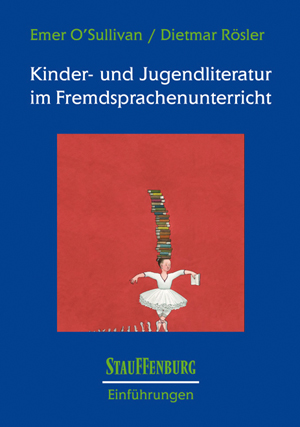
2.  New Book on Children's Literature in Foreign Language Teaching

If you are interested in the role of children's literature in foreign language teaching and if you read German, then you might be interested in this new book:

Kinder- und Jugendliteratur im Fremdsprachenunterricht, by Emer O'Sullivan & Dietmar Rösler
Tübingen: Stauffenburg 2013


Tuesday, June 19, 2012

from Academic Keys, Job Postings

NEW! - Dean -- Faculty of Arts
Chinese University of Hong Kong
Faculty of Arts
Location Hong Kong, Hong Kong Posted May. 25, 2012
Executive Director -- University Relations
Vancouver Island University
University Relations Division
Location Nanaimo, BC, Canada Posted May. 11, 2012
Manager -- Academic Administration
United Arab Emirates University
Faculty of Humanities and Social Sciences
Location Al Ain, United Arab Emirates Posted May. 7, 2012
Assoc. Vice President for Univ. Marketing and Communications
Oklahoma Baptist University
Marketing and Communications Department
Location Shawnee, OK Posted Apr. 12, 2012
Vice Dean of Faculty and Full Prof. in an FHSS Discipline
United Arab Emirates University
College of Humanities and Social Sciences
Location Al Ain, United Arab Emirates Posted Apr. 5, 2012
Executive Vice President and Provost
Naval Postgraduate School
Office of the President
Location Monterey, CA Posted Mar. 13, 2012
Director -- English Language Centre (ELC)
Xi'an Jiaotong-Liverpool University
English Language Centre (ELC)
Location Suzhou, Jiangsu, China Posted Feb. 22, 2012


NEW! - Asst. Prof. -- Women's and Gender Studies (Gender,...
Amherst College
Department of Women's and Gender Studies
Location Amherst, MA Posted Jun. 15, 2012
NEW! - Multiple Faculty Positions -- English
American University of the Middle East
College of Business
Location Al Kuwait, Al Ahmadi, Kuwait Posted Jun. 14, 2012
NEW! - Visiting Asst. Professor -- Continental Philosophy
Wellesley College
Philosophy Department
Location Wellesley, MA Posted Jun. 12, 2012
NEW! - Instructor of Modern Hebrew
Portland State University
Department of World Languages and Literature
Location Portland, OR Posted Jun. 5, 2012
NEW! - Contract Faculty Position -- Writing
Ball State University
Department of English
Location Muncie, IN Posted Jun. 4, 2012
NEW! - English Lecturer
Shanghai Jiao Tong University
Univ. of Michigan-Shanghai Jiao Tong University Joint Inst.
Location Shanghai, China Posted May. 22, 2012
Lectureships Modern Chinese History (2 Positions)
University of Sydney
School of Philosophical and Historical Inquiry
Location Sydney, NSW, Australia Posted May. 17, 2012
English Language Pedagogy Specialist
English Language Institute of Singapore (ELIS)
Language Programmes
Location Singapore, Singapore Posted May. 14, 2012
English Language Specialist
English Language Institute of Singapore (ELIS)
Language Programmes
Location Singapore, Singapore Posted May. 16, 2012
Faculty Appointment -- Division of Chinese
Nanyang Technological University
School of Humanities and Social Sci. (HSS) -- Div. of Chi...
Location Singapore, Singapore, Singapore Posted Apr. 26, 2012
Assistant or Associate Professor -- Spanish
Oklahoma Baptist University
Coll. of Humanities and Social Sciences -- Spanish Dept.
Location Shawnee, OK Posted Apr. 12, 2012
Asst. or Assoc. Prof. -- Hispanic Literary Hertiage & Con...
University of Houston
Department of English -- Creative Writing Program
Location Houston, TX Posted Apr. 10, 2012
Adjunct Faculty Position in English Composition
University of San Francisco
Arts & Sciences
Location San Francisco, CA Posted Mar. 23, 2012
Instructors -- English As a Second Language
American University of the Middle East
English As a Second Language (EPP) Program
Location Al Kuwait, Al Ahmadi, Kuwait Posted Mar. 13, 2012
Digital Communication Specialist (Assistant or Assoc. Pro...
New Jersey Institute of Technology
Department of Humanities
Location Newark, NJ Posted Mar. 1, 2012
Faculty Member -- General Education
Higher Colleges of Technology
Faculty of Liberal Studies
Location Sharjah, United Arab Emirates

Sunday, May 20, 2012

from LiteracyNews.com, excerpt with thanks

Reading Trends: What Should Your Child Be Reading in School?
The latest version of the most significant study on students’ book choices expounds from the well-known annual review on reading developments to a debate on what children should be reading. What Kids Are Reading 2012: The Book-Reading Habits of Students in American Schools, published by Renaissance Learning (website), reveals in-depth information and facts relating to the top 40 books read by children in grades 1-12. The document also encourages discussion regarding what kids should be reading by using commentaries by education professionals along with notable authors.

(Download the complete report for free)

Thursday, May 3, 2012

International Teaching Opportunities-- India

Here is an opportunity for American scholars interested in India -Guidelines for application below


Indian Studies Fellowship.pdfIndian Studies Fellowship.pdf
151K View Download

International Teaching Opportunities: China

Dear colleagues,
Please find the attached funding opportunities for short-term
teaching in China. OYCF will grant thirteen fellowship awards to
support short term teaching trips during the Academic Year of 2012-13,
including five OYCF-Ford fellowships in the amount of $2,500 each and
nine OYCF-Gregory C. and Paula K. Chow fellowships in the amount of
$2,000 each. The application deadline is August 15, 2012. Awards will
be announced on September 15, 2012.

Please let us know if you have any question regarding the OYCF
teaching program. Thank you.

Best regards,
Qiang Fu and Qifan Wang, on behalf of OYCF's Teaching Program

--
Qiang Fu
Department of Sociology
Duke University
Durham, NC 27708-0088
Email: qf6@soc.duke.edu
2 attachmentsDownload all attachments
2012_OYCF_Teaching_Announcement.doc2012_OYCF_Teaching_Announcement.doc
36K View Download
2012_OYCF_Teaching_Procedures.doc2012_OYCF_Teaching_Procedures.doc
58K View Download