Showing posts with label space. Show all posts

Saturday, September 23, 2017

Interview: Dr. Angel Daniel Matos, the newest Children's Literature Professor at SDSU


NCSCL’s Graduate Assistants, Chris Deming and Andrea Kade, sat down with Professor Matos in early September to uncover the mystery behind SDSU’s newest tenure-track faculty member. We find out how the SDSU student body sets itself apart from other institutions, and why Professor Matos chose to explore Queer Theory in the Young Adult genre.  
  
Where He Hails From: Aguada, Puerto Rico
Places of Education: B.A. University of Puerto Rico at Mayagüez, M.A. University of Puerto Rico at Mayagüez, Ph.D. University of Notre Dame
Teaching Experience: University of Puerto Rico, University of Notre Dame, and Bowdoin College. 

Chris Deming: Professor Matos, what inspired you to pursue academia as a career? Any particular moment stand out in your memory?
Professor Matos: When I was working on my Master’s degree at the University of Puerto Rico, I found teaching controversial and politically charged topics were easier and more effective at the college level. I was drawn to that particular freedom you have in the higher education environment. Then, of course, I fell in love with the research aspects of academia too.

Andrea Kade: You transferred from a small, private New England college to a large West Coast public university. Describe the experiences you’ve had teaching in these higher educational institutions. What do you find distinctive about SDSU’s student body?
Professor Matos: At the smaller, private college teaching experience the students were incredibly smart and invested in the course material, but classes are mostly comprised of traditional students. It’s the diversity at SDSU that sets it apart from these types of colleges—we have students who come from different backgrounds, students of different ages, and students who bring in a wider array of life experiences. I find the success of teaching literature [at a public university] relies on pushing students to draw from their personal and diverse experiences to highlight different ways of approaching and reading texts. In my queer literature course, for instance, we had this amazing bonding moment in class with a nontraditional student, who spoke about how as an undergrad, she would’ve never been able to take a course on queer literature. She brings such insight to our class, and she constantly reminds us of a history that current generations sometimes forget. It’s moments like these where a literature class can provide a measure of comfort and inspiration to students’ education.   
Andrea Kade: What are your current research interests and how have they developed or changed over the course of your educational experience? Can you describe any specific moment that initiated one of these changes?
Professor Matos: (laughs) That’s a great question! I actually majored in linguistics for my undergraduate degree, but towards the end of my program I realized that I was way too playful in tone when writing my papers. I was also drawn to how literature allowed me to explore a wider set of ideas and frameworks, ranging from the philosophical, the cultural, the textual, the speculative, the weird, to the imaginary. Literature seemed more daring, and it would allow to me study topics that better aligned with my identities, my political views, and my tastes. I specialized in Victorian literature in my Master’s program but kept revisiting the Young Adult genre and realized how far the bildungsroman piqued my interest in notions such as growth, development, and social ostracism. When I got into my PhD program, I immediately switched my research interests to queer children’s and young adult lit.      
Chris Deming: If you have any overlapping fields of interest, can you tell us why the intersection of these areas is important? How do you approach this intersection with your students and/or in your research?
Professor Matos: I’m deeply invested in the intersection of young adult literature and queer studies.  The queer YA genre is one that has changed drastically over time, transforming from a genre that warned readers about the detriments of queer life into a genre that celebrates the potentiality of queerness. A lot of YA lit is about assimilation, and radical queer frameworks are all about a rejection of the norm and a political alignment against the status quo. I’m very interested in the tensions that emerge in this overlap—YA is about socializing and assimilating, queerness is about dismantling and resisting. Lately, I’ve been focusing a lot of attention on queer sci-fi and fantasy, because more interesting things are occurring in this space. Many queer theorists have claimed that queer frameworks are speculative because through them, we are trying to envision a world and a future that is quite different from the realities we are currently living. We want to imagine to future that is livable for everyone—a future where people do not regulate or control what we can or can’t do with our bodies. A future where different forms of kinship and relationality can flourish. I’m becoming more and more convinced that speculative queer YA should be front and center in queer approaches to YA, especially since this genre enables political, radical, and non-normative modes of thinking. And authors are starting to take note of this queer and political potential. For instance, a novel that I’m currently writing on, David Levithan’s Two Boys Kissing, tells the story of several queer youths that are spectated by the ghosts of AIDS victims. These ghosts serve as a Greek chorus that simultaneously laments and celebrates how the queer youth culture of the present have it so good. In a way, this novel uses literature and language to craft a connection between the freedoms queer youth have today, and a history of cultural damage that continues to haunt the present. The beauty of speculative fiction is that this vehicle allows for the creation of a platform where you can explore these questions.
Chris Deming: What projects are you currently working on? Is there anything that you are particularly excited about or looking forward to starting?
Professor Matos: In addition to queer young adult literature, I’m currently researching video games and how virtual spaces in these games push us to rethink and reconfigure notions such as identity and childhood development. One of my current projects is examining The Legend of Zelda series [specifically Ocarina of Time and Majora’s Mask], where certain spaces allow the player to transition back and forth between childhood and adulthood. I’m researching how these video game spaces are traversed, and how this traversal requires players to dismantle the teleology that exists between childhood and adulthood. People think of childhood and adulthood as a one-way street, but speculative, digital spaces such as those we see in video games present childhood as a stage of development that can be revisited and relived, and one that is necessary to successfully complete a game’s objectives. Childhood is often presented as a stage that one must grow out of, but this game approaches it as a stage that one must not let go of. 16-year-old me would be very proud and amazed by the work that adult me is engaging with!
Andrea Kade: There are some critics in certain scholarly circles who might scoff at academically studying children/young adult literature, tell us why this particular area deserves attention.
Professor Matos: YA lit illustrates the limits of social acceptability, and the extent to which these limits can be transgressed. By assessing YA lit, we can explore how far cultural productions designed for young readers can push the bar, and articulate ideas that are generally deemed “unspeakable.” Another reason is more obvious: YA and children’s literature are some of the most popular and profitable genres. We need to deal with the fact that these books are bound to the regulations and limitations of popular culture and mass production, and how these texts play a major influence in influencing collective consciousness. It would be a disservice to scoff at children’s literature and young adult literature. These texts are what draw us into the world of literature in the first place. Our first exposure to the realm of the literary generally takes place through children’s books, nursery rhymes, comic books and picture books. As teachers and scholars of these literatures, we should highlight the complexity and richness in the ideas discussed in these texts, and the joys and surprises that we encounter when revisiting books we read as children. We have to acknowledge that people receive emotional nourishment from these works even though they are mostly produced and regulated by mass culture. At the end of the day, political value and rethinking social norms is the emotional heart of children’s Literature. There is a certain freedom to be found in children’s and young adult literature because people don’t always take these genres too seriously, so it can get away with pushing the boundaries more. At the same time, we must grapple with the problems that arise in books that we love and cherish, and not let nostalgia get in the way of analyzing these works. We have to learn to be critical about the things we love, but that doesn’t mean we love them any less; have fun with these texts, but understand their complexities and their issues.   
Chris Deming: What is a book you always circle back to, either with your students, for research or personal reasons? Are there any books you’d recommend for people interested in the fields you study, or for any other reason?
Professor Matos: Ah! This is such a difficult question. There are just too many books to recommend! I guess when it comes to YA literature, I would recommend all the works of Adam Silvera—an author I’ve been obsessed with for the past two years. His books, which are for the most part speculative, explore some of the more pressing questions and issues that haunt contemporary queer teens. Silvera is also adept at exploring matters of intersectionality, and his work highlights the ways in which queer identity is inflected by other domains of identity such as race, class, and disability. In terms of theoretical texts, I would recommend anything written by Sara Ahmed or José Esteban Muñoz—two queer and feminist theorists who have revolutionized the way I think about queerness, futurity, space, utopianism, emotion, and happiness.

WELCOME TO SDSU, PROFESSOR MATOS! 

For more insight into Professor Matos’ research, join us on October 4th at noon in Storm Hall 104 for the Children's Literature Criticism Panel or check out some of his publications below:

Matos, Angel (2018). “Subverting Normative Paradigms: Teaching Representations of Gender and Queerness in Young Adult Literature.” MLA Options for Teaching Young Adult Literature. Eds. Karen Coats, Mike Cadden, and Roberta Seelinger Trites.

Matos, Angel (2017). “The Undercover Life of Young Adult Novels.” The ALAN Review 44.2.

Matos, Angel (2017). “Something’s Flaming in the Kitchen: Exploring the Kitchen as a Stage of Gay Domesticity in Queer as Folk.” Queer Studies in Media & Popular Culture 2.1. (119-33).

Robert Bittner with Angel Daniel Matos (2016). “Fear of the Other: Exploring the Ties between Gender, Sexuality, and Self-Censorship in the Classroom.” The ALAN Review 44.1.

Matos, Angel (2016). “Queer Consciousness/Community in David Levithan’s Two Boys Kissing: ‘One the Other Never Leaving.’” Gender(ed) Identities: Critical Rereadings of Gender in Children’s and Young Adult Literature. Eds. Tricia Clasen and Holly Hassel. Routledge. PP. 59-74.

Matos, Angel (2015). “‘Without a word or a sound’: Enmeshing Deaf and Gay Identity in Young Adult Literature.” Lessons in Disability: Essays on Teaching with Young Adult Literature. Ed. Jacob Stratman. McFarland & Company. PP. 221-244.

Matos, Angel (2013). “Writing through Growth, Growth through Writing: The Perks of Being a Wallflower and the Narrative of Development.” The ALAN Review 40.3. (86-97).

Sunday, September 17, 2017

CFP: Northeast Modern Language Association; Deadline: September 30, 2017


Northeast Modern Language Association 49th Convention
“Global Spaces, Local Landscapes and Imagined Worlds”

When: April 12th-15th, 2018
Where: Pittsburgh, PA
Deadline for Abstracts: Saturday, September 30th, 2017

Keynote Speaker: Rob Nixon, the Currie C. and Thomas A. Barron Family Professor in the Humanities and the Environment at Princeton University. He is the author of four books, most recently Dreambirds: the Natural History of a Fantasy and Slow Violence and the Environmentalism of the Poor, which won numerous awards, including the 2012 Sprout prize from the International Studies Association for the best book in environmental studies.

Topics with areas concerning ChildLit/YA Literature and Popular Culture:
Editor's Note: We have selected only a few areas of interest, to see the entire list of topics, please visit their website.

Superwoman: Comic Myth or Idealized Icon? (Panel)
Chair: Nicol Epple (Indiana University of Pennsylvania)

We know the four tenets of True Womanhood and understand the Feminine Mystique. But, today, what gender role prescriptions still proliferate concerning domesticity and work, family affairs and public relationships? This panel seeks to create discussion which explores feminist theories and material applications in current American cultural landscapes. What changes have transpired from past feminist viewpoints and what speculations can made of feminist scholarship and cultural production for the future?

Reboots and Revivals: The Return of Television (Roundtable)
Chair: Lisa Perdigao (Florida Institute of Technology)

While film has an extensive history of remaking classics and blockbusters for new audiences, television’s recent reboots and revivals suggest new ideas about the limitations and possibilities of continuing narratives in a medium defined by seriality. Recent reboots and revivals include Arrested Development (2013- ), Heroes Reborn (2015-2016), Gilmore Girls: A Year in the Life (2016- ), Girl Meets World (2014-2017), Fuller House (2016- ), 24: Legacy (2016- ), Prison Break: Resurrection (2017- ), and Twin Peaks (2017- ) while series such as Will & GraceDynastyRoseanneCharmed, and American Idol are slated for returns in the near future.

Teaching and Learning Spaces: Real, Fantastic, and Imagined (Panel)
Chair: Carine Mardorossian (SUNY University at Buffalo)

This session is devoted to the exploration of teaching and learning as real, fantastic, and imagined spaces. It welcomes contributions that address pedagogical representations and practices, theories, issues, experiments, and debates in education.

Political Implications of the Portal Fantasy (Panel)
Chair: Emily Lauer (SUNY Suffolk County Community College)

Portal Fantasies offer a unique way to comment on the current political situation, in their capacity as invented worlds with a permeable link to our own. The portal can act as a funhouse mirror, reflecting our own world back to us in grotesque and illuminating ways, or it can offer stark contrasts to our own world which often take the form of escapist, superior alternatives. This session invites papers that explore how authors have used the portal fantasy to comment on the politics of our world in various ways.

'The World is Changed': Fantasy Literature in the Anthropocene (Seminar)
Chair: Stephanie Weaver (St. John’s University), Lisa Robinson (St. John’s University)

The Anthropocene, or "The Age of Man," focuses on the exploitation of resources and the possibilities of resiliency and sustainability in the wake of anthropocentric-induced crisis. This seminar seeks to unpack the various understandings and responses to the human-dominated geological age, specifically through the lens of the fantasy genre. Papers are sought that discuss the role of environmental crisis in various areas of fantasy literature and the multifaceted responses and solutions to preventing the destruction of worlds because of the Anthropocene.

Free Range: An Open Inquiry into the Nonhuman in Latinx Studies (Panel)
Chair: Lacie Rae Buckwalter (Cornell University)

In this panel, we propose to explore the roles of human-nonhuman encounters in the field of Latinx Studies and Literature at large. How do animal, human, botanical, and epistemological bodies alter the way we approach ontological interpretations in Latinx texts, visual art, and/or performances? In addition to these concerns, this call for papers seeks work that traverses a varied range of bodies and utilizes interdisciplinary frameworks in innovative ways. Topics might include, but are not limited to: race and animal studies, transgender bodies and queering the nonhuman, corporeal ecologies, critical approaches to landscapes, bodies of land, and water.

Arthurian Legend in the 20th and 21st Centuries (Panel)
Chair: Susan Austin (Landmark College)

The past hundred years have brought the legend of King Arthur to Broadway, television, comedy, and Disney; countless authors have appropriated or reimagined the legend and elements from it. How have films, television shows, games, comics, and books for all audiences and ages employed Arthurian characters, themes, motifs, and plots? How have these changes reflected shifting cultural attitudes and values? What do recent retellings and appropriations of Arthurian legend tell us about ourselves and the generations immediately preceding us? What do we want and need from King Arthur and his court?

Space and Psyche in Contemporary Latinx/Latin American Culture (Panel)
Chair: Thomas Conners (University of Pennsylvania)

Psychoanalysis ponders the ways in which subjects form while navigating the dynamic environments they inhabit. With movement across the Americas in constant flux, contemporary Latin American and Latinx literatures offer insights into this border-crossing psyche. Examining the implications of crossing, moving around, and standing in the spaces, we ask: how is a subject formed when straddling borders, languages, racial identities, and national affiliations? What are the formal, affective, and aesthetic manifestations of this in literature?

Human, Animal, Post-Human: Ecocriticism and Materialism in a Global Context (Panel)
Chair: Mark Epstein (Princeton University), Daniele Fioretti (Miami University)

This panel welcomes contributions that focus on the areas of tension regarding ecocriticism and the “post-human”: natural – 'human' sciences, materialism – postmodernism, global – national/regional, historical – contemporary. It also welcomes reflections on the possibilities for communication between species, and what “autonomy” and “(self)-emancipation” might possibly mean for non-human species, given the very limited forms of inter-species communication we have established so far.

Sequence and/or Simultaneity: Time and Narrative in Comics and Graphic Narratives (Panel)
Chair: Heike Polster (The University of Memphis)

This panel seeks new scholarly work on the representation of temporality in comics and graphic narratives, with a particular attention to the formal qualities of comics. Papers may address sequentiality, simultaneity, seriality, human vs. cosmic time, eruptions of the past into the present, or other experimental permutations of time in comics. Graphic narratives from other countries and traditions outside of the Anglophone world are welcome.

The Urgency of Now (and Then): Contemporary Representations of African American History (Panel)
Chair: Maria Rice Bellamy (City University of New York)

This panel seeks papers analyzing the contemporary significance of recent representations of African American history in literature, television and film as well as in the National Museum of African American History and Culture (NMAAHC). Papers are invited on such works as Colson Whitehead’s The Underground Railroad, Yaa Gyasi’s Homegoing, Nate Parker’s The Birth of a Nation, WGN America’s Underground, Ava DuVernay’s 13th, and the NMAAHC. Papers should discuss the relationship between the presented history and the contemporary moment and may address such questions as: What does the current prominence of such works say about this moment in United States history and society? How do the struggles of the past resonate with the protests of the present?


New Approaches in Zombie Studies (Panel)
Chair: Derek McGrath (SUNY University at Buffalo)
This session looks at zombies, including as they were defined by Night of the Living Dead, filmed in NeMLA’s host city Pittsburgh by local director George Romero. How have zombies changed in recent years, in their composition, narrative format, and metaphorical status? What new insights can be garnered looking to earlier conceptions of the zombie, and conceptions from Haiti and around the world? How have zombies served as commentary on medicine, social media, anti-intellectualism, economics, and society?

Spaces of Hope and Desperation in Science Fiction  (Panel)
Chair: Elif Sendur (SUNY Binghamton)

This panel aims to consider speculative/science fiction’s spatial imagination vis-à-vis hope and despair. Topics may include the kinds of dystopian spaces SF proposes, space and its spatial representation, gendered spaces within the SF genre, environment and its future imagined by SF, and the representation of the instability or hope. All forms of SF literature, including short stories, novels, films, anime, manga, and TV shows are welcome. 

Monsters and Monstrosity: A Tribute to Mary Shelley (Creative)
Chair: Richard Johnston (United States Air Force Academy)

1818 marks the 200th anniversary of Mary Shelley’s Frankenstein; or, The Modern Prometheus. To honor Shelley’s enduring novel, and to compliment the critical panel on the literature and culture of 1818, this roundtable welcomes creative work, in any genre, on monsters or the idea of monstrosity. In the interest of including as many voices and as possible, participants will be asked to limit presentations of original creative work to 10 minutes.

Postcolonial Queers: Representations, Remediations, Revolutions (Panel)
Chair: Christian Ylagan (Western University)

While Western theories such as Judith Butler’s performative thesis have been productive in opening up the discursive grounds on gender and sexuality, these frameworks often limn bodies in abstract ways that downplay their materialities and contexts. This panel thus hopes to build on the notion of a queer intersectionality whereby gender and sexual identity are inextricable from race, geography, linguistic modes, embattled histories, and cultural contexts.

Seelenlandschaften (Soul Landscapes) in German Children and Youth Novels (Panel)
Chair: Mona Eikel-Pohen (Syracuse University)

The panel invites proposals on German children and youth novels from the late 20th / early 21st century with a focus on innovative interpretation approaches (e.g. re-telling, drawing, or building in Minecraft), on respective movie adaptations, and on the impact of symbolic and real spaced for the mental and intellectual development of younger readers and its relevance for identity formation e.g. as reading text in middle and high school or higher education.


Sunday, April 12, 2015

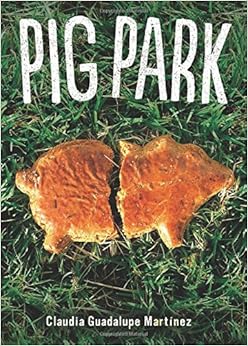
Space as the Product of Society in Claudia Guadalupe Martinez’s PIG PARK


In the introduction of Exinct Lands, Temporal Geographies, Mary Pat Brady claims that space is produced “in the everyday, in the social,” and as a result, the factors of race, gender, and sexuality become relevant to the making of space (6). This approach to space as a social construct upends the notion of it as “the grand manifestation of natural terrain” (Brady 6). With changing cultural values and social demographics, space can be modified to reflect the changes society has gone through. The most prominent of these changes in our society is the incorporation of a capitalist ideology in our interactions with space.

Claudia Guadalupe Martinez’s Pig Park explores the after effects of capitalism on a town that is no longer able to produce capital once The American Lard Company, the major contributor to their economy, relocates to another country. In a desperate attempt to save their neighborhood from turning into a ghost town, fifteen-year-old Masi Burciaga and her friends help the adults build a giant pyramid in Pig Park to draw in tourists.

In true capitalist notion, the people believe that if they build the pyramid, the visitors will come, and once again their stagnated town will be invigorated by the capital these tourists will bring. Rather than seeing the cultural association of the pyramid as a burial monument and sacrificial platform, the adults only see its symbolism for the capitalist system, and a symbol of their salvation.
Masi even points out that the people of their neighborhood “weren’t Egyptians or Aztecs to be building pyramids,” but as one of the adults states, “[N]o one this side of North America has a pyramid. Building a Gran Pirámide right here is the opportunity of a lifetime” (Martinez 17). Taking advantage of the lack of a certain commodity and capitalizing on its production for consumer use has been the most popular way that people have participated in the reconstruction of space. Just as the industrial age brought with it the fetishization of consumerism by making it accessible to more people, here we see the use of a cultural icon, the pyramid, being used for capitalist purposes for a town and society that does not have the historical or cultural ties to the creators of the great pyramids. To them the creation of the pyramid is not about building an icon of their culture, rather the marketing of a known tourist trap for their own benefit.

  
The map Martinez includes in the book shows their town to be surrounded from all sides by the American Lard Company buildings and railroad, reminders of the capitalist system that could not perform in this society. When the big business fails to be successful, so do the small businesses. As the land is transformed from a successful capitalist hub to a ghost town where people cannot make a living anymore, we see the transformation of the social aspect of space. Unable to afford the land that they lease for their businesses, the strain of the capitalist market seeps its way into the familial bonds that threaten to break up Masi’s family. As the only existing “natural” part of the town, Pig Park, is transformed into a shrine to capitalism, it shows that at the heart of the town, the success of its people will be ever dependent on the success of business.


As “space and social relations (re)constitute each other,” we see a different perspective on space as the mere setting for a story, some background image that is extra to the story rather than a crucial part of the story as a factor in the socio-cultural makeup of a town. Just as people can have an effect on space, then space, too, can create a change in people, as the possibility of a new town attraction brings with it the dangerous capitalist entrepreneurs that wish to exploit the common people for their company’s benefit. The ritualistic consumption and recreation of capitalist ideology shows people’s interpellation to a dominant culture that uses space as a means to an end.