Showing posts with label children's literature. Show all posts

Friday, April 15, 2022

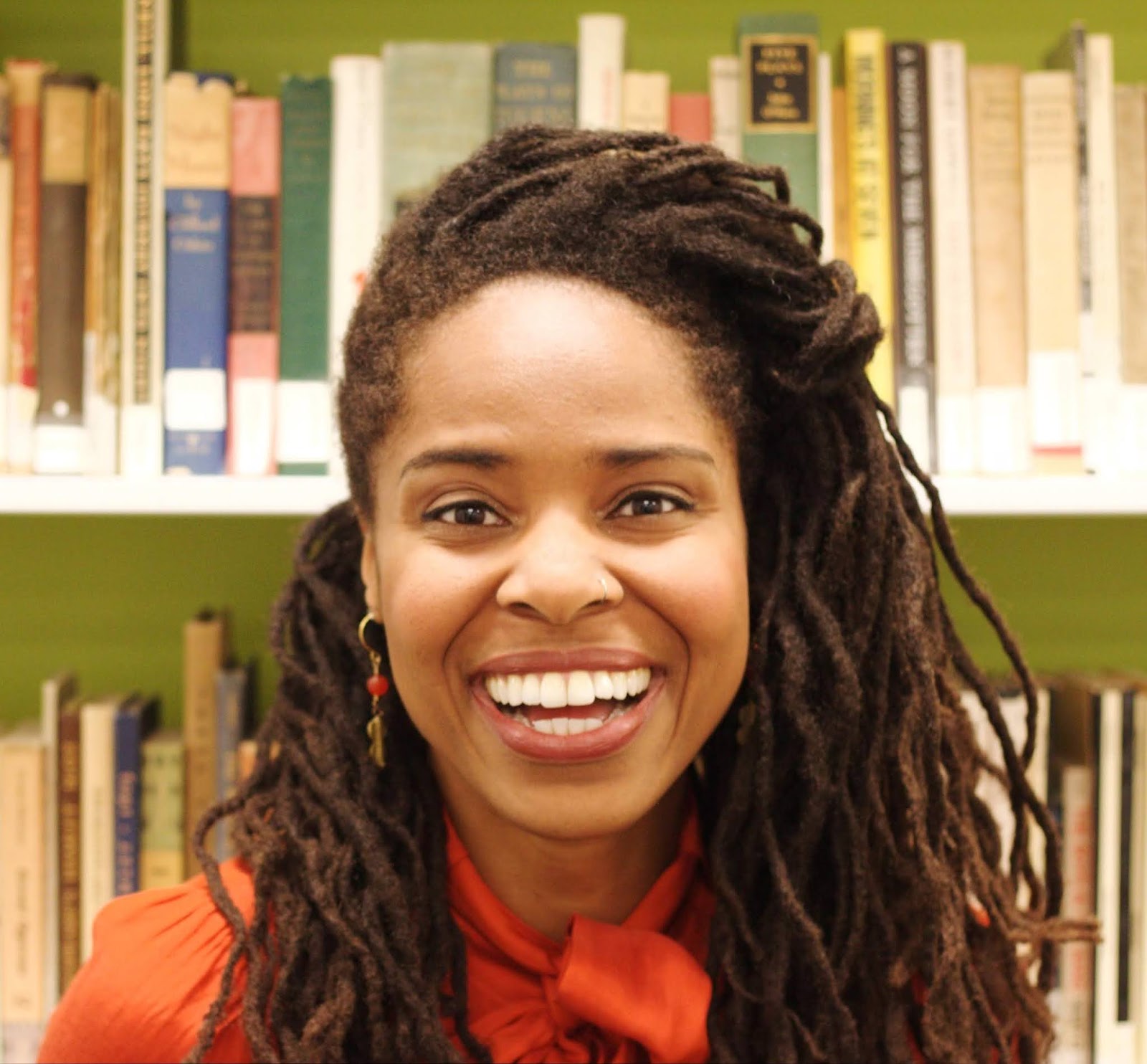
Episode 4 of Critical Conversations in Children's Literature with guest Lin Oliver


Critical Conversations in Children's Literature is a web series developed to bring children's literary writers in conversation with scholars to discuss critical topics brewing within the field. This web series is funded by CAL IRA funds. 

The series was developed by our very own Dr. Lashon Daley, assistant professor in the Department of English and Comparative Literature at San Diego State University. This series is funded by the College of Arts & Letters Instructional Activities Grant and is hosted in collaboration with the National Center for the Study of Children's Literature.

Episode 4 titled: "Thoughts on 'Collaboration' in the Industry of Children's Literature" features a conversation between Dr. Daley and Lin Oliver, which centers on the topic of collaboration within the industry of children’s literature.

Lin Oliver is the co-founder, along with Stephen Mooser, of the Society of Children's Book Writers and Illustrators also known as SCBWI. She serves as its Executive Director. Working from its headquarters in Los Angeles, Lin guides the organization through changes and challenges of the contemporary publishing field and is proud to help launch new careers that will change the face of children's picture books.

So without further ado, here's episode 4 of CCICL:


We hope you enjoy it! Until next time!

-NA


Friday, March 18, 2022

Episode 3 of Critical Conversations in Children's Literature with guest Dr. Libby Gruner

Critical Conversations in Children's Literature is a web series developed to bring children's literary writers in conversation with scholars to discuss critical topics brewing within the field. This web series is funded by CAL IRA funds.

The series was developed by Dr. Lashon Daley an assistant professor in the Department of English and Comparative Literature at San Diego State University. This series is funded by the College of Arts & Letters Instructional Activities Grant and is hosted in collaboration with the National Center for the Study of Children's Literature. Episode 3 features a conversation between Dr. Daley and Dr. Libby Gruner, centered on the topic of collaboration within the academic field of children’s literature. Libby Gruner is the 2021-2022 President of ChLA, which is the Children's Literature Association (ChLA). Libby is a scholar of both YA and Victorian literature. She has taught at the University of Richmond since 1993, where she is a Professor of English and Coordinator of Faculty Development in Teaching.


Without further ado, here's episode 3 of CCICL:


We hope you enjoy this episode!

Friday, October 8, 2021

Interview with Professor Lashon Daley

 The NCSCL is honored to present an interview with Dr. Lashon Daley, the Department of English and Comparative Literature’s new assistant professor of children’s literature. The interview was conducted online by Natalie Alvarez and Lara Amin, graduate assistants for SDSU’s National Center for the Study of Children’s Literature. We thank Professor Daley for taking the time out of her busy schedule to talk with us, and we’re proud of the opportunity to better acquaint our readers with our newest professor and her exciting work!


Tell us a bit about yourself: Where are you from? What were some of your favorite books as a child? How did you become interested in children’s literature and childhood studies, and what do you find particularly interesting about it?


I grew up in Miami, Florida, and spent most of my childhood climbing the mango tree in my backyard and the avocado tree in my front yard. As a result, I rarely read for leisure. Being outside and playing with my siblings brought me more joy than reading on my own. And to be honest, I hated reading. I preferred making up stories in my mind and telling them to my very attentive collection of stuffed animals. I did begin writing down my own stories when my mother gave me my first journal at the age of seven. I wrote my first children’s book shortly thereafter. It was about a blue rose that did not know how to bloom and had to learn on its own. 


When I eventually began to tolerate reading, I fell in love with serial collections like The Berenstain Bears by Stan and Jan Berenstain, Clifford the Big Red Dog by Norman Bridwell, and Spot by Eric Hill. In addition, I’ll Fix Anthony by Judith Viorst was also a favorite because it mimicked my experience of being the youngest child and allowed me to feel seen.


As you can see, my love for children’s literature was a slow burn. It finally caught fire when I was working as a marketing assistant at the Louisiana Children’s Museum in New Orleans. I had the privilege of working with my colleagues to implement children’s educational programs, and childhood literacy was a major part of our core mission. I had a running knowledge of what was popular in the industry, what books were used to hit literacy goals, and essentially what made a good children’s picture book. So, I decided to write my own. My children’s book, Mr. Okra Sells Fresh Fruits and Vegetables, was published in 2016 by Pelican Publishing, and it launched me into the industry in a new way. Performing the text at festivals and in classrooms made me even more curious about children’s literature. When the book was released, I was in my first year of my doctoral studies at UC Berkeley. Through a series of research pursuits, children’s literature, especially children’s literature as it intersects with Black girlhood studies, eventually became one of my research fields.


Children’s literature is a fascinating field of study because of its depth and breath. Essentially everyone from children, to parents, to educators, to librarians, to the top 

scholars within the field, to the illustrators, to the writers themselves all, play a role in expanding this field of study. The infinite possibilities of where this field can go means that I am limitless in my research. And for me, that is a beautiful place to be. 


When you applied to SDSU, what aspects of the university and the Department of English and Comparative Literature did you find most attractive?


While my Ph.D. is in Performance Studies, my heart has always been based in English and Comparative Literature. I received my BA in English, my MA in Folklore, and my MFA in Writing. So applying to the department felt like a homecoming for me. I was extremely impressed by my colleagues Phillip Serrato and Joseph Thomas, whose research interests are so fascinating. I felt that I was going to be among scholars who also remained curious and limitless in their approach to the field and to their research. I felt a strong connection to so many of the professors in the department, who are not only top scholars, but also creatives as well. Plus, the opportunity to work with, teach, and mentor English majors and minors is an absolute dream. 


What were the most significant challenges or obstacles for you during or post-graduate school?


When I was pursuing my MFA in Writing at Sarah Lawrence College, I had a desire to pursue publishing after graduation. I did not. However, that desire manifested itself again while I was preparing for my qualifying exams in the third year of my doctoral program. I was feeling so overwhelmed by the requirements of becoming a top scholar that I considered leaving my program. I began to research the job market in publishing and even applied for a position at a children’s literary publisher. I never told my advisor because I knew that she would talk me out of it. Once I passed my exams, I did feel much more confident in my ability to complete my degree. I am grateful that I persevered because now I have the opportunity to continue my research and to be in conversation with those within the industry. 


What seminars would you like to teach? Tell us about them and how they relate to your research. 


I would love to teach a seminar on research methods for fiction writers. Since I pursued my MFA before pursuing my PhD, I feel like I missed out on some crucial knowledge on how to conduct research for my creative master’s thesis. Being taught the craft of writing is super important, but I believe that teaching research methods in MFA programs would be a game changer. I am a really great example of why this is important. For my MFA thesis, I was writing a young adult novel about a Black girl coming to terms with heartache and grief after the tragic passing of her father. Now as a scholar at the intersection of children’s literature and Black girlhood studies, I feel much more equipped to write and construct a world for my character that is based in real-world research.


Which of your current projects excites you the most?


I have some children’s picture book manuscripts that I put on hold in order to complete my dissertation. I am excited about returning to those manuscripts. And then, of course, I am excited about turning my dissertation into a book.


What advice would you give to a student starting graduate school in 2022? 


When you wake up in the middle of the night with the perfect word or sentence for your manuscript, write it down immediately. You will NOT remember it in the morning. 


**


Thank you so much to Dr. Daley! We’re grateful to have the opportunity to showcase SDSU’s brilliant new professor of children’s literature!


- (NA) & (LA)


Friday, September 17, 2021

New Graduate Assistant


 Hello everyone!


My name is Lara Amin, and I am currently a second-year graduate student pursuing a master’s in English at SDSU! My specialization is in Children’s Literature, and I’m most interested in literary nonsense like Lewis Carroll’s Alice’s Adventures in Wonderland. Other scholarly interests include gender and sexualities studies and feminist and queer theory.


This fall semester, I am also a TA for English 220: Introduction to Literature. In my course, I strive to help students understand literature on a deeper level, close read various texts using different mediums, and provide a safe space to learn and grow as critical thinkers. 


When I’m not in the classroom, I spend my free time studying astrology and tarot. Astrology has always been a particular interest of mine, and it’s essentially my love language. I utilize astrology with tarot readings to give advice and guidance to others, especially when they need it. To me, astrology and tarot are other forms of close reading, just like with literature. When I’m not studying astrology, I write poetry and post my photography on Instagram. 


All in all, I am grateful for the opportunity to be a Graduate Assistant at the National Center for the Study of Children’s Literature. ​​I can't wait to see what I will learn from this deep dive into the scholarly conversations surrounding children's literature!


-LA

Sunday, April 4, 2021

"Unhappy Ever After: When fairytales end badly" a lecture by Neil Philip


On Thursday, March 18th, the NCSCL was delighted to virtually host Neil Philip for his talk, “Unhappy Ever After: When fairytales end badly.” Well over a hundred listeners joined us through Zoom from both sides of the pond.

The topic that drew so many people to join us was tragic endings. Although most people have come to associate fairytales with the lighter iterations found in Disney adaptations, many of these tales originally end in grief and disappointment. For example, Philip describes how the “greatest of wish fulfillment tale type, Cinderella,” has evolved into a version that ends sadly: in a Brazilian version, Maria’s sister-turned-snake Labismina helps her to escape marriage to her own father but is forgotten when Maria marries a prince. Philip claims that “it is the lonely fate of Labismina that sticks in the mind, not the happy one of Princess Maria,” and goes on to reference Zuni and Eastern Indian versions of this tale with their own tragic endings. He acknowledges that there are also tales that purposefully twist listeners’ expectations of a happy ending via comedy, such as the “English gypsy variant of The Water of Life” told by Taimi Boswell.


He then transitions into a text that is much more familiar to the audience -- that of Little Red Riding Hood. Perrault’s 1697 version is the one with the question-and-answer dialogue that we recall, but in the Brothers Grimm iteration, Red Riding Hood is eaten along with her grandmother and a woodsman cuts them free from the wolf’s belly. Even more gruesome, however, are the French versions, one of which can be found in Catherine Orenstein’s Little Red Riding Hood Uncloaked. In this tale, the wolf serves the girl her own grandmother’s flesh, but the young girl manages to escape by claiming she needed to relieve herself. Philip adds a factual tidbit here about the standard three-volume book wherein one can find over 2,000 folktale types across cultures -- Little Red Riding Hood is listed at ATU-333. 


Philip notes that even the Grimm brothers’ darker fairytales are a result of altering the original tales to be lighter. Grimm adds what Philip calls a “literary flourish” to the juniper tree tale, which concludes with a happy ending after “a story that is relentlessly miserable.” Dark themes and other key elements carry on through the iterations of stories. Hans Christian Andersen, the author of the original tales of many fairytales we know today, often writes with themes of grief, suffering, and disillusion. Philip explains that Andersen was rarely one to write happy endings, instead the iterations are “infused with melancholy” and he was “merciless to the characters'' in his tales. Although these happier stories are more popular, Philip quotes Oscar Wilde, “there are times when sorrow seems to me to be the only truth.” Ultimately, Philip says, storytelling can be seen as an act of reparation for the world. 

Partway through the talk, an ill-intentioned attendee unmuted himself and interrupted with inappropriate comments. Thankfully, Natalie moved quickly to kick him out and reported him immediately. The lecture resumed without incident, though we were no longer able to admit latecomers. 

After Philip concluded his lecture, the chat was opened up for questions which came pouring in. A few of them, along with Philip’s responses, are listed here:

Q: Why do you think children are associated with fairy tales?

A: It started with the Grimm's; they called their collection “Children’s and Household Tales.” The children’s section was really quite short, but as they released newer editions, they realized children were being read these stories, so they softened quite a lot of the elements. Evil mothers become evil stepmothers, for instance. By the end of the 19th century, you get really influential series of books of fairy tales which are specifically aimed at children. The stories are made more acceptable for a child audience. So that’s the beginning of our assumption that fairy tales are expected to be enjoyed by children.

Q: What do you think is the appeal, aesthetic or psychological, of tragic fairy tales?

A: It’s the same as the appeal of horror films and gothic novels; it’s just part of human nature that people like sad things as well as happy things. It is fair to say that the majority of traditional fairy tales do end up with a happy ending, but they put the poor protagonists, both male and female, through the most terrible suffering and troubles along the way. So the happy ending, what Tolkien called the eucatastrophe, is won through suffering. 

Q: Why do you think people have edited the original fairy tales to something that can now be read to children?

A: The Victorians -- well, 19th century people; let’s not say Victorians since the Grimms’ first version came out in 1812 -- they were sort of prudish about what was suitable for children. It’s interesting what they thought was suitable, like terrible retributions at the end of fairy tales like Cinderella's sisters getting their eyes being pecked out by doves and people being made to dance in red hot shoes regarded as perfectly acceptable. But they tried to weed out the sexual elements. It’s just part of the transition of these stories from an inherited oral folkloric inheritance to a literary one. People like Angela Carter have tried to put back all the things that were taken out.

Q: It’s refreshing to hear a scholar identify ways their thinking has changed as you mention with the Fens tale or your conception of authenticity’s value or otherwise. Have you experienced any other major shifts in your thinking over the years, scholarly or otherwise?

A: That’s certainly an example when my mind has been changed by someone else’s scholarship. I’m very much more aware of the individual voice of the storyteller in the story and that’s what I value in any particular story, rather than having a more generic interest in Snow White stories, let’s say. That and an interest in all the other elements in a story: the language, cadence, intonation, pauses, gesticulations. The relation between the storyteller and the audience is a very potent, dynamic thing in storytelling. My thinking about folk and fairy tales has remained much the same, but deepened and widened. There are things such as Mrs. Balfour stories where I’ve had a change of heart and thought. I’ve just written, for the Oxford Dictionary of National Biography, a biography of a woman called Ruth Tongue, who was a very famous storyteller in the second half of the twentieth century in England. My initial attitude was that Ruth Tongue was basically a fraud, which I thought since I heard recordings of her actual voice: very cut-glass, upper class English and her storytelling voice which is a very heavily accented Somerset dialect.  I thought that something is not right here. And learning more about Tongue, I’ve begun to think she is not correct in what she says about where she learned these stories and who she learned them from because it doesn’t stack up, but actually it makes her more interesting as a creative storyteller because she is basically making all this stuff up. Someone said she “collects from herself,” which I thought was a very polite way of putting it.


There were many other questions and answers which we were not able to fit in this blog, but it seemed that many people were able to enjoy the fruit of Philip’s scholarship! His clear expertise, thorough research, and insightful conclusions sparked ongoing conversation on this compelling topic. Even Philip’s cat had something to add! Thank you to those who attended our first virtual scholarly talk. We were delighted to have such an engaged audience.


For those who missed it, the lecture and Q&A were recorded and can be found here:


https://www.youtube.com/watch?v=dBzElceP2nE


Our next guest lecture will be in April; keep an eye out for the details! In the meantime, we hope you pick up a tale that ends unhappily ever after.


Friday, February 5, 2021

New Graduate Assistant


 Hello everyone!

My name is Natalie Alvarez and I’m currently a first year M.A. student studying English with a specialization in Children’s Literature. Being a new student to the program means that I’m still exploring my definitive areas of research. Nonetheless, areas such as queer studies, media studies, sexuality studies, and Digital Humanities have caught my attention. When it comes to Children’s Literature, I gravitate towards Young Adult Literature. I’m especially interested in YA narratives written by authors of color in the Fantasy genre. I would like to explore how cultural and/or queer identity operate in Fantasy landscapes.


My love for reading blossomed due to my desire to learn English. I was learning the language in school, but I wanted to experience more than grammar rules and the assigned texts. Then a family member talked to me about a certain book revolving around vampires. After devouring such in a couple of days my journey began. The rest as they say is history and now here, I am now pursuing the degree that I dreamed of when I was younger.


When I'm not doing schoolwork I can be found creating book related content for my Instagram. I post everything from book inspired makeup looks to book reviews. Besides reading I enjoy fashion, watching the latest tv series or horror movie, digital art, and blogging. In case you were wondering (and I know you were) some of my favorite books are We Set the Dark on Fire by Tehlor Kay Mejia, A Song of Wraiths and Ruin by Roseanne A. Brown, and Daughter of Smoke and Bone by Laini Taylor.


I’m extremely grateful for the opportunity to be a Graduate Assistant at the National Center for the Study of Children’s Literature, and I can’t wait for all the amazing things this will bring. I’m excited to be part of the conversation and immerse myself more into the scholarly world of Children’s Literature. I look forward to sharing with you all everything related to Children’s Literature and the National Center for the Study of Children’s Literature.


-NA


Tuesday, December 10, 2019

Interview with Nayeli Castañeda-Lechuga, MFA Student


I got a chance to sit down with Nayeli Castañeda-Lechuga, a first-year student in the MFA program here at San Diego State University. She is currently wrapping up the semester of a course in Chicanx Children’s Literature taught by Dr. Phillip Serrato. We discussed her perspective on studying children’s literature with a creative writer’s mind. 


Nayeli Castañeda-Lechuga


What were your expectations going into the course? How have those expectations been affirmed or altered by what you encountered? 


Honestly, when I was looking into the course, I overlooked the “children’s” aspect of it and thought of it as a course on Chicanx Literature. The idea of spending a whole semester reviewing and analyzing Chicanx literature was extremely appealing to me, specifically because I love reading and writing about Chicanx/Latinx identity.

I didn’t think too much about how we would discuss the material, however. So it was interesting to delve into the efficacy of Chicanx characters in perpetuating or dismantling stereotypical ideals of Chicanxs or Mexican-Americans. Doing this through children’s literature--a side of literature I’d never thought too much about--was only that much more eye-opening.


How does your background and identity influence the way you read these texts?

As a Mexican and Chicanx women (I tend to identify myself as Mexican, though, technically I am Mexican-American/Chicana), I came into the course with an idea of what Chicanx literature looked like and those ideas set up certain expectations on how people of color should be represented, which writers qualified to portray brown bodies, etc. Soon, however, I learned that Chicanx literature (from children’s to YA to adult) is much more complicated than I imagined. I’d never taken a course on Chicanx literature--the closest I came to it was a course on Latin American Literature, which is still very different. This has been the course that most immediately and intimately relates to my background, my familial history, and my identity--so I’m definitely biased towards how much I appreciate (or don’t appreciate) the stories being told and examined in our class.


Did anything about the texts or critical frameworks surprise you? 

So much surprised me about the texts we read--from the extremely stereotypical Mexican-American/Chicanx characters we examined to the well-executed feminist constructions of  Chicanxs in children’s literature. As I’ve mentioned, I had never examined Children’s literature on a scholarly/grad-school level and applying critical frameworks to these often short stories was something I didn’t consider possible.

I enjoyed certain critical frameworks the most--such as Conocimiento narratives, marginality, and discussing how the stereotype functions as oppression and the white man’s need to ‘other’.


How has your understanding of children’s literature changed as a result of taking this course?

The most immediate change has been realizing that children’s literature is something we can and should be having scholarly conversations about. I used to overlook children’s literature and, honestly, thought of it as something that was very easy to write--a mentality which can and has led to poorly written children’s books. While the stories may seem simple, often the impact can be extreme--especially for stories about frequently underrepresented communities, such as Chicanxs. I’ve learned to appreciate writers and illustrators who tackle the task of writing and/or illustrating effective Children’s literature, especially since these are people’s first encounters with books and can shape how they understand social structures.

I’m also impressed by everything that can be analyzed from a thirty-page book with often minimal text. Children’s literature is much more than the text itself--it’s the images, the placement of words in relation to the images, line breaks, book size, blank space, etc.


Do you see the content of this course affecting your creative writing?

It makes me nervous to fall into the same category of creating really problematic pieces. I think that a lot of them had worked but I don't want to make it worse as a writer because like I said, one of my main goals us as a writer is to write Latinx characters – specifically Mexican characters – because I'm Mexican and I have more of more knowledge of the Mexican culture though some of our values tend to align with other Latinx cultures. I'm a little nervous about falling into traps that I didn't realize are traps or writing really trope-y narratives that end up reinforcing stereotypes that I didn't realize I was doing. Sometimes when you're writing, your characters kind of take you a place that you weren't expecting. You kind of got to follow them and it's a really weird thing to say, but like when you're so into it, you see things before you actually write them. So sometimes they might do something or they might be calling you to write something that you feel is going to be problematic. Like race issues. So then you have to decide whether or not that's something that you're willing to risk. Now you say, “it's okay; I'm going to risk it. But how am I going to address this so it's clear that this is the character's point of view? This is how the character is and it's not what I as a writer believe.” It's a lot of questions that you have to keep asking yourself as a writer and this class is has given me a lot more questions than answers as a writer. I think that's a good start to be conscious of what you're writing.


Do you have any favorite assignment or anything that you thought was fun to do?

In retrospect, I really enjoyed the presentation*. I was nervous about it at first, but once I began reading Calling the Doves and analyzing it, I felt like I was bringing something new to class discussion and I enjoyed the conversations that arose after it. Mostly, I appreciated the work and thought I put into the book prior to my presentation. I spent hours looking at Elly Simmons’ (the illustrator) images--analyzing every swirl and color and repeating image, until finally I began to notice different themes and patterns that related to the text itself. It was like finally fitting puzzle pieces together on a 500 piece puzzle with only one shade of blue. It was a different experience than writing an essay or participating in class discussion; I couldn’t rely on my classmates’ or Professor Serrato’s textual interpretations--I had to go through the process on my own, which was extremely rewarding.

In the end, I ended up discussing Lucha and Juanito’s (mother and son) relationship, which led to the topic of my final essay.

 *[Here, Castañeda-Lechuga references an assignment in which each student chooses a Chicanx children’s book outside of the course readings to present about during class. She chose Calling the Doves by Juan Felipe Herrera.]


Would you recommend authors take courses like this? 

Absolutely. That's what I appreciate about San Diego State University’s MFA in Creative Writing program. It’s required that MFA students take literature courses, which is well-thought out since to improve our writing, we should be reading and analyzing other writer’s work.

I recommend that other writers search for courses that will most directly aid in developing their own writing--whether that be taking a course that discusses texts that connect to the writer’s interest (as was the case for me) or taking courses that look into texts with different textual forms. I’m sure that all literature courses will broaden a writer’s perspective on effective story-telling, but it will definitely be more enjoyable and advantageous if the writer chooses to take a course that aligns with their passions.

In my case, I chose this course because I'm interested in writing about Chicanx and Latinx communities. I’ve found the course to be helpful in how I think about my own writing--how not to fall under the same stereotypical discourse of some texts and how to push further with my concepts of the Mexican identity(ies).

As writers, it’s inevitable not to read as writers. When I'm reading, I make notes about what kinds of strategies I like, or lines that I thought were well-written. Because they resonate with your own writing, you tend to find these courses more interesting and more helpful. Long story short, I would recommend it!


Thank you, Nayeli Castañeda-Lechuga, for sharing with us! We’re glad to learn that studying children’s literature helped you as an author focus on the importance of accurate representation. Looking forward to seeing what you will publish in the future!

- (AN)


Wednesday, November 27, 2019

NCSCL at PAMLA 2019

Hello scholars! We had such a fun time at our first ever Pacific Ancient and Modern Language Association (PAMLA) conference this past weekend. We met (and witnessed) so many talented scholars this weekend.


Graduate assistants Sofia and Ashley ready to check
scholars into the conference

One of the key takeaways Ashley got from working at the registration desk was seeing the diversity of people who attend academic conferences. Scholars from many states and countries came to present on a stunning variety of topics ranging from vampire studies to absurdist history. Several families came to America’s Finest City for the weekend, with many a child treated to a trip to the San Diego Zoo. Students and faculty came from all over, from the University of Hawaiʻi at Mānoa to Vancouver Island University. A young girl in the audience of Joseph Thomas and Michael Heyman’s poetry reading delighted the crowd with her giggly additions to the performance. Ashley was also thrilled to meet another person studying Vietnamese American literature.


Thai Luong presenting on A Different Pond by Phi Bao

The Asian American Literary and Cultural Studies sessions on Thursday left Ashley dazzled. As a first-semester graduate student just entering that field, this conference was her first time meeting fellow Asian American literature scholars, and hearing their research left her inspired. She left with many topics of interest to research further: the effect of the model minority myth on lived experience, Vietnamese American history and literature, and the boundaries of what is defined as Asian American and literature. She is determined to search for an area of focus of her own (food is brilliant but taken) and to draw all the inspiration she can from the admirable work of those trailblazing in her field.

 
Katherine Sciurba presenting on White Flour by David LaMotte

Ashley also had the opportunity to attend the brilliant Children’s Literature I panel. Katherine Sciurba, Assistant Professor in the SDSU School of Teacher Education, opened with “March of the Coup Clutz Clowns: The Clown as Figure of Resistance to White Supremacy in David LaMotte’s White Flour.” She analyzed LaMotte’s humorization of ostensible KKK members who attempt to join a parade. It was fascinating to hear her perspective as an instructor who focuses on the affective response of her students to the books she reads, and the Q&A raised the question of empathizing with KKK members and where the limit is. Dr. Sciurba argues that children are capable of processing trauma in picture books because they might witness much worse on the news and maybe even personally.

 
Linda Salem presenting on Aruki Taro by Takei Takeo

Next, Linda Salem, the Children’s Literature Librarian at SDSU, spoke about “Takei Takeo’s Aruki Taro, Clara Breed, and Japanese Illustrated Children’s Literature in Context.” She described the wonder she felt finding this book and imagining the story, which she could only extrapolate from the images. After getting the story translated, she began extensively researching the history of children’s literature in Japan and shared those findings with us. Salem’s role as a librarian requires much communication with different organizations, such as the public library system from which she obtained this rare book. Thank you to Linda Salem and all librarians for making the study of rare literature possible!

 
Mary Galbraith presenting about animals in 20th century novels

Children’s Literature Lecturer Mary Galbraith presented “The Live Creature: Animal Presence and Inhabiting the World in 20th Century Children’s Novels.” The talk drew upon many well-known novels, such as The Black Stallion and The Call of the Wild, to explore how authors can typify emotion and express nonverbal communication. Dr. Galbraith marveled at how entire books can be written about animals that don’t communicate in words but with their bodies. She described how “yes” and “no” are very deep in physiology, spreading her arms and stepping forward to indicate “yes” and withdrawing while pulling her arms to her chest to express “no”. As always, Dr. Galbraith’s animated and yet casual style of speaking is engaging and simplifies her very complex research.


Dr. Joseph Thomas and Dr. Michael Heyman Reading
During “Children's Poetry Today: A Creative Writing Reading”

Dr. Joseph Thomas and Dr. Michael Heyman had a poetry reading together, entitled “Children's Poetry Today: A Creative Writing Reading: an event in four chapters,” on Saturday. Joseph Thomas read from “‘Advice for Children (NSFW)’ and Other Poems for Young People,” among other works. Joseph Thomas and Michael Heyman have worked on many projects together over the years, from collaborative poetry to being judges of The Lion and The Unicorn Poetry Award.

Adults and children alike joined together to listen to these brilliant poets and readers; at one point a child delightfully laughed at one (or maybe more than one) poem, emphasizing the wide reach poetry can have. The two did not write this show as a piece, but often worked through poems together on the phone, showing the true organic creativity of their poetry. For Joseph Thomas, although this reading is enjoyed by all, he states, “doing this for children makes the physical important,” referring to their vibrant movements and energy while performing.

Their reading was broken into four chapters. In the first chapter, Joseph Thomas dedicated a poem he wrote in the intro to his late father, and dedicated another poem to his beloved cats. Next, Michael Heyman read his poem “Bish Boshed” a rhyme poem with arguably “nonsense” names which he brought sense to with the rhythm and passion of his reading. Joseph Thomas then read his own poem, “Nonsense Rhyme for Michael Heyman” following “A Pomsense Poem” by Michael Heyman.

 In the reading’s second chapter, Joseph Thomas read eight lines from “The Charge of the Light Brigade” by British poet Alfred Tennyson, otherwise known as “Lord Tennyson.” Michael Heyman followed with his own poem, “The Chard of the Blighted Souffle.” Michael Heyman then read an excerpt from “Warning to Children,” which Joseph Thomas argues is an improvement to the original poem.

Dr. Joseph Thomas and Michael Heyman Reading

Chapter three, entitled “Seasick Love Songs,” began with “The Hummerhead Brill” by Michael Heyman. Joseph Thomas read his lighthearted poem “The Fisherman,” a poem about a man in love with a creature neither a fish, nor a human.

In the fourth and final chapter, “Rinnzekete bee bee nnz krr müü?”, A.A. Mill’s “Now we are Six” was improved by Joseph Thomas’s poem “Six We are Now.” Michael Heyman concluded with a stunning, dynamic rendition of Kurt Schwitters’s “Ursonate”.


Dr. Joseph Thomas and Michael Heyman waiting for
“Children's Poetry Today: A Creative Writing Reading”

Watching these two perform was such a joy, but it truly felt like watching one, with how in tune they were with each other’s every word and movement. The audience, and the readers themselves, could be seen exchanging smiles throughout the event. We were so lucky to be reminded of the creativity and joy involved with writing and sharing poetry.

The full video of this event is linked here: https://www.youtube.com/watch?v=XBQOqxOgWoI
PAMLA 2019 was a blast, and we look forward to PAMLA 2020, which will be held in Las Vegas. Thank you for the generosity of all involved! 

-(AN) & (SS)

Tuesday, November 12, 2019

SDSU Children's and Young Adult Scholars at PAMLA

Hello scholars!

We have been looking forward to the PAMLA Conference this weekend! We would especially like to remind you of the panels featuring children’s literature scholars from San Diego State University. 


Thursday, Nov 14th:
In honor of its fifteenth anniversary, former and current judges/essayists for The Lion and the Unicorn Award for Excellence in North American Poetry, along with the award’s founder, its first editor, and its newly appointed second editor will discuss literary prizing, the difficulties of aesthetic judgement, and the award’s history and future. Dr. Thomas will also preside over this event and speak of his roles as Editor (2013-19) and Founding Judge (2005-12; 2017-18) of The Lion and the Unicorn Award for Excellence in North American Poetry. 


Act Four - Literature of the Oxford Inklings
10:15 AM - 11:45 AM  
Jordan Garza, a graduate student in the San Diego State University English Department, will be presenting “An Unexpected Spectacle; Or, the Situationist International Visits the Shire”. J.R.R. Tolkien’s The Hobbit is a children’s literature fantasy novel published in 1937 that, through its depiction of Bilbo and Hobbit society and their drive for remaining in a passive consumerist state, anticipates some of the cultural critiques leveled by the Situationist International a quarter century before its founding.


Friday, Nov 15th: 

Act Four - Gothic II
10:15 AM - 11:45 AM

Phillip Serrato, the new chair of the San Diego State University English Department and a longstanding Children’s Literature faculty member, will be presenting “‘My Dearest Friend’: The Post-Coital Appeal Mad Monster Party? and The Nightmare Before Christmas.” This talk examines the ways that in Mad Monster Party? and The Nightmare Before Christmas a carnivalesque ethos of rule-breaking fun plays out in ideological dimensions such as gender and sexuality. Specifically, this talk proposes that part of the appeal of these films lies in what might be called a post-coital defiance of heteronormative resolution.

Act Four - Young Adult Literature
10:15 AM - 11:45 AM
Our director, Joseph Thomas, will be the presiding officer and chair for three fantastic sounding essays: “Constructing the Young Poet-Activist in Margarita Engle’s Enchanted Air: Two Cultures, Two Wings” by Krystal Howard from California State University - Northridge; “‘Toto, We aren’t in Kansas Anymore’: Resistance and Counterstorytelling in Cynthia Leitich Smith’s Hearts Unbroken” by Michelle Pagni Stewart from Mt San Jacinto Community College District, and “Self Image and the Community in Young Adult Steampunk Novels The Black God’s Drums (2018)” by Melanie Marotta from Morgan State University. 
Act Six - The Lion and the Unicorn Award for Excellence in North American Poetry (Special Event)
3:20 PM - 4:50 PM

Saturday, Nov 16th
Act Nine - Children's Literature I
10:15 AM - 11:45 AM
This panel boasts an impressive lineup of San Diego State University scholars. Katherine Sciurba, Assistant Professor in the School of Teacher Education, will present “March of the Coup Clutz Clowns: The Clown as Figure of Resistance to White Supremacy in David LaMotte’s White Flour;” Linda Salem, Children’s Literature Librarian, will present “Takei Takeo’s Aruki Taro, Clara Breed, and Japanese Illustrated Children’s Literature in Context;” and Mary Galbraith, Children’s Literature Lecturer, will present “The Live Creature: Animal Presence and Inhabiting the World in 20th Century Children’s Novels.”
Act Eleven - Children's Poetry Today: A Creative Writing Reading Featuring Joseph Thomas and Michael Heyman (Special Event)
3:30 PM - 4:40 PM
Michael Heyman and Joseph Thomas will perform a number of children’s poems. Dr. Joseph Thomas will read from “‘Advice for Children (NSFW)’ and Other Poems for Young People” among other works. 
The NCSCL is a sponsor of this year’s PAMLA conference, but many other SDSU scholars will present their works in an array of fields! All SDSU students can attend for FREE; just make sure to bring your student ID card.  
We hope to see you all there!
- (AN) & (SS)

Tuesday, November 5, 2019

Invitation to PAMLA Conference 11/14-11/17


Hello Children’s Literature Scholars!

We’re having a semester packed with such exciting events. We would like to invite all of you to the PAMLA conference (Pacific Ancient and Modern Language Association) NEXT WEEKEND NOVEMBER 14-17. We are so excited to see all of the talented scholars.

It is FREE to ALL SDSU students - graduate and undergraduate - can attend for free, so make sure to bring SDSU IDs.

The conference will be held at the Wyndham San Diego Bayside. Here
is the address & phone number:

1355 North Harbor Drive
San Diego, California 92101
619-232-3861

The conference schedule can be found here:

We are especially excited to see Joseph Thomas, SDSU Professor of English and Comparative Literature and (The Amazing) Director of the National Center for the Study of Children's Literature. He will be in two events. 

The first is a discussion of the Lion and the Unicorn Children's Poetry Award that he co-founded back in 2005. Here are the details for the panel:

Friday, November 15.
3:20 PM - 4:50 PM
6.17: The Lion and the Unicorn Award for Excellence in North American
Poetry (Special Event)
Location: Pacific A

His second event is a poetry reading. He will be reading his own poetry alongside poet, musician, and scholar Michael Heyman:

Saturday, November 16
3:30 - 4:40 PM
Location: East Coast
11.07: Children's Poetry Today: A Creative Writing Reading Featuring
Joseph Thomas and Michael Heyman (Special Event)

We look forward to seeing you there!

-SS and AN