Showing posts with label MFA. Show all posts

Friday, October 8, 2021

Interview with Professor Lashon Daley

 The NCSCL is honored to present an interview with Dr. Lashon Daley, the Department of English and Comparative Literature’s new assistant professor of children’s literature. The interview was conducted online by Natalie Alvarez and Lara Amin, graduate assistants for SDSU’s National Center for the Study of Children’s Literature. We thank Professor Daley for taking the time out of her busy schedule to talk with us, and we’re proud of the opportunity to better acquaint our readers with our newest professor and her exciting work!
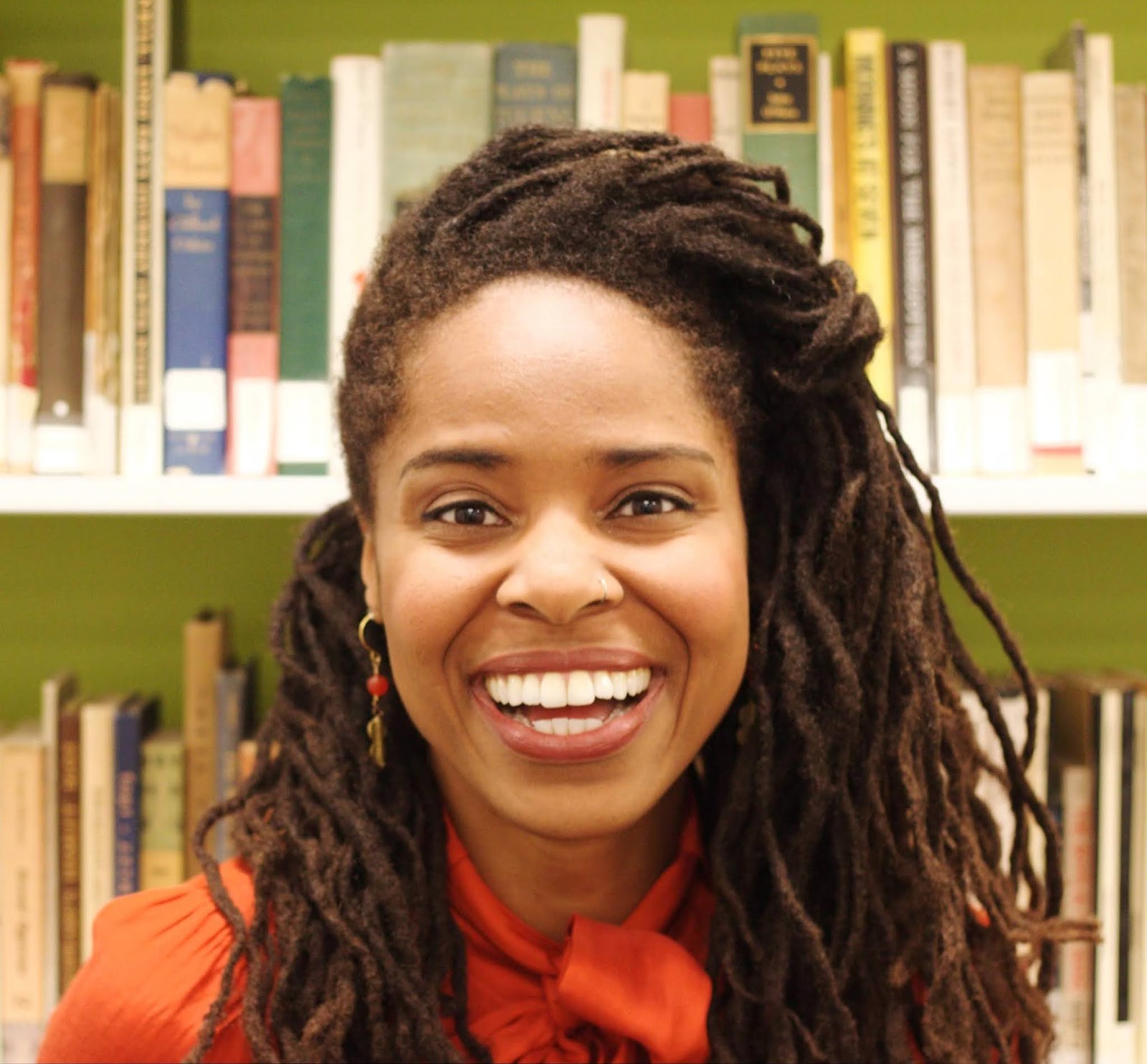

Tell us a bit about yourself: Where are you from? What were some of your favorite books as a child? How did you become interested in children’s literature and childhood studies, and what do you find particularly interesting about it?


I grew up in Miami, Florida, and spent most of my childhood climbing the mango tree in my backyard and the avocado tree in my front yard. As a result, I rarely read for leisure. Being outside and playing with my siblings brought me more joy than reading on my own. And to be honest, I hated reading. I preferred making up stories in my mind and telling them to my very attentive collection of stuffed animals. I did begin writing down my own stories when my mother gave me my first journal at the age of seven. I wrote my first children’s book shortly thereafter. It was about a blue rose that did not know how to bloom and had to learn on its own. 


When I eventually began to tolerate reading, I fell in love with serial collections like The Berenstain Bears by Stan and Jan Berenstain, Clifford the Big Red Dog by Norman Bridwell, and Spot by Eric Hill. In addition, I’ll Fix Anthony by Judith Viorst was also a favorite because it mimicked my experience of being the youngest child and allowed me to feel seen.


As you can see, my love for children’s literature was a slow burn. It finally caught fire when I was working as a marketing assistant at the Louisiana Children’s Museum in New Orleans. I had the privilege of working with my colleagues to implement children’s educational programs, and childhood literacy was a major part of our core mission. I had a running knowledge of what was popular in the industry, what books were used to hit literacy goals, and essentially what made a good children’s picture book. So, I decided to write my own. My children’s book, Mr. Okra Sells Fresh Fruits and Vegetables, was published in 2016 by Pelican Publishing, and it launched me into the industry in a new way. Performing the text at festivals and in classrooms made me even more curious about children’s literature. When the book was released, I was in my first year of my doctoral studies at UC Berkeley. Through a series of research pursuits, children’s literature, especially children’s literature as it intersects with Black girlhood studies, eventually became one of my research fields.


Children’s literature is a fascinating field of study because of its depth and breath. Essentially everyone from children, to parents, to educators, to librarians, to the top 

scholars within the field, to the illustrators, to the writers themselves all, play a role in expanding this field of study. The infinite possibilities of where this field can go means that I am limitless in my research. And for me, that is a beautiful place to be. 


When you applied to SDSU, what aspects of the university and the Department of English and Comparative Literature did you find most attractive?


While my Ph.D. is in Performance Studies, my heart has always been based in English and Comparative Literature. I received my BA in English, my MA in Folklore, and my MFA in Writing. So applying to the department felt like a homecoming for me. I was extremely impressed by my colleagues Phillip Serrato and Joseph Thomas, whose research interests are so fascinating. I felt that I was going to be among scholars who also remained curious and limitless in their approach to the field and to their research. I felt a strong connection to so many of the professors in the department, who are not only top scholars, but also creatives as well. Plus, the opportunity to work with, teach, and mentor English majors and minors is an absolute dream. 


What were the most significant challenges or obstacles for you during or post-graduate school?


When I was pursuing my MFA in Writing at Sarah Lawrence College, I had a desire to pursue publishing after graduation. I did not. However, that desire manifested itself again while I was preparing for my qualifying exams in the third year of my doctoral program. I was feeling so overwhelmed by the requirements of becoming a top scholar that I considered leaving my program. I began to research the job market in publishing and even applied for a position at a children’s literary publisher. I never told my advisor because I knew that she would talk me out of it. Once I passed my exams, I did feel much more confident in my ability to complete my degree. I am grateful that I persevered because now I have the opportunity to continue my research and to be in conversation with those within the industry. 


What seminars would you like to teach? Tell us about them and how they relate to your research. 


I would love to teach a seminar on research methods for fiction writers. Since I pursued my MFA before pursuing my PhD, I feel like I missed out on some crucial knowledge on how to conduct research for my creative master’s thesis. Being taught the craft of writing is super important, but I believe that teaching research methods in MFA programs would be a game changer. I am a really great example of why this is important. For my MFA thesis, I was writing a young adult novel about a Black girl coming to terms with heartache and grief after the tragic passing of her father. Now as a scholar at the intersection of children’s literature and Black girlhood studies, I feel much more equipped to write and construct a world for my character that is based in real-world research.


Which of your current projects excites you the most?


I have some children’s picture book manuscripts that I put on hold in order to complete my dissertation. I am excited about returning to those manuscripts. And then, of course, I am excited about turning my dissertation into a book.


What advice would you give to a student starting graduate school in 2022? 


When you wake up in the middle of the night with the perfect word or sentence for your manuscript, write it down immediately. You will NOT remember it in the morning. 


**


Thank you so much to Dr. Daley! We’re grateful to have the opportunity to showcase SDSU’s brilliant new professor of children’s literature!


- (NA) & (LA)


Tuesday, December 10, 2019

Interview with Nayeli Castañeda-Lechuga, MFA Student


I got a chance to sit down with Nayeli Castañeda-Lechuga, a first-year student in the MFA program here at San Diego State University. She is currently wrapping up the semester of a course in Chicanx Children’s Literature taught by Dr. Phillip Serrato. We discussed her perspective on studying children’s literature with a creative writer’s mind. 


Nayeli Castañeda-Lechuga


What were your expectations going into the course? How have those expectations been affirmed or altered by what you encountered? 


Honestly, when I was looking into the course, I overlooked the “children’s” aspect of it and thought of it as a course on Chicanx Literature. The idea of spending a whole semester reviewing and analyzing Chicanx literature was extremely appealing to me, specifically because I love reading and writing about Chicanx/Latinx identity.

I didn’t think too much about how we would discuss the material, however. So it was interesting to delve into the efficacy of Chicanx characters in perpetuating or dismantling stereotypical ideals of Chicanxs or Mexican-Americans. Doing this through children’s literature--a side of literature I’d never thought too much about--was only that much more eye-opening.


How does your background and identity influence the way you read these texts?

As a Mexican and Chicanx women (I tend to identify myself as Mexican, though, technically I am Mexican-American/Chicana), I came into the course with an idea of what Chicanx literature looked like and those ideas set up certain expectations on how people of color should be represented, which writers qualified to portray brown bodies, etc. Soon, however, I learned that Chicanx literature (from children’s to YA to adult) is much more complicated than I imagined. I’d never taken a course on Chicanx literature--the closest I came to it was a course on Latin American Literature, which is still very different. This has been the course that most immediately and intimately relates to my background, my familial history, and my identity--so I’m definitely biased towards how much I appreciate (or don’t appreciate) the stories being told and examined in our class.


Did anything about the texts or critical frameworks surprise you? 

So much surprised me about the texts we read--from the extremely stereotypical Mexican-American/Chicanx characters we examined to the well-executed feminist constructions of  Chicanxs in children’s literature. As I’ve mentioned, I had never examined Children’s literature on a scholarly/grad-school level and applying critical frameworks to these often short stories was something I didn’t consider possible.

I enjoyed certain critical frameworks the most--such as Conocimiento narratives, marginality, and discussing how the stereotype functions as oppression and the white man’s need to ‘other’.


How has your understanding of children’s literature changed as a result of taking this course?

The most immediate change has been realizing that children’s literature is something we can and should be having scholarly conversations about. I used to overlook children’s literature and, honestly, thought of it as something that was very easy to write--a mentality which can and has led to poorly written children’s books. While the stories may seem simple, often the impact can be extreme--especially for stories about frequently underrepresented communities, such as Chicanxs. I’ve learned to appreciate writers and illustrators who tackle the task of writing and/or illustrating effective Children’s literature, especially since these are people’s first encounters with books and can shape how they understand social structures.

I’m also impressed by everything that can be analyzed from a thirty-page book with often minimal text. Children’s literature is much more than the text itself--it’s the images, the placement of words in relation to the images, line breaks, book size, blank space, etc.


Do you see the content of this course affecting your creative writing?

It makes me nervous to fall into the same category of creating really problematic pieces. I think that a lot of them had worked but I don't want to make it worse as a writer because like I said, one of my main goals us as a writer is to write Latinx characters – specifically Mexican characters – because I'm Mexican and I have more of more knowledge of the Mexican culture though some of our values tend to align with other Latinx cultures. I'm a little nervous about falling into traps that I didn't realize are traps or writing really trope-y narratives that end up reinforcing stereotypes that I didn't realize I was doing. Sometimes when you're writing, your characters kind of take you a place that you weren't expecting. You kind of got to follow them and it's a really weird thing to say, but like when you're so into it, you see things before you actually write them. So sometimes they might do something or they might be calling you to write something that you feel is going to be problematic. Like race issues. So then you have to decide whether or not that's something that you're willing to risk. Now you say, “it's okay; I'm going to risk it. But how am I going to address this so it's clear that this is the character's point of view? This is how the character is and it's not what I as a writer believe.” It's a lot of questions that you have to keep asking yourself as a writer and this class is has given me a lot more questions than answers as a writer. I think that's a good start to be conscious of what you're writing.


Do you have any favorite assignment or anything that you thought was fun to do?

In retrospect, I really enjoyed the presentation*. I was nervous about it at first, but once I began reading Calling the Doves and analyzing it, I felt like I was bringing something new to class discussion and I enjoyed the conversations that arose after it. Mostly, I appreciated the work and thought I put into the book prior to my presentation. I spent hours looking at Elly Simmons’ (the illustrator) images--analyzing every swirl and color and repeating image, until finally I began to notice different themes and patterns that related to the text itself. It was like finally fitting puzzle pieces together on a 500 piece puzzle with only one shade of blue. It was a different experience than writing an essay or participating in class discussion; I couldn’t rely on my classmates’ or Professor Serrato’s textual interpretations--I had to go through the process on my own, which was extremely rewarding.

In the end, I ended up discussing Lucha and Juanito’s (mother and son) relationship, which led to the topic of my final essay.

 *[Here, Castañeda-Lechuga references an assignment in which each student chooses a Chicanx children’s book outside of the course readings to present about during class. She chose Calling the Doves by Juan Felipe Herrera.]


Would you recommend authors take courses like this? 

Absolutely. That's what I appreciate about San Diego State University’s MFA in Creative Writing program. It’s required that MFA students take literature courses, which is well-thought out since to improve our writing, we should be reading and analyzing other writer’s work.

I recommend that other writers search for courses that will most directly aid in developing their own writing--whether that be taking a course that discusses texts that connect to the writer’s interest (as was the case for me) or taking courses that look into texts with different textual forms. I’m sure that all literature courses will broaden a writer’s perspective on effective story-telling, but it will definitely be more enjoyable and advantageous if the writer chooses to take a course that aligns with their passions.

In my case, I chose this course because I'm interested in writing about Chicanx and Latinx communities. I’ve found the course to be helpful in how I think about my own writing--how not to fall under the same stereotypical discourse of some texts and how to push further with my concepts of the Mexican identity(ies).

As writers, it’s inevitable not to read as writers. When I'm reading, I make notes about what kinds of strategies I like, or lines that I thought were well-written. Because they resonate with your own writing, you tend to find these courses more interesting and more helpful. Long story short, I would recommend it!


Thank you, Nayeli Castañeda-Lechuga, for sharing with us! We’re glad to learn that studying children’s literature helped you as an author focus on the importance of accurate representation. Looking forward to seeing what you will publish in the future!

- (AN)