Tuesday, July 30, 2013

Underneath the Juniper Tree Literary Magazine

Kathleen Rushall, graduate of the SDSU M.A. program in children's literature and current literary agent at the Marsal Lyon Literary Agency, recently shared with us a literary magazine for those with a penchant for the dark, macabre, gothic, and creatively neurotic. Under the Juniper Tree is a non-profit online magazine that supports budding authors and artists with a twist toward the shadows. "We aim to promote the most creatively fantastical and darkly neurotic literature that has been much loved over the centuries and will be loved for centuries to come" (from magazine description).

For any students or new authors and illustrators interested in dark children's literature and "Edward Gorey style art," as Kathleen points out, this magazine would be a great place to explore fresh new storytelling and submit some of your own. Check it out: http://issuu.com/underneaththejunipertree


Sunday, July 28, 2013

The Unjournal of Children's Literature Is Officially Published


The inaugural issue of The Unjournal of Children's Literature has been published! The SDSU-based editors and staff worked exhaustively to get this first installment up and invite you to explore it. With two articles, a book review, two interviews with Dr. Jerry Griswold, and introductory looks at artists focusing on childhood themes, The Unjournal is off to a great start, and we expect to publish new additions to the first issue in the weeks and months to come as well.

Reception has already been positive; we have received numerous words of encouragement and recognition from our mentors and supporters, including Dr. Griswold himself: 
The debut The Unjournal of Children’s Literature presents the surpassing prose and artwork of, for the most part, graduate students at San Diego State University. Besides bringing honor to the university, this publication offers a highly original and new voice in the field of literary studies. Everyone involved is to be congratulated, envied, and admired.
I say this not withstanding the fact that I am the subject of two interviews in The Unjournal where I am presented as a gray-haired eminence and referred to as “esteemed,” “important,” “charming,” etc.  While grateful, please be advised that I will not be coaxed by adulation into respectability. It’s more fun to be a pirate than a decorated admiral. 
You can see why we were so eager to involve Dr. Griswold in the first issue; it's certainly more amusing to work with a pirate than a decorated admiral too.

To learn more about The Unjournal, read the details here.

Wednesday, July 24, 2013

Environmental Crisis in Young Adult Fiction

A few weeks ago we shared a CFP for the upcoming Graduate Student Conference at Harvard, Sensing Wonder, Serious Play: Ecology and Children's Literature. The deadline for their submissions is August 15, so you have some time if you're interested in it.

If, like myself, you are intrigued by the concept but largely unfamiliar with the study of eco-criticism, maybe the following book will help. Environmental Crisis in Young Adult Fiction, by Alice Curry, addresses feminism and the environment in YA literature (particularly post-apocalyptic lit, which we all know there's no shortage of these days).
  ...it explores the narrative techniques by which contemporary young adult authors attempt to develop a sustainable ethic of care that can encompass ‘feminised’ peoples and spatialities, including nonhumans and the environment. With particular reference to the ways in which global processes are mapped onto the local landscape, it advocates a poetics of earth to replace the disengaged planetary consciousness often engendered through crisis. (from the publisher's description)
My current research involves examining space and geography in children's literature, so certain keywords of this description stand out to me. If someone has read this book or intends to in the near (or distant) future, I'd love some feedback. For now, Palgrave Macmillan has a discount code for 50% the text: WECYAF2013a (entered at checkout).

Monday, July 15, 2013

Recent Children's Lit Publications

Adding to the wealth of scholarly material on children's literature are two recent publications, including a journal issue and an international book title.

1. Newest Issue of The Looking Glass online journal

Vol. 17 No. 1 has just been published, with articles that consider the intellectual elements that readers use to create their meaning from texts.
They have Lemony Snicket, Harry Potter, The Hunger Games, The Pied Piper, history and spirituality all being explored, with plenty of questions for you to ponder.

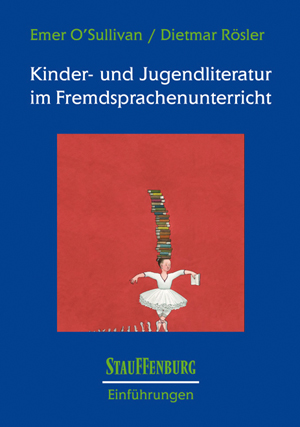
2.  New Book on Children's Literature in Foreign Language Teaching

If you are interested in the role of children's literature in foreign language teaching and if you read German, then you might be interested in this new book:

Kinder- und Jugendliteratur im Fremdsprachenunterricht, by Emer O'Sullivan & Dietmar Rösler
Tübingen: Stauffenburg 2013


Friday, July 12, 2013

CFP: Worcester Papers - 'Representation of the Body in Fantasy and Gothic Literature '

Call for Papers
Representation of the Body in Fantasy and Gothic Literature 

Papers are invited for Issue 9 (2013) of Worcester Papers (ISSN 1749-1150) to be published in December 2013. This issue will be themed 'Representations of the Body in Fantasy and Gothic Literature', aiming to explore the undeniable influence of the body in these genres. This issue welcomes articles that examine the varied portrayals of the physical in the wide range of Gothic and Fantasy literature including, but are not limited to the following topics:
-    The subversive body
-    Corporeal transition/hybridity and the body
-    Embodying gender
-    Body under attack/ bodily betrayals
-    Notions of alterity
-    Body in illustrations

Please send 250 word abstracts, along with a brief biography by September 7th  2013 to 
n.aziz@worc.ac.uk. Successful submissions will be notified by September 21st 2013. Final articles, in MLA style, font Times New Roman font size 12, double spaced, between 4,000 to 6,000 words must be received by November 7th 2013.

About Worcester Papers.
Worcester Papers is a journal produced by the Institute of Humanities & Creative Arts at the University of Worcester, Worcester, UK. The journal is edited by postgraduate students in collaboration with an editorial board of experienced academics. The articles are peer reviewed. The journal is registered with the British Library. The International Forum for Research in Children's Literature is within the Institute of Humanities & Creative Arts under the directorship of Prof Jean Webb. IFRCL is an interdisciplinary research group working in children's literature, historical perspectives, drama, film, illustration and interpreting text in the widest sense.

We look forward to receiving your abstracts and articles. Thank you.
contact: Fateha Aziz, n.aziz@worc.ac.uk. 

Wednesday, July 10, 2013

Multicultural Picture Books on Ramadan

Around the world, Muslims have begun to observe fasting during the Islamic month of Ramadan. The next four weeks  will include resisting food and water from dawn until sunset, as well as tempering one's lifestyle to be more reflective, charitable, and understanding.

To celebrate this annual experience, here are two recent picture books that convey the rich messages of Ramadan and contribute to the dearth of diverse literature that exists for children, but need only be sought.

Under the Ramadan Moon, by Sylvia Whitman (2011).
The lyricality of this book makes it stand out, and its repeated verses mirror the importance of ritual and tradition that highlight a single day of Ramadan, including waking up before dawn to eat and pray, and breaking fast among family and friends. It serves as an artful introduction to Ramadan.

White Nights of Ramadan, by Maha Addasi (2008)
I reviewed this book earlier this year for the SDSU Book Reviews. For now I will say that the lush colors bring to life a culturally specific holiday (from Kuwait and other Gulf countries) that occurs midway through Ramadan -- Girgian. It's festive and thoughtful, and does a great job of capturing the spirit of month.


Monday, July 8, 2013

21st IRSCL Conference: Children's Literature and Media Cultures

21st IRSCL conference
10th-14th August 2013
2013 Congress, Maastricht, The Netherlands
Theme: Children’s Literature and Media Cultures

The 21st biannual IRSCL conference will be be hosted this year by the Faculty of Arts and Social Sciences of Maastricht University in Maastricht, the Netherlands, on August 10th -14th, 2013.

Contemporary children and adolescents divide their time over many different media. These media do not develop in isolation. Rather, they shape each other by continually exchanging content and modes of mediation. This conference addresses the exchanges between children’s literature and adjacent newer and older media (oral narrative, theatre, film, radio, TV, digital media).
Media are best defined as cultural practices that forge specific links between senders and receivers of messages, facilitating certain types of communicative behavior. As newer media tend to imitate if not absorb older media, they force older media to continually reassert their uniqueness and indispensability in a rapidly changing media landscape. How has children’s literature staked out its own niche in these historically variable ‘mediascapes’ in the course of time? How do electronic and digital media affect children’s emergent literacy and literary competence? How have children’s books and the newer electronic and digital media impacted on children’s play? What sort of communicative behaviors are facilitated by the diverse media available to children and adolescents nowadays? Which ethical and political issues are raised by the fact that children’s literature has to share its claim to the audience’s attention with a whole gamut of alternative media? These questions are central to the 21st biennual conference of the IRSCL.
The aim of the conference is to strengthen the ever closer ties between children’s literature scholars and media experts, and to bridge the gap between hermeneutic methods from the humanities and empirical, experimental methods from the social sciences.
 
The conference will include the following tracks:

I Historical Perspectives:
  • orality and literacy
  • the changing place of children’s books within shifting media ecologies
  • adaptations of children’s literature to other media
  • remediation (the absorption and reorganization of older media in newer children’s media)
  • children’s media and children’s play
  • narratives across media (picture books, comic strips, graphic novels, games etc.)
II Sociological, Ethnographic and Cultural Studies’ Perspectives
  • children and online communities
  • fan practices (fan videos, comics, fiction, role play and costume play)
  • age and media: how do media solidify and destabilize distinctions between age groups?
  • the circulation of social stereotypes (class, ethnicity, gender, nationality, religion) between children’s media
  • migration, globalization and children’s media
III Pedagogical Perspectives
  • emergent literacy and literary competence  in a multimedia  world
  • the dynamic acquisition of media literacy
  • the acquisition of cultural literacy through diverse children’s media
  • online contexts for promoting children’s literature
  • digital environments  for researching children’s literature
IV Ethical and Political Perspectives
  • strategies of (dis)information in children’s media
  • children’s media and issues of  age-appropriateness (media moral panics)
  • the ethics of social media
  • children’s media and global inequality (digital divides)
V  Other related topics

Tuesday, July 2, 2013

Call for papers: Barnboken – Journal of Children’s Literature Research

Following are three Call for Papers for Barnboken – Journal of Children’s Literature Research.
For information on any of them, please see www.barnboken.net.

1. For the Spring 2014 issue: “You're Out of Control!” The Unruly Child in Children’s Literature

Unruly, wild and loud children are common in children’s literature. Indeed, there seems to be a need to portray children outside parental control, or even of children who rebel against oppressive adult regimes, as in Shockheaded Peter or Pippi Longstocking. One could argue that children’s and YA fiction establishes a zone of freedom where (fictional) children are allowed a measure of freedom. It is of course true that the unruly and anarchic child can be used as a warning, but more often than not the disobedient and troublesome child saves the day. Both Astrid Lindgren’s Emil and J. K. Rowling’s Harry Potter are rule-breakers who go their own ways, yet they ultimately bring about harmony and redemption.

The unruly child can be seen from different perspectives. Concepts that can open up the notion of the unruly child include: identity, power (not least between adult-child), normativity, body, performativity, animalism, and queer. Some of the questions that beg to be asked are: what is the role of the unruly child in children’s literature? What are the limits of “unruliness”? How close is the state of the wild child to that of animals? Thus, the wild, the loud and the unruly will be the Barnboken – Journal of Children’s Literature Research Spring theme 2014. We welcome proposals and articles in that spirit, and we do so up until:

23 September 2013 (proposals)
25 November 2013 (articles)

2. For the Autumn 2014 issue: Britt G. Hallqvist 100 Years

Britt G. Hallqvist (1914-1997) is one of the most important figures in Swedish children’s literature during the 20th C. Her contribution is at once deep and versatile. From the début with the comic masterpiece Rappen’s på Blåsopp [The Rappens of Blåsopp] in 1950, over numerous children’s and YA-books, several collections of poetry and verse, children’s drama, to children’s songs, hymns and prayers, her work is characterized by a both playful and exact attitude to language. Equally important was her role as a congenial translator of children’s literature. She translated Kipling’s The Jungle Books, Wilder’s The Little House on the Prairie, Milne’s Winnie-the-Pooh and Tolkien’s The Hobbit, to just mention a few. Finally, in her translations just as in her original work, she switched with perfect ease from pose to poetry as can be seen in her indispensable translations of nonsense poetry (Plath, Lear, Eliot, Krüss) into Swedish. Barnboken – Journal of Children’s Literature Research will devote the 2014 Autumn issue to Britt G. Hallqvist and her contribution to Swedish children’s literature. We welcome proposals and articles up until:

25 November 2013 (proposals)
1 April 2014 (articles)

3. For the Spring 2015 issue: The Institutions that Shape Children’s Literature: Schools, Publishers and Libraries

Children’s literature cannot be reduced to the book the reader holds in her hand. The act of reading comes at the end of a long chain of actions, all of which are prompted and supported by different literary, cultural, pedagogical institutions (schools, libraries) as well as by commercial interests (publishers, booksellers). Thus, to understand the conditions that shape children’s literature and children’s reading it is necessary to scrutinize children’s literature as a cultural field with its own infrastructure. Through which channels do children’s books reach the child reader? What is the role of publishers, libraries, reading campaigns, reviews of children’s books, literary prizes? Which discourses about children and childhood shape the institutions of children’s literature? What is the role of new technologies and media forms in creating new arenas for children’s literature? Which tools can children’s literature research bring to bear on the field of children’s literature and the cultural practices of reading? These are some of the questions that Barnboken – Journal of Children’s Literature Research will address in the 2015 Spring issue. We welcome proposals and articles on these and related topics up until:

12 August 2014 (proposals)
25 November 2014 (articles)

For more information, please see www.barnboken.net.

Åsa Warnqvist, editor
Swedish Institute for Children’s Books
Odengatan 61
SE-113 22 Stockholm
SWEDEN
Tel: + 46 8 54 54 20 51. E-mail: barnboken@sbi.kb.se

Thursday, June 27, 2013

Talk & Book Signing with illustrator/artist Susie Ghahremani in La Jolla, June 27


If you're in San Diego and have some time this evening, consider making a trip to La Jolla to attend this event:
Join illustrator and artist Susie Ghahremani tonight as she shares her work and the secrets behind the making of the artwork for her picture book, What Will Hatch? (written by Jennifer Ward).

When & Where: Thursday, June 27th at 6 pm at the Museum of Contemporary Art San Diego in La Jolla.
The museum is located at 700 Prospect St. in La Jolla, CA and the talk is part of the “Shore Thing” evening event series. The talk will be followed by Q&A and book signing.

Talk begins promptly at 6:30 pm, so arrive early!

Sunday, June 23, 2013

Illustrating Children's Books, UCSD Extension Course with Joy Chu


Just a smidgling of days left to register for Joy Chu's upcoming workshop, "Illustrating Books for Children" through UCSD Extension.

Illustrating Books for Children / Art 40011
Instructor: Joy Chu
June 26-August 21
Wednesdays, 6:30pm-9:30pm
extension.ucsd.edu
Register before June 25!

More info about the class on her website: http://gotstorycountdown.wordpress.com/
Or join her facebook group: https://www.facebook.com/groups/gotstory/ 

Monday, June 17, 2013

Reading Fictions One-day Symposium

A One-day Symposium on Representations of Books and Readers in Children’s Literature
Friday 11 October 2013
School of Education, University of Glasgow
 
Confirmed Speakers:

Dr Evelyn Arizpe, Senior Lecturer, University of Glasgow
Julia Eccleshare, The Guardian's Children's Books Editor
Dr Maureen Farrell, Senior Lecturer, University of Glasgow
Prof Kim Reynolds, Professor of Children's Literature, University of Newcastle
Dr Vivienne Smith, University of Strathclyde
Prof Morag Styles, Professor of Children’s Poetry, University of Cambridge
Prof Maria Nikolajeva, University of Cambridge
Dr Sylvia Warnecke, The Open University
Prof Jean Webb, Director of the International Forum for Research in Children's Literature, University of Worcester

*A joint project of the University of Glasgow and the University of Strathclyde, funded by the British Academy.
Registration: £10.00 donation to UKLA Books for Africa project.
Places are limited. RSVP to evelyn.arizpe@glasgow.ac.uk and send cheque, made out to UKLA,  to Evelyn Arizpe, School of Education, St Andrew's Building, 11 Eldon St., Glasgow G3 6NH

Friday, June 14, 2013

CFP: Children's Literature and Psychoanalysis Conference in Philadelphia

Call for Papers
“Enchanted Places”, Imagined Childhoods
A Symposium on Children’s Literature and Psychoanalysis
Saturday, September 20, 2014
Psychoanalytic Center of Philadelphia and the University of Pennsylvania
Deadline: February 15, 2014

Featured Author:  Jerry Spinelli

Jerry Spinelli has been writing books for more than thirty years and has published an average of one book a year over that time.  Maniac Magee (1991) won the Newbery Award and Wringer (1997) was a Newbery Honor recipient.  More recent titles include Stargirl (2000), Milkweed (2003) and Hokey Pokey (2013). In a blend of gritty realism and casual magic, Spinelli locates his stories in the places where ordinary children live—old cities, dreary suburbs and school classrooms—then enchants these places with transcendent language and characters who radiate courage and bold eccentricity.  His stories confront difficult and conflictual themes like poverty, homelessness and urban race relations, as well as mourning and social ostracism, but they do so without sentimentality.  Spinelli’s characters are never victims, but are tough survivors and often moral and spiritual heroes in his and their imagined worlds.

It is a challenge to psychoanalytic theory and practice to acknowledge the “enchanting” role of language on a day to day basis as we practice our “talking cure,” as well as to go beyond our normative developmental narratives in order to account for the survivors, the exceptions, and the morally courageous characters who have emerged from difficult environmental circumstances to transform their own lives and the lives of others in the process.

This symposium will provide an opportunity for explorations of language, of ‘enchantment’ in psychoanalysis and literature; of the reciprocal acts of imagination between author and reader involved in creating works of childrens’ literature; and,  the possibilities for transformation of the painful realities of ordinary childhood in both psychoanalysis and literature.  It will provide a forum for Jerry Spinelli’s work, for the work of other authors, as well as for works of theoretical, clinical and literary interest. Academics, psychoanalysts, graduate students and psychoanalytic candidates are encouraged to submit original papers on any aspects of the above.

Guidelines for submission:
Completed papers only. 8-10 pp.  No abstracts or proposals.
Names and identifying information on separate cover sheet only.
Deadline: February 15, 2014
Send papers to:  Elaine Zickler, PhD at mezickler@gmail.com

Wednesday, June 12, 2013

An Unjournal Preview!

After a long and determined journey, the ChildLit GSA is really excited to present an introductory look at our new journal, The Unjournal of Children's Literature. The children's lit grad students at SDSU have worked tirelessly -- especially in the last month -- to pull this endeavor together. Despite setbacks that always seem to pop up at the most inopportune moment, we are thrilled to give you a glimpse into what's in store, right in time for the ChLA Conference this week!

The Unjournal is set to showcase budding voices in the field of children’s literature, hopefully encouraging emerging scholars to pursue their passion of children’s literature, while also attracting a wide readership: established scholars (of children's lit and otherwise), writers and artists, and children's lit enthusiasts of any kind.

Part of the unjournaling process includes a more unconventional system of "publishing" an issue -- pieces will be shared over the course of many months, culminating in a large collection of works. These works will include a diverse assortment of material; articles and book reviews will certainly be featured, but so will notable interviews, lots of artwork (illustrations and child-themed pieces), and down the road some curious eclectic articles as well. It will also be an interactive experience, with a live twitter feed and discussion comments to figure in the mix.

Expect the first batch of the inaugural issue to be published soon, but for now explore the site, at least to take in an excerpt of Dr. Jerry Griswold's interview with the editors. We hope you'll enjoy this unjournal 365 days of the year.


CFP: Happiness Conference in Oxford

Call for Papers: Happiness, Childhood, and Children's Literature
16th November 2013, St Hilda’s College, Oxford

"Novels, like paintings or music or sport, should hold out to children the promise of happiness, and the certainty of laughter." -Fred Inglis

Jean-Jacques Rousseau claims that children are born innocent and happy; all their educators need to do is protect this natural state of childhood from being contaminated by society. In the last few years, however, a radical reassessment of happiness has taken place in critical theory, through thinkers such as Sara Ahmed and Lauren Berlant. They point to the social construction of the idea of happiness, how it varies over history and geography, and is based on predominating social values. As such, “happiness” can work as an ideology that welcomes some kinds of lifestyles and excludes others. In particular, they emphasize the difference that gender and sexuality makes to conventional models of a “happy” life. Their resituating of happiness as a normative and often oppressive ideology brings us the opportunity to reassess the place of happiness in children’s literature.

No sustained study of happiness in children’s literature has taken place since Fred Inglis’ The Promise of Happiness: Values and Meaning in Children’s Fiction was published in 1981. Inglis suggests that children’s literature is exempt from the critique of happiness: "Whatever has happened to the idea of beauty and happiness in adult art, our children must keep faith with their radical innocence." However, such children’s books as John Burningham’s Granpa, Neil Gaiman’s The Wolves in the Walls, and Michael Rosen’s Sad Book deal with the loss of loved ones and of home. Such texts reject happy endings, and implicitly or explicitly, see and value more negative emotions such as mourning, fear, and depression in children. These texts raise the issue of the purpose of children’s literature: should it prepare children for sad truths, or shield children from them? In this way, such works move to redefine the "happy ending."

Should children’s literature play a role towards encouraging or defining happiness? How do cultural differences affect children’s happiness? This conference invites papers on happiness in English and French children’s literature or theorisations of childhood.

Topics may include, but are not limited to:
-childhood “innocence”; criminal children; angelic children
-adult nostalgia; childhood idylls
-humour; play; fantasy; utopia
-unconventional modes of happiness; non-normative families; gender and sexuality
-dealing with death, tragedy and war
-representations of depression; angst; suicide
-Rousseau; Winnicott; Klein; childhood and affect
-cultural differences and happiness; post-colonial children’s literature
-adaptation, translation and changing values of happiness

Abstracts of no more than 300 words should be sent to childlithappiness@gmail.com by no later than 21st September 2013.

This one-day conference on Saturday 16th November 2013 at St Hilda’s College, Oxford, is organized by Queen Mary, University of London. We are fortunate to welcome keynotes on French and English children’s literature, highly successful children’s authors, and the renowned producer Martin Pope ) for what promises to be an exciting day.

Keynote Speakers:
Penelope Brown, University of Manchester
Anna Kemp, Queen Mary, University of London (author of Dogs Don’t Do Ballet)
Diane Purkiss, Keble College, University of Oxford (co-author of the Corydon series)
Martin Pope, producer of The Gruffalo and The Gruffalo’s Child films

Monday, June 10, 2013

CFP: Canon Conference at the University of Tübingen, Germany

Call for Papers: Canon Constitution and Canon Change in Children’s Literature

International Conference at the University of Tübingen, Germany, 11-13 September 2014

Although several scholars have investigated how national canons of children’s literature have developed, such historical approaches have mostly focused on aesthetic matters or on changing concepts of childhood. The impact of cultural concepts that are constitutive for the construction of cultural identities (so-called social imaginaries) on canon-formation has, on the other hand, been widely neglected. The same applies to a transnational perspective on canon constitution, which transcends national boundaries and instead locates children’s literature in a more comprehensive communicative space.

Issues that might be investigated in this respect are the presentation of children’s literature in literary histories, the historical contingency of the status of canonicity, the impact of social institutions and awards on the appreciation of certain types of children’s literature, the possible reasons for excluding or including particular children’s books from/into the canon, the conceptual shifts in the acknowledgement of children’s literature in national canons, the influence of genre preferences for canon constitution and the perception of a canon of children’s literature as a transnational phenomenon.

The purpose of this international conference is to bring together scholars of children’s literature from different countries who are especially interested in the topic of canon formation in children’s literature. We particularly invite papers dealing with one or several of the following topics:

  • National vs. transnational canons;
  • Paul Hazard and the idea of a “World Literature for Children”;
  • Divergent canon concepts (Western Canon, European Canon, Global Canon, Multicultural Canon, Postcolonial Canon);
  • The concept of the “Golden Age” and its impact on the canon of children’s literature;
  • Genre preferences in canonization processes;
  • The impact of institutions (e.g. libraries, museums, schools, literary societies, awards) on the development of the canon;
  • Canons and social imaginaries;
  • Reasons for inclusion or exclusion in literary histories; 
  • Falling out of the canon: the challenges of forgotten children’s books; 
  • Interfaces between the canons of children’s and adults’ literature; 
  • Changing criteria for canonicity.

Contributions from academics interested in the close relationship between historical and theoretical perspectives of canon research in the realm of children’s literature are particularly welcome. The proceedings of the conference will be published in book form.

Deadline for proposals: 31 July 2013.

Please send abstracts of c. 300 words (for a twenty-minute paper) and a short biographical note (c. 100 words) as e-mail attachments (Word format please) to both convenors, Bettina Kümmerling-Meibauer: bettina.kuemmerling-meibauer@uni-tuebingen.de and Anja Müller: am.englit-si@muelleranja.eu

Notification whether proposals have been accepted will be made by 31 August 2013.

The conference venue is Schloss Hohentübingen, a beautiful 16th-century castle in the picturesque university town of Tübingen (close to Stuttgart international airport). For details, visit http://www.uni-tuebingen.de/museum-schloss/schloss.html

Saturday, June 8, 2013

Quick Link: Annotations by Famous Authors

Check out Flavorwire's fascinating slideshow of famous authors' annotations of classic books. There are many links to view more annotations, as well. Not surprisingly, Mark Twain's comments are hilarious.

(Semi-related note: Mark Twain is the only person I would desperately want at my dream dinner party.)

Friday, June 7, 2013

SDSU Students and Grads at 2013 ChLA Conference

SDSU is excited to have a large contingent of students, alums, and faculty attending the 40th Annual Children's Literature Association Conference!

This year's conference, "Play and Risk in Children's and Young Adult Literature," will be held June 13-15 in Biloxi, MS.

Faculty attending include Alida Allison, June Cummins, and Phillip Serrato. Faculty Emeritus Jerry Griswold will deliver the Francelia Butler Lecture.

Current students and recent alumni attending include Sarah Burns '13, Jill Coste '13, Megan Parry '13, and Kelsey Wadman.

Additional alumni include NaToya Faughnder, Naomi Lesley, Sean Printz, and Martin Woodside.

Check out the ChLA Conference Schedule at this link to see what topics our SDSU friends will be discussing!

Thursday, June 6, 2013

MLA Session Call - Deadline June 10

Each year, the Children‘s Literature Association is guaranteed one session at the Modern Language Association Convention and can submit proposals for up to two more.

If you would like to propose a session topic, then by 9 pm on Monday, June 10th please send the ChLA/MLA Liaison (Jennifer Miskec at miskecjm@longwood.edu):

(1) a short description of your proposal idea, and, if relevant,
(2) the name of another MLA-affiliated entity (allied organization, division, or discussion group) you plan to seek as a co-sponsor.

The ChLA Board will examine the proposals and select the top three (one guaranteed, plus two additional**) for submission to the 2015 MLA Convention.

If the ChLA chooses to submit two additional sessions, then one of those sessions must be a collaborative session with another entity (division, discussion group, allied organization, etc.):

• MLA divisions:
• MLA allied and affiliate divisions:
• MLA discussion groups: 


**The proposals for the two additional sessions are not guaranteed and will be reviewed by the MLA Program Committee. Please see the Procedures for Organizing Meetings on the MLA Web site (http://mla.org/conv_procedures) for further details.

A Little Bit of Diversion

The end of the semester has come and gone, but the thrills of summer freedom seem to have skipped over a head or two. At least, that is how I and some of my peers have been feeling the past few weeks what with relentless projects that continually evolve (soon to be shared here!). In the meantime, it's nice to take a short break and enjoy a few lighthearted discoveries vis a vis the web:

If you're interested in picture books, in illustrating, or in award winning artists, check out Jon Klassen's guide to drawing/painting a bear in deep thought. Klassen was awarded both the 2013 Caldecott Medal for This is Not My Hat and a 2013 Caldecott Honor for his illustrations in Extra Yarn. I warrant a lesson or two from someone who can work in a rabbit being eaten off-page in a darkly humorous fashion could go a long way...

If you need another reason to love libraries (really? you do?) or you grew up playing Domino Rally, this video from the Seattle Public Library's Summer Reading Kick-Off is definitely worth the view. And then just imagine what reshelving must have been like after the fact...


Friday, May 31, 2013

CFP: Ecology and Children's Literature Grad Student Conference

Sensing Wonder, Serious Play: Ecology and Children’s Literature  

A Graduate Student Conference
Harvard University
Friday, October 25 2013

Keynote Speaker: 
Sara St. Antoine
Student Moderators:
Steven Brown, Evander Price

Much has happened in the decade since Sidney Dobrin and Kenneth Kidd applied the lens of ecocriticism to the world of children’s media in their collection of essays Wild Things: Children’s Culture and Ecocriticism (2004).  This conference grows from their foundational work and endeavors to further the discussion.  We invite any essays that consider the role children’s media plays in building a sense of identity, wonder, imagination, environment, and relationship to the surrounding world.  Relevant questions range from (but are certainly not limited to):

How do certain works of children’s literature use nature to bridge the gap between adulthood and childhood?

What sort of eco-ethic does children’s media teach, and what do children learn from that media?

What is behind the phenomenal popularity of recent children’s stories?
Why have certain themes, such as dystopia and post-apocalpytic settings, become so popular?

What lessons can adults learn from depictions of nature in children’s stories?  What might be gained from accessing the heightened sense of wonder present in childhood?

We invite papers that explore children’s literature (Newbery Award Winners), imagery (Caldecott Medal Winners), movies, toys, and the like, from an ecocritical perspective.  This conference is meant as an opportunity to tap into childhood experience and explore that sacred period when we possessed, as Rachel Carson put it, an unparalleled sense of wonder, now forgotten.

For consideration, please submit your name, academic affiliation, and the most recent version of your paper to ecoconferenceharvard@gmail.com by August 15, 2013.

DEADLINE FOR SUBMISSIONS: August 15, 2013

Monday, May 27, 2013

Children's Literature in English Language Education Journal Available in Open Access Format Online

The debut issue of the CLELEjournal (Children's Literature in English Language Education Journal) is available online.

CLELEjournal is a peer-reviewed, biannual, and open access journal dedicated to examining the use of children's literature in teaching English language. The first issue features the following articles:
  • "The World Turned Upside Down: Exploring Alternate History with Young Adults" by Justyna Deszcz-Tryhubczak & Mateusz Marecki
  • "From Reading Pictures to Understanding a Story in the Foreign Language" by Annett Kaminski
  • "Humanizing Teaching English to Young Learners with Children's Literature" by Irma Ghosn
  • "Playing with Nonsense: Toward Language Bridging in a Multilingual Classroom" by Urmishree Bedamatta
  • "Response to 'The Lost Thing': Notes from a Secondary Classroom" by Sandie Mourão
Visit http://clelejournal.org to read these articles and learn more about CLELEjournal.


Thursday, May 23, 2013

CFP: NeMLA Conference April 3-6 2014

45th Annual Convention
Northeast Modern Language Association (NeMLA)
April 3-6, 2014
Harrisburg, Pennsylvania

The 45th Annual Convention will feature approximately 350 sessions, as well as dynamic speakers and cultural events. Interested participants may submit abstracts to more than one NeMLA session; however, panelists can only present one paper (panel or seminar). All of the panel CFPs can be found on their website here, which includes the following CFP:
Young Adult Literature After A Wrinkle in Time 
 
The 50th Anniversary in 2013 of the still popular Madeline L’Engle’s ‘Wrinkle in Time’ gives this panel an opportunity to assess the progress of Young Adult literature in the 50 years since the novel appeared. What is the state of Young Adult literature? Did authors follow L’Engle’s lead or branch out to new horizons? Is young adult literature still appealing to young adults? Interested scholars should email 250-300 word abstracts to burtonpbcc@gmail.com.
 
Chairs: Carmen Burton, burtonpbcc@gmail.com and Mary Willingham, willingham_m@mercer.edu 
Area: Cultural Studies and Film
Abstract Deadline: September 30, 2013


Wednesday, May 22, 2013

Multicultural Perspectives: ChildLit Festivals in Pakistan

Last September I wrote about the Children's Literature festival in Pakistan--turns out it has blossomed into an insightful and inspiring series of events, inviting resident authors, scholars, and children to two to three day events aimed at broadening awareness for the existence, importance and influence of children's literature in Pakistan. When last I checked, they had held their fourth conference, but it looks like CLF 2013 is ready for its sixth conference this weekend, on May 24-25. It follows on the coattails of the first Literary Festival in Islamabad that was held last month, also successful on its own terms.

I'm really impressed by the tenacity and eagerness of the Idara-e-Taleem-o-Aagahi (ITA), or the 'Center of Education and Consciousness,' who have been organizing these conferences since 2011 with the Oxford University Press. Amid all the mayhem that is painted across media about the state of things in Pakistan, movements like this are vital for the spirit of the local community and serve to develop the regard and support of the international community.

I had the opportunity to interview one of the festival coordinators from ITA, Sheba Sherin, following their November festival. At the time, the festival had incorporated events and activities in honor of Malala Yousafzai, the young Pakistani girl shot last October by the Taliban for her vociferous advocacy of education for girls. She is now one of the most recognizable young faces in the world, being named one of Time's 100 most influential people of 2013 and recently announcing an international grant for girls' education.  The CLF had honored her and Sherin described some of those efforts to me:
Malala was supposed to be the Young Ambassador of the CLF. However during the time we had approached her and were to have her officially on board with us, her unfortunate accident occurred. At the festival we had a special stall known as "Tribute to Malala--Letters, posters and cards dedicated to Malala Yousafzai". At the stall, children were given art materials through which they created beautiful letters and cards for her. Also a special short documentary created by Fauzia Minallah from Funkor Arts, was screened at the inauguration ceremony of the festival. The short animation was a tribute to Malala extending the support of millions for her.
Sherin also shared her insights on the role of children's literature in Pakistani culture. "Enhancing reading abilities and learning through promoting literature and the habit of reading books is something that automatically leads to excellence and brilliance, "she told me, articulating the need to instill in kids the value of books and reading.

At the time that I corresponded with her, the CLF was planning to coordinate events in smaller cities and less urban areas, including Swat and Bahawalpur for holding festivals at a smaller city level. They certainly hit the mark though in holding one in the capital of the country at such short notice. Hopefully this weekend will mark another momentous experience for kids and adults, and continue to spark a zest for learning and literacy, imagination and hope.

Monday, May 13, 2013

Links to Start Your Week Off

A bit of book news for you...

The Michigan School System was presented a proposal last week from a mother seeking to ban Anne Frank: Diary of a Young Girl from the curriculum due to one passage she found distasteful and overly sexual. The review committee has decided not to ban it however, citing that 'situational censorship' would be in play if they did. I wonder how the Chicago Board of Education justified supporting the classroom ban of Persepolis. It certainly helped book sales but was viewed as detrimental to kids as well.

independent publisher Pushkin Press has established a new imprint, Pushkin Children's Books,aimed at translating children's books from around the globe into English. This has been something of great import on my mind as well; consider the wealth of storytelling cultural awareness, and overall knowledge that children (and adults) are missing out on by not having access to stories everywhere. There is the Marsh Award for Children's Lit in Translation, which implies its importance, but still the movement has been relatively slow. Nevertheless, Pushkin is pushing the movement forward.

Pakistan will be holding their 6th Children's Literature Festival at the end of May, the first to be held in the capital city of Islamabad. I'll be writing some more on this really soon (let the final papers be done!), but in the mean time you can read up on the organization, making groundbreaking strides with each event.

And because it's Monday and we all deserve a tasty treat to set the week right (It's Children's Book Week by the way!), here are some delectable sights to behold: edible books and more edible books.

Thursday, May 9, 2013

Children's Book Editor Discusses What Makes a "Good Book" on Saturday May 11

The San Diego Chapter of the Society of Children’s Book Writers and Illustrators (SCBWI) will feature Kira Lynn from Kane Miller Books on Saturday, May 11 at 2 p.m.

Ms. Miller will share her definition of a “good book,” offer tips on what writers and illustrators can do to make sure that they’ve submitted their best work, and discuss the state of the children’s book market in general. The event will be held at the University of San Diego in the Hahn School of Nursing building. (See a map of campus here.)

* Contact: 619-713-5462 or pr-sd@sandiego-scbwi.org
* Age limit: 18+
* When: Saturday, May 11, 2 p.m. to 4:30 p.m.
* Where: USD: University of San Diego, 5998 Alcalá Park, San Diego, 92110 (Directions)
* Cost: $7 - $9 (Buy Tickets)