Friday, May 31, 2013

CFP: Ecology and Children's Literature Grad Student Conference

Sensing Wonder, Serious Play: Ecology and Children’s Literature  

A Graduate Student Conference
Harvard University
Friday, October 25 2013

Keynote Speaker: 
Sara St. Antoine
Student Moderators:
Steven Brown, Evander Price

Much has happened in the decade since Sidney Dobrin and Kenneth Kidd applied the lens of ecocriticism to the world of children’s media in their collection of essays Wild Things: Children’s Culture and Ecocriticism (2004).  This conference grows from their foundational work and endeavors to further the discussion.  We invite any essays that consider the role children’s media plays in building a sense of identity, wonder, imagination, environment, and relationship to the surrounding world.  Relevant questions range from (but are certainly not limited to):

How do certain works of children’s literature use nature to bridge the gap between adulthood and childhood?

What sort of eco-ethic does children’s media teach, and what do children learn from that media?

What is behind the phenomenal popularity of recent children’s stories?
Why have certain themes, such as dystopia and post-apocalpytic settings, become so popular?

What lessons can adults learn from depictions of nature in children’s stories?  What might be gained from accessing the heightened sense of wonder present in childhood?

We invite papers that explore children’s literature (Newbery Award Winners), imagery (Caldecott Medal Winners), movies, toys, and the like, from an ecocritical perspective.  This conference is meant as an opportunity to tap into childhood experience and explore that sacred period when we possessed, as Rachel Carson put it, an unparalleled sense of wonder, now forgotten.

For consideration, please submit your name, academic affiliation, and the most recent version of your paper to ecoconferenceharvard@gmail.com by August 15, 2013.

DEADLINE FOR SUBMISSIONS: August 15, 2013

Monday, May 27, 2013

Children's Literature in English Language Education Journal Available in Open Access Format Online

The debut issue of the CLELEjournal (Children's Literature in English Language Education Journal) is available online.

CLELEjournal is a peer-reviewed, biannual, and open access journal dedicated to examining the use of children's literature in teaching English language. The first issue features the following articles:
  • "The World Turned Upside Down: Exploring Alternate History with Young Adults" by Justyna Deszcz-Tryhubczak & Mateusz Marecki
  • "From Reading Pictures to Understanding a Story in the Foreign Language" by Annett Kaminski
  • "Humanizing Teaching English to Young Learners with Children's Literature" by Irma Ghosn
  • "Playing with Nonsense: Toward Language Bridging in a Multilingual Classroom" by Urmishree Bedamatta
  • "Response to 'The Lost Thing': Notes from a Secondary Classroom" by Sandie Mourão
Visit http://clelejournal.org to read these articles and learn more about CLELEjournal.


Thursday, May 23, 2013

CFP: NeMLA Conference April 3-6 2014

45th Annual Convention
Northeast Modern Language Association (NeMLA)
April 3-6, 2014
Harrisburg, Pennsylvania

The 45th Annual Convention will feature approximately 350 sessions, as well as dynamic speakers and cultural events. Interested participants may submit abstracts to more than one NeMLA session; however, panelists can only present one paper (panel or seminar). All of the panel CFPs can be found on their website here, which includes the following CFP:
Young Adult Literature After A Wrinkle in Time 
 
The 50th Anniversary in 2013 of the still popular Madeline L’Engle’s ‘Wrinkle in Time’ gives this panel an opportunity to assess the progress of Young Adult literature in the 50 years since the novel appeared. What is the state of Young Adult literature? Did authors follow L’Engle’s lead or branch out to new horizons? Is young adult literature still appealing to young adults? Interested scholars should email 250-300 word abstracts to burtonpbcc@gmail.com.
 
Chairs: Carmen Burton, burtonpbcc@gmail.com and Mary Willingham, willingham_m@mercer.edu 
Area: Cultural Studies and Film
Abstract Deadline: September 30, 2013


Wednesday, May 22, 2013

Multicultural Perspectives: ChildLit Festivals in Pakistan

Last September I wrote about the Children's Literature festival in Pakistan--turns out it has blossomed into an insightful and inspiring series of events, inviting resident authors, scholars, and children to two to three day events aimed at broadening awareness for the existence, importance and influence of children's literature in Pakistan. When last I checked, they had held their fourth conference, but it looks like CLF 2013 is ready for its sixth conference this weekend, on May 24-25. It follows on the coattails of the first Literary Festival in Islamabad that was held last month, also successful on its own terms.

I'm really impressed by the tenacity and eagerness of the Idara-e-Taleem-o-Aagahi (ITA), or the 'Center of Education and Consciousness,' who have been organizing these conferences since 2011 with the Oxford University Press. Amid all the mayhem that is painted across media about the state of things in Pakistan, movements like this are vital for the spirit of the local community and serve to develop the regard and support of the international community.

I had the opportunity to interview one of the festival coordinators from ITA, Sheba Sherin, following their November festival. At the time, the festival had incorporated events and activities in honor of Malala Yousafzai, the young Pakistani girl shot last October by the Taliban for her vociferous advocacy of education for girls. She is now one of the most recognizable young faces in the world, being named one of Time's 100 most influential people of 2013 and recently announcing an international grant for girls' education.  The CLF had honored her and Sherin described some of those efforts to me:
Malala was supposed to be the Young Ambassador of the CLF. However during the time we had approached her and were to have her officially on board with us, her unfortunate accident occurred. At the festival we had a special stall known as "Tribute to Malala--Letters, posters and cards dedicated to Malala Yousafzai". At the stall, children were given art materials through which they created beautiful letters and cards for her. Also a special short documentary created by Fauzia Minallah from Funkor Arts, was screened at the inauguration ceremony of the festival. The short animation was a tribute to Malala extending the support of millions for her.
Sherin also shared her insights on the role of children's literature in Pakistani culture. "Enhancing reading abilities and learning through promoting literature and the habit of reading books is something that automatically leads to excellence and brilliance, "she told me, articulating the need to instill in kids the value of books and reading.

At the time that I corresponded with her, the CLF was planning to coordinate events in smaller cities and less urban areas, including Swat and Bahawalpur for holding festivals at a smaller city level. They certainly hit the mark though in holding one in the capital of the country at such short notice. Hopefully this weekend will mark another momentous experience for kids and adults, and continue to spark a zest for learning and literacy, imagination and hope.

Monday, May 13, 2013

Links to Start Your Week Off

A bit of book news for you...

The Michigan School System was presented a proposal last week from a mother seeking to ban Anne Frank: Diary of a Young Girl from the curriculum due to one passage she found distasteful and overly sexual. The review committee has decided not to ban it however, citing that 'situational censorship' would be in play if they did. I wonder how the Chicago Board of Education justified supporting the classroom ban of Persepolis. It certainly helped book sales but was viewed as detrimental to kids as well.

independent publisher Pushkin Press has established a new imprint, Pushkin Children's Books,aimed at translating children's books from around the globe into English. This has been something of great import on my mind as well; consider the wealth of storytelling cultural awareness, and overall knowledge that children (and adults) are missing out on by not having access to stories everywhere. There is the Marsh Award for Children's Lit in Translation, which implies its importance, but still the movement has been relatively slow. Nevertheless, Pushkin is pushing the movement forward.

Pakistan will be holding their 6th Children's Literature Festival at the end of May, the first to be held in the capital city of Islamabad. I'll be writing some more on this really soon (let the final papers be done!), but in the mean time you can read up on the organization, making groundbreaking strides with each event.

And because it's Monday and we all deserve a tasty treat to set the week right (It's Children's Book Week by the way!), here are some delectable sights to behold: edible books and more edible books.

Thursday, May 9, 2013

Children's Book Editor Discusses What Makes a "Good Book" on Saturday May 11

The San Diego Chapter of the Society of Children’s Book Writers and Illustrators (SCBWI) will feature Kira Lynn from Kane Miller Books on Saturday, May 11 at 2 p.m.

Ms. Miller will share her definition of a “good book,” offer tips on what writers and illustrators can do to make sure that they’ve submitted their best work, and discuss the state of the children’s book market in general. The event will be held at the University of San Diego in the Hahn School of Nursing building. (See a map of campus here.)

* Contact: 619-713-5462 or pr-sd@sandiego-scbwi.org
* Age limit: 18+
* When: Saturday, May 11, 2 p.m. to 4:30 p.m.
* Where: USD: University of San Diego, 5998 Alcalá Park, San Diego, 92110 (Directions)
* Cost: $7 - $9 (Buy Tickets)

Tuesday, May 7, 2013

Healthy Reading before Children's Book Week

One enticing diversion of mine is to scour the food blogosphere. Sadly I've been neglecting that lately, what with the end of the semester nipping at my toes and obligations that come with it. Still, when the chance avails I catch up on what I've missed and sometimes stumble on a delight. Yesterday was no different, as I came across the following post about some healthy pickin's for the young foodie from North Atlantic Books (located in Berkeley, CA, lest that name fools you). I had the opportunity to intern with them many, many moons ago, and am not surprised by this conscious collection of wholesome reads. I wonder what presence the "food revolution" has in youth culture, and if books like this are becoming more abundant.
As an aside: if I might suggest a delicious read myself, I'd recommend Hot, Hot Roti for Dada-Ji, by F. Zia--not so much for the healthiness than for the utterly mouthwatering visions of delicious Indian bread cooked fresh at home for many generations to enjoy.

Really, I don't even have the book and I still get excited by what lies within it.

But this first discovery led me to another--I was unaware that next week is Children's Book Week, the longest-running national literacy initiative (since 1919). As someone who hopes to get more involved in literacy movements locally and globally, I always get excited about these programs and checked out if any local events were happening. Apparently events will occur in La Jolla at Warwicks Books, including a reading/signing event with local author/illustrator Salina Yoon.

These initiatives make me reflect on the balance between being children's lit scholar and children's lit(eracy) advocate -- where they share ground and where they diverge. I'll have to hash that one out later. For now, I need some roti...

Friday, May 3, 2013

Brave New Girls: What it means to be a heroine in dystopian YA literature

If I were in New York City, I would definitely be going to this talk on May 10. The editors of the forthcoming book Contemporary Fiction for Young Adults: Brave New Teenagers will discuss the intersections between dystopias and pop culture, examining the hows and whys of the dystopian trend in contemporary young adult literature.

This relates to Alya's post from yesterday, where she mused over the popularity of certain kinds of young adult books. In fact, just the other day, Alya and I were chatting and marveling about how the dystopian trend hasn't yet hit a saturation point in the YA market. Why is this, do you think? Is it because audiences were so captivated by the thrilling Hunger Games that they just want more reading experiences like that? Is it because teenagers now live in a post-9/11 America, where a palpable awareness of terrorism gives rise to fear, and teens need to read comforting tales of heroes trumping totalitarian societies? Or is it simply because this is our culture's version of the mythic hero tale? Instead of knights questing to eradicate a monster and bring back some sort of treasure to the ruling party, we now have teenage protagonists (usually female) questing to overthrow a frightening dictatorship and return life to a semblance of "normal."

So the next question is why the teenage girl protagonist? Obviously there is science fiction and dystopian literature that features adult protagonists, but it is the work that follows the teenager's journey that has so populated the market. I might suggest that the fight against authority and the ultimate triumph of the teenage hero is a [wishful] metaphor for the move from adolescence to adulthood, a fantastical one where the adolescent successfully finds her place after the trials and tribulations of "figuring it all out."

Of course, we know that life is never that easy -- the time period between adolescence and adulthood is increasingly murky, and even if one "grows up" successfully (e.g. has a job they don't hate and enough money to live on their own), the story doesn't end there.

But frequently in dystopian literature, the story does end with the ultimate triumph of the female protagonist. She has suffered loss, yes, and she must cope with the drastic changes that her decisions have led to, but she is also wiser, and she has a place of relative power in this new society. Her journey has led her from being acted upon to being the actor.

So maybe what this boils down to (admittedly simplisticly) is that teenagers (and adults, too) are drawn to dystopian young adult literature for the hope they provide. Ultimately, don't we all want to believe that we would be actors and not acted-upon, come the revolution? Even if we know that the majority of people will let change happen TO them, we can read works that allow us to align with the people who CREATE that change.

We can pretend that we are brave new heroes.

Thursday, May 2, 2013

Limitless YA Publishing and a Fix of Fantasy

When I was young--or specifically, a young adult (whatever that actually means)--I spent most of my time reading 19th and 20th century classics, some fantasy, the occasional mystery thriller and, when no one was looking, current children's books that my younger brother was assigned from school. Even in my teenage years, I had developed a sense of nostalgia for the books I had read five, six, eight years prior, so it was with that memory that I'd check out the brother's newest assigned reading, curious about the goings on of the children's literary world.

But I was certainly not reading anything printed for me and my age group. Not regularly at least. That is why the Young Adult category intrigues me, as it may most of you. It has catapulted in the past ten years, generating some of the most memorable, and loathed, books of our generation. Is it because they are "easier" to read, venture into more fantastical or currently dystopic areas, or people just can't get enough of the teenage psyche? It's certainly profitable, which is why so many publishers are adopting the genre and creating their own YA imprints. Even Penguin Books India is launching INKED, their own "hip new young adult imprint." A recent LA Times article points out why:
What's the reason? Readers, or more specifically, book-buying readers. It's been obvious since midway through the Harry Potter series that books for kids could sell big -- in part because adults are reading the books as well. The success of the "Twilight" and "The Hunger Games" series proved that what might have looked like a trend is more like a habit. There are young adult book buyers are to be had.
That's wonderful--the book buying industry is on the rise in the children's lit area--and yet there is room for worry, if they all aim to churn out what's "trending" instead of what is innovative, challenging, or just different. Sigh. I'm grumbling to myself, when I should be celebrating all the new and exciting things that have come to pass and do await. But can we just move past the dystopias and all the cavalcade of "mean-girl" high school dramas? Has our storytelling run dry? Not at all. I just hope that these imprints search out the best of the best.

On an entirely separate note, speaking of what awaits us, if you're a fantasy/sci-fi aficionado, this Ultimate Guide to Fantasy and SciFi in May should help you get your fix in May.

Tuesday, April 30, 2013

Reminder: Professor Lissa Paul to Give Lecture Tomorrow, May 1

Date and Time: Wednesday, May 1, 5:00-6:30 PM
Location: Student Services East, Room 1401
Free and Open to the Public

"In Search of Eliza Fenwick (1766-1840): Or, the Trials and Tribulations of Writing a Life"

The National Center for the Study of Children's Literature and the Department of English & Comparative Literature are proud to co-sponsor Professor Lissa Paul's lecture on Eliza Fenwick.

Paul's lecture concerns her latest book project, which she originally intended to be a standard biographical “life” of Eliza Fenwick (1766-1840), what one might call a literary biography. However, over the course of her research and writing, Paul realized that a Possession-like narrative, something that entwines Fenwick's life story with Paul's own search for that life, provided the better structure.

As Fenwick’s story is an adventure story, an immigrant’s story, a mother’s story, a writer’s story, and the story of an abolitionist slave-holder, its narrative structure is fraught, especially as there are missing pieces and complicated ethical questions to negotiate. Paul's talk is an attempt to navigate the Scylla and Charybdis of writing Eliza’s life. It is a public lecture, for students, faculty, and our community.

Monday, April 29, 2013

The Melted Refrigerator: The Autobiography of Francelia Butler

Compiled from over 40 versions of her autobiography collected at the Thomas J. Dodd Research Center at the University of Connecticut, The Melted Refrigerator: Comedy and Combat in the Life of a Woman has just been released this week and details the innumerable accomplishments and memories of Francelia Butler.  The field of Children's Literature owes much to this remarkable woman who played a major role in placing Children's Lit on the map of academic scholarship, including creating the journal Children’s Literature (originally titled The Great Excluded), and serving as a founding director of the Children’s Literature Association in 1972. Its release is perfectly timed with the centennial of her birthday, and it also acts as a spirited precursor to the Children's Literature Association Conference that is just over a month away.

The book is described as being "a delicious, magical, moveable feast" richly filled with Butler's memories and adventures. It currently can be found at the UConn and Harvard Bookstores.

You can read more about the creation of the book, and of Butler's enormous presence in UConn and academia, here.

Wednesday, April 24, 2013

PAMLA: YA Lit Panel Submission Deadline Extended to May 12th

The general submission deadline for the PAMLA conference in San Diego has passed (April 15th) but there are a number of sessions that have extended their deadline to May 12th, including the following panel on Young Adult Literature, chaired by SDSU grad student Megan Parry.

The details:

Young Adult literature has been growing in popularity with readers and scholars. Why do these stories interest a young audience as well as adults? Why are new versions of old stories still interesting? This session will focus on Young Adult literature as well as literature about young adults. Submit a title, an abstract of approximately 40 words, and a proposal of 300-500 words explaining your project pertaining to the realm of Young Adult literature. Proposals must be uploaded via the online proposal submission form (http://www.pamla.org/2013/) by May 12th, 2013. Papers can range from any time period and genre (novel, short stories, film, etc).

Topics prospective panelists may wish to address include, but are not limited to, the following:
  • Influences on identity formation
  • Marketing of YA literature
  • Depictions of the young adult body
  • Trauma and violence
  • Dystopian YA novels
  • Gender
  • Family relations
  • Young adults relationship with media and technology
  • Aesthetics in YA literature
Questions may be directed to Megan Parry at mparry@mail.sdsu.edu, but all proposals must be submitted directly to the PAMLA website

Tuesday, April 23, 2013

Professor Lissa Paul to Give Lecture on May 1st

"In Search of Eliza Fenwick (1766-1840): Or, the Trials and Tribulations of Writing a Life"
Wednesday, May 1, 5:00pm – 6:30pm
Location: SSE 1401
Open to the Public

The National Center for the Study of Children's Literature and the Department of English & Comparative Literature are proud to co-sponsor Professor Lissa Paul's lecture on Eliza Fenwick. Paul's lecture concerns her latest book project, which she originally intended to be a standard biographical “life” of Eliza Fenwick (1766-1840), what one might call a literary biography. However, over the course of her research and writing, Paul realized that a Possession-like narrative, something that entwines Fenwick's life story with Paul's own search for that life, provided the better structure. As Fenwick’s story is an adventure story, an immigrant’s story, a mother’s story, a writer’s story, and the story of an abolitionist slave-holder, its narrative structure is fraught, especially as there are missing pieces and complicated ethical questions to negotiate. Paul's talk is an attempt to navigate the Scylla and Charybdis of writing Eliza’s life. It is a public lecture, for students, faculty, and our community. 

Lissa Paul (Ph.D. York University) is a professor of education at Brock University. She is the author of Reading Otherways (1998), which was a finalist for the F. Harvey Darton Award for historical criticism. Her work on children’s literature has appeared in Signal, The Children’s Literature Association Quarterly, and The Horn Book, among others. Paul is a former co-editor of the children’s literature journal The Lion and the Unicorn and recently, with Philip Nel, co-edited the essay collection Keywords in Children's Literature (NYU Press). 

Monday, April 22, 2013

Earth Day!

Check out our review blog for a book that is perfect for Earth Day. Titled "River Song" (time for a shout out to you Doctor Who fans), the story describes the noises that nature makes. Oh, and it's written by Steve Van Zandt, aka Silvio Dante aka Bruce Springsteen's guitarist. Neat, huh?

Friday, April 19, 2013

Princess Culture and Consumerism

In light of the fairy tale discussions we've had on the blog this week, this link is an excellent example of one of the many ways fairy tales show up in society.

These Disney-princess-themed rings run between $1000 and $5000 a pop. Oh, heck yeah.


Except...these aren't actually sold by the jeweler who designed these rings. At first I was going to point out that I came to these rings by way of a post on Jezebel.com, which said that these ring designs already existed in the jeweler's inventory before the ol' fantasy lyrics were engraved inside the band. But further investigation revealed that these rings are an invention of the site http://heckyeahdisneymerch.tumblr.com.

It's still an interesting example of how commodified fairy tales are now. Even if these rings aren't being marketed by the jeweler as Disney princess rings (I wonder if they soon will be?), the existence of this as an idea calls to mind questions about "princess culture." It also reminded me of this Disney bridal collection by Alfred Angelo:


There are dozens of Disney-inspired dresses, and if you'll notice, the first line of the "about" paragraph tells you that "Your Fairy Tale Awaits..." It's fascinating that marketers pull on the happy ending trope by implying that the wedding is the end goal. You'll have your fairy tale wedding, and that's all that matters. You know how in fairy tales it ends with a big lavish sparkly wedding? Yeah! That could be you! Your wedding day is your chance to be a princess!

I could write a lot more incensed prose about how problematic it is to link the wedding day with being a princess and how that just feeds into the Wedding Industrial Complex and how a fancy billowy gauzy ethereal princess wedding is not the most important moment in a relationship and how your wedding day is ONE DAY and so on and so forth. But I won't, because it's Friday, and I've had a long week.

But before I sign off, I do want to pose the question of why fairy tale wedding dresses and jewels are so popular. What is it about the pervasiveness of princess culture that these items exist for grown women to purchase? As someone who was never wildly into Disney princesses, I'll admit that I have no personal connection with this. Is it because it evokes childhood happiness? Is it because in spite of our progressive times, many women still subconsciously want to be beautiful princesses who are revered for their exquisiteness, because that's what we're so often taught in mainstream children's media?

What do you think?

P.S. There is going to be a panel at PAMLA about princess culture; I really hope someone talks about Disney and the wedding industry. 

Thursday, April 18, 2013

Art, Inspiration, and Adaptations

First, a brief announcement that the Museum trip with the ChildLit GSA has been cancelled, but if you want to check out the Maurice Sendak exhibit on your own, you have until April 28th! And if you do, feel free to share your experience and review of it.

In fact, there are always interesting exhibits and events going on all over the place, if you know where to look. Case in point, the Gallery Nucleus in Alhambra has had some really intriguing exhibits in the past. It's always frustrating to learn about these after the fact, like the Tribute to Wizard of Oz collection; however, one can at least view the pieces and artwork online to get a taste of the exhibit. Their upcoming gallery exhibit, starting oh-so-coincidentally on May 4th, is "A Saga in the Stars: a Tribute to a Galaxy Far, Far Away," featuring artwork inspired by the Star Wars franchise. I wonder what this exhibit will have transformed into once Disney's own life force reincarnates the saga into a never-ending series?

Speaking of Disney, a short piece of Huffington Post today discusses the malleability of fairy tales in every generation, mentioning the domination of Disney in children's minds. Liesl Shurtliff writes, "Fairy tales have survived for generations, not just because of their symbolic nature, but because they are flexible. We can shift point-of-view, draw different conclusions, and even change the events of the tale to make them more meaningful to our current social, political, and moral points-of-view." What follows are a series of "successful" adaptations... Do you agree with the arguments for these adaptations? What would you include?

Tuesday, April 16, 2013

Cinderella In Pictures Through the Ages

I'm writing about Marissa Meyer's Cinder for my thesis, and I've been looking at the different iterations of Cinderella through the years. I love how various illustrations/images of Cinderella reflect the time period in which they were created. Check out this progression from the 1800s until today:

George Cruikshank (1792-1878)


Arthur Rackham (1867-1939)


Harry Clarke (1889-1931)


Walt Disney (Film: 1950)

The New Yorker (1993)

Dina Goldstein (2009)

And for giggles (and related to that last image), let's not forget Kristen Wiig's hilarious drunk Cinderella:

Finally, there is some wonderful fan art on the internet for Marissa Meyer's Cinder (2012), whose Cinderella character is a working-class cyborg mechanic with metal limbs. I'm especially fond of this image:


Monday, April 15, 2013

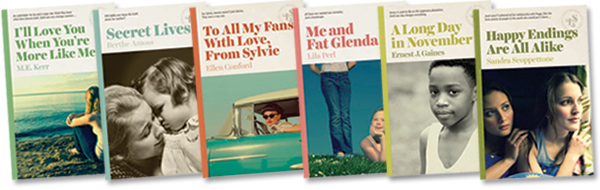
New Imprint Resuscitates Forgotten YA of Years Past

I have a question: what is a classic? A children's book classic? Does it fall within a particular genre or time period? Has it evolved or are we glued to the traditional idea of it, forever and ever?  These have been thoughts trampling around my brain the past week, so I found it eerily fitting to come across news about a new imprint aiming to revitalize out of print YA books, to return to the public a variety of "classic" books from bygone eras.
The imprint, explained Ig publisher Robert Lasner, will “bring back the very best in young adult literature, from the classics of the 1930s and 1940s, to the thrillers and social novels of the 1970s and 1980s.”
I was struck by the word choice, "classics of the 1930's...", but not because I doubt the merit of the books slated for return. Rather, I wonder whether a classic would go out of print in the first place, and thus is such a term even relevant or should it start to ebb out of the conversation. I welcome these additions, specifically because the writers in question are predominantly women whose works introduced darkly comedic traits directly to Young Adult audiences. Considering the over-abundance of YA novels now, many of which fall into the thriller and dark territory, it certainly is worth experiencing and exploring the texts of earlier decades that contributed--maybe even helped shape--the status of YA now.

Do you think it will appeal to the young generations now though? The Imprint is not shy of sharing that they are targeting the original generation of readers, not current teens. Will a 70's thriller seem unappealing, or just retro enough to be cool?

Saturday, April 13, 2013

ChildLit GSA Forum: Field Trip!

Next Week: Final ChildLit GSA Forum of Spring 2013 

When: Saturday, April 20, 10:00 am
Where: Bowers Museum, 2002 N. Main Street, Santa Ana, CA 92706
Topic: "Maurice Sendak: 50 Years, 50 Words, 50 Reasons"

The SDSU ChildLit GSA is at it again, transforming our Discussion Forums into a fun and stimulating excursion for all. This time, we are planning our own little field trip! If you have ever read (and consequently loved) a book written or illustrated by Maurice Sendak, then you really will want to join us this coming Saturday.  We are going as a group to visit the Bowers Museum in Santa Ana to see the Maurice Sendak art exhibit: 50 Years, 50 Words, 50 Reasons (it ends April 28th! Not much time left!).

I blogged about the exhibit recently, so you can find all the details about it there. The GSA plans to visit the museum and then have a light lunch in the area to talk shop about Sendak, picture book illustrations in general, and the next wild thing in the horizon.

If you are interested in joining us, please comment on this post or email sdchildlitgrads@gmail.com ASAP; we hope to obtain funding for travel and tickets (looking forward to a fun train ride up the Amtrak possibly!). We do need to know by Wednesday April 17th if you will come with us so we can have tickets arranged and finalize meeting times. Of course, you are welcome to come separately and meet us there too.

For more Information about the ChildLit GSA, please visit us at:


Friday, April 12, 2013

Links for a Friday morning

I've been hoarding some particularly interesting links to share here. Read on for news about celebrity authors, 19th-century comics, gay characters in YA, and more.

Just because they can, does that mean they should? Apparently Jason Segel ("How I Met Your Mother," "Freaks and Geeks", various Judd Apatow films) has written a series of three YA novels that are "about kids facing their biggest fears." I dunno. I generally feel skeptical about literature written by actors.

The last decade has seen a surge in children's books about "non-traditional" families. This article from Jezebel takes a look at some of the most significant.

This website houses a digital collection of British comics from 1873-1939. I'm especially fascinated by the Tramps & Oddballs category.

The Atlantic Wire has a wonderful piece exploring queerness in YA literature. The article, "A New Way for Gay Characters in YA," briefly traces the history of gay characters in YA and asks for recommendations in the comments for books they may have missed.

And speaking of authors featured in the aforementioned Atlantic Wire piece, David Levithan wrote a thoughtful essay reflecting on writing Boy Meets Boy in the early aughts.

This is an interesting slideshow of famous authors as teenagers. Almost all of them look preternaturally mature to me. Is that a trick of vintage photography or old souls shining through?

I am really bummed about this tepid review of Strands of Bronze and Gold by Jane Nickerson. It's a retelling of Bluebeard, and y'all know how I love my fairy tale retellings. But this reviewer found it lacking, and considering that I generally agree with Leila's reviews, I am now less excited to read this. Hmmm...

Okay, this one isn't really child lit related, but you have to take a look at this "where are they now?" slideshow of 31 child stars. Atreyu and Sebastian are on here!


Wednesday, April 10, 2013

Kidd Talk Canceled

The National Center for the Study of Children's Literature regrets to announce that Professor Kenneth Kidd will not be speaking at the SDSU campus tomorrow (Thursday April 11th, 5 pm). 

We apologize for any inconvenience this cancellation may cause. There will be no alternative program. Hopefully he will be able to visit in the future, but for now we don't have any set plans.

Once again, many apologies for having to cancel tomorrow's event.


Reminder: Paper Proposals for PAMLA Children's Literature Panel Due April 15

The Pacific Ancient and Modern Language Association (PAMLA) Conference will be held in San Diego this year, from November 1-3, 2013 at the Bahia Resort Hotel. Below is the CFP for the children's literature panel, chaired by SDSU graduate student Lauren Benard.
Children's Literature Panel
Pacific Ancient and Modern Language Association
Contact email: laurenbenard@hotmail.com
Proposal deadline: April 15, 2013

The academic interest in children's literature has been growing in popularity. Why do these stories interest a young audience as well as adults? Why are new versions of old stories still interesting? Is the story itself compelling, or are readers fascinated with the aspect of the child itself? This session will focus on children's literature as well as literature about children. Papers can range from any time period and genre (young adult, picture book, folk, film, etc.) Submit a proposal of 300-500 words explaining your project pertaining to the realm of children's literature.

Topics prospective panelists may wish to address include but are not limited to the following:
  • Marketing of children's literature
  • Intended audience
  • Depictions of the changing child body
  • The dynamic between the adult/child relationship
  • Trauma
  • Gender
  • Creativity
  • Family relations
  • Visual and literary worlds of childhood
Proposals should be submitted to PAMLA's online proposal system (http://www.pamla.org) by April 15, 2013.

Direct any questions to Lauren Benard (laurenbenard@hotmail.com).

Tuesday, April 9, 2013

Reminder: Kenneth Kidd Event this Thursday April 11

In case it slipped your mind or you just happened to miss the announcement last week, this Thursday the National Center for the Study of Children's Literature in conjunction with the Department of English and Comparative Literature is hosting a lecture session with University of Florida's Dr. Kenneth Kidd. His lecture, "Philosophy for Children" will be followed by a question-and-answer period, so plan to attend and invite anyone you think would be interested. The Event is open to the public.


 It will be held on Thursday, April 11, 2013 from 5:00 - 6:30 pm in Hardy Tower room 140  (HT 140) We are all extremely excited to have him here, and you should be too! 
 
Click HERE for more details about Dr. Kidd's planned lecture.

Wednesday, April 3, 2013

SPA/ACYIG Conference on Childhood Studies This Week

2013 Biennial Meeting of the
Society for Psychological Anthropology
With the Anthropology of Children and Youth Interest Group
Hyatt Regency Mission Bay in San Diego, CA
April 4-7, 2013

If you're around this week and interested in an anthropological approach to the study of children (literature or otherwise), consider visiting the SPA/ACYIG conference to hear different perspective on Childhood Studies. SDSU’s Dr. Elisa Sobo is presenting on “Play” on Friday which may be of particular interest to some. Grad Student Kelsey Wadman will also be there, participating in the poster sessions.
 
Some details about the conference:

For the first time the Society for Psychological Anthropology biennial meeting will be held jointly with the Anthropology of Children and Youth Interest Group (ACYIG).

Psychological anthropology examines the relation among social processes, cultural meanings, and human subjectivities.  Psychological anthropologists study topics such as narrative, identity, experience, emotion, memory, discourse, belief, motivation, conceptualization, gender, sexuality, trauma, mental illness, stigmatization, and psychological development in social and cultural contexts.
The anthropology of children and youth is the cross-cultural and ethnographic examination of infants, children, youth, and adolescents.  It examines such topics as child development across time and space (physical, cognitive, emotional, social); parenting, childcare, and childrearing around the world; the evolution of childhood; the impact of globalization on children and their families and communities; child health; child education and learning; child participation in their cultures; the socio-historical construction of childhood; child agency and vulnerability; children’s rights; the political lives of children; and critical studies of childhood.

In addition to panels and discussion groups, we will also schedule plenary sessions, coffee breaks, and receptions that will bring our group together and facilitate informal conversation and networking. 

Saturday afternoon the ACYIG will hold a business meeting.  There will be a banquet on Saturday night, highlighted by presentation of the SPA Lifetime Achievement Awards to Anthony Wallace and to Jean Lave.

Registration for the SPA /ACYIG Biennial Meeting on April 4-7th, 2013 in San Diego is now open. Click here. The registration fee for professionals is $125 and a reduced rate of $60 for students. One-day conference rates for professionals are $50 and $25 for students. These fees cover all conference costs including meeting room rentals, audio / visual equipment, programs, etc.

Find all the info HERE

Friday, March 29, 2013

Prof. Kenneth Kidd to Speak at SDSU on April 11th!

We here at SDSU and the National Center for the Study of Children's Literature can't get enough of the University of Florida's Dr. Kenneth Kidd. First he virtually visited us last October for an illuminating brown bag discussion session of a chapter from his book Freud in OZ. And now he will be right here with us (live! in the flesh!) to speak about his research on the Philosophy for Children movement of the 1970's and its resurgence in child-rearing and children's literature now.

Please join us on Thursday, April 11, 2013 from 5:00 - 6:30 pm in Hardy Tower room 140  (HT 140) to hear Professor Kidd's lecture followed by a question-and-answer session. We are all extremely excited to have him here, and you should be too! 

Professor Kidd kindly wrote up an introductory piece to acquaint us with his talk, so here we go:

On Thursday, March 27, 2013, the NPR blog written by Robert Krulwich featured a story with the title "Socrates (In the Form of a 9-Year-Old) Shows Up in a Suburban Backyard in Washington." The entry describes how Washington, D. C. based musician, blogger, and camera man Zia Hassan, visiting his fiance during a babysitting gig, comes across a young boy with an interest in cosmology. Teasingly Hassan asks the boy about dark matter, and is stunned to hear the boy's nuanced, careful answer. The ensuing discussion, taped with the boy's permission, is now on YouTube with a million and a half views so far. The boy is not named, but simply referred to as The Philosopher. "Where," asks Krulwich, "did he learn about multiverses, free will, the odds of intelligent life in the universe? How does he manage to be so aware of what he doesn't know?" (Meanwhile, the Philosopher's young brother talks just as philosophically about baseball). The piece is a meditation on the curiosity and wisdom of children, and on the importance of parental encouragement. Krulwich quotes Hassan: "I think there are a lot of kids who think about interesting things. It's my guess no one really asks them about it." The moral seems to be that if adults were less afraid of what their children might think or say, their children might think or say pretty deep things.
Such was a core assumption of the Philosophy for Children movement, or P4C for short. In 1970, inspired by 1960s social activism and eager to promote critical thinking in young people, philosophy professor Matthew Lipman published his philosophical novel for children, Harry Stottlemeier’s Discovery, which was used for teaching purposes in the Montclair public school system of New Jersey. Its success in the classroom alongside positive media attention helped lead to the establishment of the Institute for the Advancement of Philosophy for Children (IAPC), headquartered at Montclair State College where Lipman was appointed. Students involved in IAPC programs ostensibly saw significant improvements in their reading and critical thinking skills. Under Lipman, the IAPC devoted itself to producing pedagogical materials, beginning with additional novels written by Lipman and accompanying teacher workbooks. Lipman also designed graduate level programs in the field of Philosophy for Children and in 1979 founded Thinking: The Journal of Philosophy for Children, which folded in 2011. Other universities as well as various institutes also undertook work with public school students. Wikipedia reports that “Before the Department of Education cut funding for such programs in the early 1990s, there were over 5,000 programs in K-12 schools nationwide which engaged young people in philosophical reflection or critical thinking, more generally. This number has dropped substantially.”
While support for P4C programs has faded, the idea that children are natural philosophers persists, and lately we've seen a resurgence of this notion, in child-rearing literature, in writing for children and young adults, and in how-to volumes such as Dr. Seuss and Philosophy. This presentation focuses on the P4C movement, and on ongoing claims to the child as exemplary philosopher. Special attention is given to the place of children's and young adult literature, and also to the connections between P4C and a related enterprise, "theory for beginners."