Thursday, October 10, 2013

Resources at the Children's Lit Center

You may not know that the office for the National Center for the Study of Children's Literature is located in Arts & Letters 218. And if you weren't aware of the location, you probably didn't realize how many great resources reside here. In truth, the NCSCL has a plentiful and growing repository of books and resources, especially useful for graduate students getting their feet wet in the field of children's literature. Some of this cool stuff includes:
  •  A huge collection of current picture, middle grade, and young adult books that publishers send to us for possible review by our book review service. Many of these are eventually sent over to SDSU's Love Library to add to the wonderful Juvenile Collection; some are sent to local schools as well. This program has been going on for years, and we have amassed more books than we can handle! 
  • In fact, students and alumni are all welcome to drop by and check out a book to review. We encourage it and would love to post your response and thoughts on the books you choose. Drop by or send an email to NCSChildlit@gmail.com to find out when we are around.
  • We have many scholarly books that serve as great resources, for graduate students in particular. And as Kelsey mentioned earlier, once the Unjournal begins the process of requesting books for review, the resources in the center office will undoubtedly grow with current academia too.
  • You'll find a few theses from former children's lit grad students shelved here as well. If you have chosen (or are debating the choice) to embark on that journey instead of SDSU's portfolio option, you would certainly benefit from examining a few of them. What better way to learn what it entails than to hold a hefty, bound complete work in your hands.
  • Lastly, two earnest grad assistants inhabit the office and thrive off the friendly hello once in a while amidst studying, working, and office hours. 
 

Tuesday, October 8, 2013

Local Bookstore Highlight: 5th Ave Books

5th Ave Books is a large used book store in Hillcrest. They are amply supplied with children's and YA books, and are very well organized by author's last name. I have shopped here for specific books often, and am usually pleased to find them. The clerks are extremely well-read and can usually direct me toward exactly what I am looking for. I also tend to come across treasures I wasn't looking for- like this Gangsta Rap Coloring Book.

The only slightly negative thing I have to say is that they are a bit pricey for used books. While Baras Thrift Shop will sell you any paperback book for 50 cents, be prepared to pay $4-6 for paperback novels here. It's still cheap compared to new books, and worth it to shop somewhere that is knowledgeable and well-stocked.

Monday, October 7, 2013

ChildLit Cartography: The Death of Yorik Mortwell

A recent book review by Philip Nel on The Expeditioners and the Treasure of Drowned Man's Canyon by S. S. Taylor reminded me instantly of two things: how much I enjoyed the mystery and wonder of that story, and how enraptured I was with the artistry of the book.  If you haven't read or even seen it, I highly recommend you explore this adventure novel; each visual aspect of it (illustrated by Katherine Roy) -- the illustrations, the cover, the sketches hidden on the inside of the cover -- deserves attention because of how cunningly it tricks the reader into exploring the heartiness of the book itself. My eyes feasted on this novel, especially upon the map included on the inner flap/binding (I need to brush up on the jargon of book parts, I know). Beautifully rendered and an integral part of the story, the map for me was the most exciting feature to the point that I actually felt frustration at not being able to hold it myself.

Hmm, I was going to differentiate this frustration from that of wanting a Marauder's Map, which DEMANDS interaction, play, and clandestine exploits. However, I really did want to play with this one as well, for reasons I won't share lest I spoil the story for you. That is, in fact, how much I enjoyed the role of the map and the book itself. It invites the reader into the tale and allows us to explore with the characters in ways that I haven't experienced in a long while, if ever.

Perhaps I just need to read more books with maps. This shall be my new endeavor. 

I don't exaggerate either; most of my peers could tell you how invested I have become in the role and influence of the maps that pop up in children's literature. Thus, I have decided to share some of these cool features as I discover them -- sometimes playful, sometimes morbid, often misleading, always provocative.

So I begin with a spotlight on the map from The Death of Yorik Mortwell, by Stephen Messer, illustrated by Gris Grimly.


Without knowing the novel itself, you could examine this map and cultivate your own story. Maps have a history after all; the cemeteries would certainly indicate as much here. Perhaps you might wonder why the servants' cemetery is placed outside the boundary of a river or consider how many servants would have died on this property. Well, I'm not spoiling anything by saying that young Yorik dies (his titular death is just the beginning of a haunting adventure!) but he's just one.

When I see maps I wonder about what I might glean from it (e.g., shooting range next to the aviary glade? How convenient). Sometimes I wonder about who is envisioning this map within the textual universe itself -- which character do I perceive to have potentially conjured this up? And does that shape the map? A resident of the manor would not necessarily include the run down cabin, for example. But by existing, it suddenly plays a part and we hopefully will recognize that.

Thus, on the surface this seems a map like any other. But the curiosities emerge when you force yourself to question why a lovely topiary garden would be so far removed, but a dreaded hedge maze exist right next to the manor. Curious questions can lead to deeper understandings. 

Saturday, October 5, 2013

CFP: Seventeenth Biennial Conference on Literature and Hawaii's Children

Submit proposals to a small but rewarding upcoming conference. Conference registration is free!

When: June 5-7th, 2014
Where: Honolulu, Hawaii
Conference Theme: "Beyond the Moon: Journeys Imaginary and Real"
Keynote Speakers: Kathi Appelt, National Book Award Finalist for The Underneath; Grace Lin, Newbery Honor Book Recipient for Where the Mountain Meets the Moon 
Session Proposals Due: December 5, 2013

The Biennial Conference on Literature and Hawai`i's Children, scheduled for June 5-7, 2014, is again calling for session proposals. The conference seeks to bring together academics, teachers, librarians, writers and would-be writers, illustrators and would-be illustrators, storytellers, parents, grandparents, teens, and children, indeed, anyone with an interest in children's literature. As such, unlike most academic conferences, we expect all sessions to allow for audience participation. You must present your session interactively, not simply read a paper. Sessions are free to attendees, except for professional sessions offered by the keynote speakers, for which we charge a small fee. Sessions are 75 minutes long. A session may consist of an individual presenter or be shared by a panel, normally of no more than 3 presenters. 

The conference is made up of three strands, "Interpreting Literature," "Using Literature," and "Creating Literature," in addition to a "Teen Track" for teenage writers and illustrators and a program of children’s and family activities. Teen track participants are encouraged to attend any sessions that appeal to them, in addition to attending a targeted session with the keynote author or illustrator, open to teens only. The "Interpreting" strand emphasizes ways of reading children’s literature, primarily from a humanities perspective. We are looking for people, mostly with an academic background (including graduate students), who can do a good job "translating" their specialist knowledge into a form suitable for a general audience. "Using" sessions approach literature from the perspective of teachers, librarians or parents, focusing on innovative ways to work with children’s books directly with children; "Creating" sessions usually come from authors, illustrators, or editors. Participants attend sessions across strands according to personal interests, so audiences are likely to be mixed.

"Interpreting Literature" strand proposals to: Todd Sammons, sammons@hawaii.edu
"Using Literature" strand proposals to: Vicky Dworkin, vicky.dworkin@gmail.com
"Creating Literature" strand proposals to: Sue Cowing, niuiki@hawaiiantel.net

There is no specific form to use for proposals. Please include session title, description (75-150 words), your name, affiliation, and contact information (e-mail, snail mail, phone, and fax). Use more words if you need to.  In general, proposals should be brief, a half-page to a page. However you may attach a vita or other supplemental information if you wish. Let us know something about your previous experience in presenting at conferences or in other settings.

Preliminary information on the upcoming conference will be available shortly; check out last year's conference program for an idea of the structure of this conference. 

Friday, October 4, 2013

Comics Overload with Comic Fest and Comic Day

The first weekend of October is all about superheroes, villains, and the graphic wonder of comic books. First, the Second Annual San Diego Comic Fest starts today and runs all weekend long (Oct 4-6). I talked about it last year, as an endeavor to reconnect with the folks who created what has now become the SD Comic Con (though this event is not affiliated with Comic Con). For a more "friendly, intimate" experience, you really should consider checking this out. I was happy to see that among the artists to participate in Artist Alley is Eric Shanower, who Dr. Griswold mentioned in his interview with The Unjournal this summer.

Secondly, evidently the first Saturday of October has been dubbed "24-Hour Comics Day", wherein people around the world accept the challenge to create a full 24-page comic in 24 consecutive hours. First dreamed up by Scott McCloud, this event has spawned into a global phenomenon. The very idea of it astounds me. In fact, those who in some way succeed in these timed challenges to create work, such as NaNoWriMo, humble me in their confident and determined purpose; I simply cannot find the time to write a novel in a month, or even conceive a full comic in a day. It's the process that must be so invigorating, and I'm sure allows people to then reflect on what they've created to see if it can be developed beyond that time. Anyway, it's cool stuff, so I'm sharing.

Thursday, October 3, 2013

CFP: Enchanted Places, Imagined Childhoods

"Enchanted Places”, Imagined Childhoods
 A Symposium on Children’s Literature and Psychoanalysis

Saturday, September 20, 2014
Psychoanalytic Center of Philadelphia and the University of Pennsylvania

Featured Author:  Jerry Spinelli

Jerry Spinelli has been writing books for more than thirty years and has published an average of one book a year over that time.  Maniac Magee (1991) won the Newbery Award and Wringer (1997) was a Newbery Honor recipient.  More recent titles include Stargirl (2000), Milkweed (2003) and Hokey Pokey (2013). In a blend of gritty realism and casual magic, Spinelli locates his stories in the places where ordinary children live—old cities, dreary suburbs and school classrooms—then enchants these places with transcendent language and characters who radiate courage and bold eccentricity.  His stories confront difficult and conflictual themes like poverty, homelessness and urban race relations, as well as mourning and social ostracism, but they do so without sentimentality.  Spinelli’s characters are never victims, but are tough survivors and often moral and spiritual heroes in his and their imagined worlds.

It is a challenge to psychoanalytic theory and practice to acknowledge the “enchanting” role of language on a day to day basis as we practice our “talking cure,” as well as to go beyond our normative developmental narratives in order to account for the survivors, the exceptions, and the morally courageous characters who have emerged from difficult environmental circumstances to transform their own lives and the lives of others in the process. 

This symposium will provide an opportunity for explorations of language, of ‘enchantment’ in psychoanalysis and literature; of the reciprocal acts of imagination between author and reader involved in creating works of childrens’ literature; and,  the possibilities for transformation of the painful realities of ordinary childhood in both psychoanalysis and literature.  It will provide a forum for Jerry Spinelli’s work, for the work of other authors, as well as for works of theoretical, clinical and literary interest. Academics, psychoanalysts, graduate students and psychoanalytic candidates are encouraged to submit original papers on any aspects of the above.

Guidelines for submission:
Completed papers only. 8-10 pp.  No abstracts or proposals.
Names and identifying information on separate cover sheet only.
Deadline: February 15, 2014
Send papers to:  Elaine Zickler, PhD at mezickler@gmail.com


Wednesday, October 2, 2013

Local Bookstore Highlight: Adams Ave Books


San Diego hosts a great deal of independent bookstores, all with a unique vibe. Local bookstores are often venues for amazing events- a point of access to the vibrant children's lit community here in San Diego.

My favorite will always be my neighborhood shop, Adams Ave Book Store. This two-story used bookstore has been in business since 1965, making its home in an old residential building. With a wink at their customers recipes books are in the kitchen, and at the back of the first floor you will find the children's room (pictured). Books are organized and alphabetized to make searches for specific books easy, but, as actual children also buy books here, many books are piled on the floor or tables. Adams Ave Books certainly has recent and popular books, but also makes a point to carry older, collectible books.

Because of my Indigenous and Decolonization Lit class a first edition collection of colonist-slanted titles like Maori and Settler and The Young Colonist caught my eye. A little research revealed that the author was G.A. Henty, a 19th century author who wrote war adventure stories (obviously marketed for boys), some informed by his firsthand experience as a soldier for British imperialism. Henty has been studied critically; a 1991 article in Children's Literature Association Quarterly by Mawuena Logan states that "When we study the works of Henty we are in touch with racial myths that have yet to be fully dismantled" (Children's Lit Quarterly, Volume 16, No 2, 1991). In any case, I couldn't afford the whole collection but I will be returning to look at Henty more closely.

I recommend following Adam's Ave Books on Facebook- they often post when they get new and interesting merchandise or advertise discounts- in the past they've offered discounts to college students the month before a new semester begins.

Adams Ave Books is inhabited by two cats, Bartleby (pictured) and Felixia.

Tuesday, October 1, 2013

Reading for Boys and Girls, Or the Legitimacy of Girliness

First, a quick announcement that, for the Fall 2013 semester, the NCSCL is offering tutoring to undergraduates taking children's lit courses at SDSU. The scheduled hours are Mon 2-3 pm and Wed 11:45-12:45 pm, but students can also request appointments by emailing NCSChildlit@gmail.com. They MUST include "tutoring" in the subject line.

So, last year I was perusing some book review blogs, and came across one (author and title have since escaped me, lucky for them) that completely turned me off because the story and the review clearly typecasted girls into the role of princesses and boys into the role of adventurers. I distinctly recall the marketing on the website as speaking to the gender-inclusive merits of the book, something that could appeal to both boys and girls. I also distinctly recall that I was most annoyed by the fact that girls were evidently not meant to seek out wild and crazy adventures; those activities were reserved for boys!

Now, we all know that isn't true. Girls are as much adventure-driven as the young lads are. We have a whole new genre of dystopian Young Adult books that speak to this very call for girls to get out there and be fierce. I've pointed out the discussion this has spawned in previous posts, highlighting the underlying issue that these young women aren't out there by choice but by necessity. So, the adventure and thrill seeking young girl seems to linger only on the outskirts of identity, once more.

But instead of focusing on that, let's focus on the girlhood and boyhood culture that emerges with the kinds of treatment we give children, the kinds of stories we feed them at an early age, and the kinds of messages that unfold. This article on Book Riot addresses that problem: what we have taken for granted as typical girl and boy behavior, and how we both foster and address that.  The picture book that troubled me, the one speaking to the "inherent princess qualities" of girls, fits directly into this mold. And this branding transcends books of course; it pervades all arenas of material culture and media.

BUT, oh man, here is that irritating conjunction, come in to thwart my mental processes. Should we instead overlook -- even negate -- the girliness of girlhood? Is that the answer? Quite a while back I discussed the issue of cuteness studies. When considering that in comparison to girliness, we see that the status of the female does always come into question during the classification of "worthwhile" literature, children's, young adult, or adult. Is something only valid if it doesn't appeal to the feminine qualities? What message do we send if we only give credence to gender-role-dismantling texts? It only takes a quick discerning eye to notice that this need to upend what we consider the weaknesses of gender usually applies to the weaknesses and flaws of femininity in children's lit. We expect girls to be readers, but expect that the most successful depictions of girls they read should show girls NOT being girls. We expect boys to repel from books, so the books cultivated for them should appeal to that same interpreted boyishness.

Does this have to be the case? The princess should be a swashbuckler, if she so chooses, and it shouldn't be seen as an anomaly to her "kind" nor a proclamation that only now is she "worthwhile" by doing so. 

Sunday, September 29, 2013

Recent Children's Lit Books of the Critical Nature

Given The Unjournal of Children's Literature's soon-to-grow book review section, my recent project has been to keep up with new scholarly books in the field of children's literature. Finding some intriguing titles, I'd like to share some of my discoveries. In our burgeoning field there are several amazing new books to discuss, so I first have to apologize for only highlighting a few this time around:

Second-Generation Memory and Contemporary Children's Literature: Ghost Images by Anastasia Ulanowicz published by Routledge in March, 2013. This book, declaring that second-generation memory "is characterized by vicarious, rather than direct, experience of the past," caught my eye because of my curiosities about the impact of memory on children's literature at large. Usually stuck on notions about how an author is in touch with their own childhood memories and how this may impact their writing, Ulanowicz's book promises to challenge my own assumptions about memory itself by claiming that memories can be adopted instead of formed from personal experience. Dedicated to examining how child protagonists adopt the memories of their elders, "this study shows how novels such as Lois Lowry’s The Giver (1993) and Judy Blume’s Starring Sally J Freedman as Herself (1977) — both of which feature protagonists who adapt their elders’ memories into their own mnemonic repertoires — implicitly reject Cartesian notions of the unified subject in favor of a view of identity as always-already social, relational, and dynamic in character." Ulanowicz is an Assistant Professor at the University of Florida.

The Children's Table: Childhood Studies and the Humanities edited by Anna Mae Duane, published by The University of Georgia Press in June, 2013. Always a fan of interdisciplinary work, The Children's Table had immediate appeal for me. Referencing the image of children relegated to a separate table at holidays and other adult-run events, this book's organizing principle embraces this image and claims a space for scholars to discuss childhood and its place in various adultcentric fields and at the same time challenges this "seating arrangement." Essays feature scholars from fields such as architecture and law as well as children's literature and cultural studies. Well-known in the field of children's literature is Robin Bernstein, who wrote an essay for this collection titled "Childhood as Performance." Duane is an Associate Professor in the Department of English at the University of Connecticut.

Bloody Murder: The Homicide Tradition in Children's Literature by Michelle Ann Abate, published by The John Hopkins University Press in February, 2013. As a passionate advocate that children's literature is no genre of mere sugar-coated fantasies, it's exhilarating to see a new book that not only blasts this misconception, but also promises to examine and tease out meanings of the killing trope in children's lit. Abate's book was released in a climate of Hunger Games hysteria, including protests about the trilogy's violence. Using this hysteria as an introduction, this article in the Boston Globe interviews Abate about her book. Abate is an Associate Professor at Hollins University.


Friday, September 27, 2013

Banned Book of my Week: Bridge to Terabithia

Despite knowing that this is Banned Books Week, I completely overlooked the fact that my children's literature graduate seminar had actively discussed a frequently challenged book this week: Bridge to Terabithia. And what a wonderful experience that was, since this was one of my all time favorite books as a child; reading it as an adult, I can easily say it remains high up there.At any rate, it did not dawn on me until now the status of Bridge and its relevance to this week.

Now that I've had time to ponder it, I can't help but feel perplexed by the reasons to ban such a novel. Having read it as a child, I latched onto the imaginary dreamscape the children concoct and make into a near-reality; the power of imagination felt like the most amazing gift of all and I constantly rooted for Jesse to bring the breadth of his artistic potential to life (while also yelling at him for not inviting Leslie. Just take her to the museum too, for goodness sake!). Ah, but I see that I've lightly touched upon one of those troubling "challenge-able" notions: power of imagination that can equate to magic. Because naturally that implies a disregard and turning away from faith and turning toward the occult. Naturally.

Viewing it through critical eyes now, I have a deeper appreciation for the purpose of that imagination, and the limits to its power. I can comprehend the conflict struck between the awesomeness of Nature -- the marker of rural, regional life -- and the cosmopolitanism the Burkes symbolize (as they hail from "the city"). I can see how we might break down the barrier between adult and child behavior and identify the wisdom that comes from forging a physical, tangible relationship with Nature in order to keep on going. Maybe the city identity acts as invader of the regional world, but hey, maybe not. Regardless, I see doorways leading to enormous ideas, challenging ideas, ideas that redefine what we might instinctively consider childhood, maturity, human development.

But THESE are hardly ever the reasons why certain peoples challenge these books. It goes back so often to the danger of exposing kids to profanity, to "magic" and blasphemous respectable characters, to issues of identity that don't coincide with the beliefs of some (here's an oversimplified list of reasons). These are so insubstantial though, and therein lies the truth of so many instances and issues of censorship -- a fear and loathing for the superficial characteristics of a novel that leave room for ghastly misinterpretation and vilification to enforce one's own agenda. In the case of children's literature, the excuse comes from wanting to shelter children, to guard them from the reckless perils of ungodly behavior. I for one loved the difficult books most, the ones that make your heart ache and then sing and then scream and then sigh.

And one blogger discusses this situation: the very things that get focused on are harmless and misunderstood and in fact, the very reasons one MIGHT ban a book like this are totally untouched. Of course, she jokes about the misleading title of Bridge to Terabithia (fair point) but the end result is that the novel offers so much more than the trouble-seeking eye permits. And children deserve the choice to decide for themselves if they want to take what it offers, what any book offers, for their own personal benefit. 

Wednesday, September 25, 2013

A Cancellation and an Addition to the Rutgers University Speaker Series

Because she is under the weather, Robin Bernstein’s lecture (“Trayvon Martin and So Many More: Racial Innocence Today”)–mentioned in a blog post earlier and scheduled for September 19th at the Childhood Studies Program at Rutgers University (Camden)–has, unfortunately, been canceled: http://childhood.camden.rutgers.edu/annual-lecture/

At the invitation of Rutgers grad students, however, Professor Emeritus Jerry Griswold will be there on October 1 and 2. Details can be found at: http://www-rohan.sdsu.edu/~jgriswol/Calendar.htm. He will be speaking on "Visualness" and "The Anthropology of Childhood" during his visit.

While in Philadelphia, Griswold will also be assessing the progress of Martin Woodside and Ellen Malven, former SDSU grad students now studying for the Ph.D. in Childhood Studies. These examinations will take place in Irish bars throughout the city.

Tuesday, September 24, 2013

Banned Books Week 2013

It's that time of the year again: Banned Books Week (Sept 22-28, 2013), which too appropriately is coming on the heels of last week's news that Ralph Ellison's Invisible Man would be banned from school libraries in a North Carolina county.

A cool new feature of the Week, especially in its attempt to connect people to the voices that at times must fight to be heard, is ability to virtually "hang out" with banned authors via Google Hangout, including some fabulous young adult authors. Sherman Alexie was available yesterday, but 13 Reasons Why author Jay Asher will chat today and many more are on the list. Our society continues to struggle with censorship, unable to always strike that balance between evocative ideas and ideas that trouble one's belief set. A good challenge is healthy for anyone and anything; it only makes things stronger and thus demonstrates the resilience of so many of the "banned" books we love.

You can read some more about the importance of Banned Books Week here. And if you know of any local events, do share.


Thursday, September 19, 2013

CFP: Perceptions of Childhood for The Unjournal of Children's Literature

Volume 1, Issue 2 (Spring 2014):  Perceptions and Portrayals of Childhood
Submissions Deadline: November 4, 2013
Submit to: UnjournalSubmissions@gmail.com
Send Questions to: ChildlitUnjournal@gmail.com

The Unjournal of Children’s Literature is now accepting submissions on the topic of perceptions and portrayals of childhood in children’s literature. Traditional scholarly articles are welcome, as well as more creative approaches to addressing the subject.
The academic field of children’s literature often struggles with the definition, or indeed the existence, of childhood. While scholars like Jacqueline Rose and Perry Nodelman have long maintained that the adult-constructed perception of childhood dominates the field of children’s literature, others such as Jerry Griswold and Marah Gubar are exploring the role of the real child in children’s literature. We hope to enliven this discussion with thoughtful approaches that expand on one or more of these perceptions, examine various portrayals, or challenge the conceived notions of childhood with a point-of-view altogether unique.

Possible topics could include, but are not limited to:
  • Blurred boundaries between children’s books and adult books
  • The authenticity of the portrayal of the childhood experience
  • Children in adult roles in children’s lit
  • Interdisciplinary analyses of childhood in children’s lit (e.g., psychological, anthropological, historical, socio-cultural, geographical, etc)
  • Portrayals of adults in children’s lit
  • Children’s books that aren’t: Go the Fuck to Sleep, Animal Epitaphs and more
  • Child authors
  • The real versus the constructed child
  • The rhetoric of the constructed child in children’s lit
  • Essentials of childhood debunked
  • Child agency, either in child characters or in the field itself
  • Evolution of the concept of childhood
  • Effects of globalization on the understanding of childhood
Once again, both traditional and unconventional submissions are welcome. Some potential examples of creative approaches include: an interactive map/chart of your argument, an illustrative approach, or an editorial/opinion article (less academic, more charged).

Review Process:
The review process for submissions will include a double blind peer review. The selections for publication will be based on recommendations from the peer reviewers and final editorial review.

Submission Specifications:
Send your submissions to UnjournalSubmissions@gmail.com
  1. Indicate in the subject that this is an article submission
  2. In the body of the email, include your name, contact information, title of your work, and abstract (250 words max)
  3. All papers should be attached as a Word document (.doc or .docx)
    • Include ONLY the title
    • Do NOT include your name or contact information in the Word document
Any supplemental artwork should be attached as a JPEG. If the file size is too large to be sent via email, please contact us directly to arrange an alternative method of submission.

Copyright Information: Please note that due to copyright laws, there may be images that we will not be able to reproduce; it is up to you to confirm, obtain, and provide us with proof of copyright permission. Otherwise, we can include legitimate links to artwork/images if provided.

Any Questions? Contact the Unjournal editors at ChildLitUnjournal@gmail.com

Tuesday, September 17, 2013

Multicultural Perspectives: Burka Avenger versus Disney

For the latter half of summer, I heard a lot of talk and saw many a screen shot of an emerging star in Pakistan's children's media field: The Burka Avenger. Skipping over the fact that the burka is not a cultural norm in Pakistan (read some insights about that here), this female super hero cartoon topples many of the preconceived notions of heroism and strength by using educational tools--books, pens etc--as her weapon of choice. And the Avenger's day job? A school teacher. One who does not wear a burka, by the way.

What the creators are trying to accomplish is clearly evident: the importance of female education, the power that an individual voice (and superb ninja training abilities) can have, a demonstration of female and child empowerment in general, and a visual challenge to those who would strive for otherwise. Does equating her attire with superhero skills glamorize the potentially limiting uses of the burka? It can, yes, but not necessarily. And what I enjoyed about the cartoon is how the teacher chooses to use it specifically for her own advantage, an important lesson in cultural awareness (that these are choices at all).

The cartoon feeds into the international dialog on Girl's agency too. Last week I shared a link about the merits of paranormal YA, which addressed the explosion of girl-centric YA adventures, dystopias, and science fiction and gave merit to the boom of YA romances. In it, the author did conclude that while a lot of movement has been made, there is still much left to be altered. I couple this with Sophia McDougall's "I Hate Strong Female Characters" to shed light on the fact that young women are prone to be classified as strong but little else. The diversity of their personal character is as sparse as the diversity of their culture. McDougall basically suggests that the sudden explosion of female-protagonist YA has gilded the post-apocalyptic road to serenity with girls whose primary struggle is with troubled romance, apart from having to save the world. Not enough room for character depth.

Of course, there are arguments challenging this. Do I think all female protagonists fall under those clutches? No, and they surely don't need to either. Some would say it isn't a forgone conclusion, and it is important to note that the McDougall focuses on films and television rather than literature. It is quite fair to say, I think, that books allow for more subversive actions, upending of cultural "norms"; they yield a greater amount of charisma for females. Movie adaptations tend to succumb to the aesthetic of visual appeal, and sacrifice story for pretty faces.

Still, even within books, there's a debate about the efficacy of girls' agency. All the more reason that I was impressed with the concepts supporting The Burka Avenger. It is trying quite fervently to place itself as a bearer of empowering thought. It stumbles and suffers from a collection of stereotypes itself, but nothing that impedes the feminine or child's voice. And, as the Huffington Post points out, it teaches Disney six invaluable lessons about heroines.

Monday, September 16, 2013

Forum Recap: The Paranormal in Children's Literature

On the evening of Friday the 13th members of the ChildLit GSA gathered at the Living Room Cafe on El Cajon Blvd to discuss various elements of the paranormal and supernatural in children's literature.

Discussion topics included love for the works of Neil Gaiman, the trend of angel and demon romance in YA lit, and a general embarrassing fear of lightweight horror such as the Goosebumps series of the 90's. Newcomer Matt Griffing revealed himself as the only true fan of horror and otherwise scary paranormal happenings in children's lit, and won the Pub(lication) Quiz after a riveting lightning round tie-breaker with President of the ChildLit GSA, Alya. Congrats, Matt!

If you missed this forum but would like to attend the next, don't fret! The ChildLit GSA will be sure to hold another forum soon, possibly on comics and graphic novels and their intersections (or not?) with children's lit. Check back for updates!

CFP, Edited Collection: Comics and the Canon

Deadline: April 30, 2014

Website: http://partialanswers.huji.ac.il/Call_for_Papers.asp

Over the last three decades, comics, graphic memoirs, and graphic novels have emerged as literary, artistic, and cultural artifacts of central importance. Comics were once seen as outside what we might broadly call a literary and fine-arts “canon”: as objects belonging to low culture rather than high culture, as ephemeral items rather than artworks of lasting and iconic significance, as lesser hybrids of word and image rather than as belonging to a specific demanding medium. And yet the last thirty years have seen the rise and impact of works that are serious, ambitious, and monumental — works in conversation with an established literary and artistic canon, and works which themselves make a claim to cultural centrality and significance. “Comics studies” has developed as an academic discipline; artists and critics have worked to recover the rich and understudied history of the medium, with the result that a “canon” of central figures is emerging.

What is gained and what is lost when we try to establish a Comics canon? How do artists make claims to cultural centrality by putting their work in conversation with more traditional canonical works, and how do they challenge the “canon” through exploring alternative aesthetic values and subjects? In the canon-building process of winnowing and centralization, which works are elevated and which are excluded? Is there something perverse in canonizing works in a medium that has often characterized itself as marginal? What tensions are thereby exposed, not just in comics but also in the very process of canonization?

This collection invites essays on all aspects of comics and canonization, including:
  • analyses of comics which rewrite or otherwise engage with canonical works of art, film and literature 
  • studies that consider comics in relation to other artistic media in which word and image are traditionally combined (illustrated novels, illuminated manuscripts, film scripts and storyboards, etc.)
  • defenses and critiques of the artists whose works have become most central to the comics canon (Spiegelman, Satrapi, Bechdel)
  • arguments for the inclusion of understudied artists, artworks and movements in the comics canon, essays on the ways in which comics challenge the premises and processes of literary canonization
  • projections on the future of the “canon” in comics classes and scholarship


Submissions (between 5,000 and 10,000 words, the Harvard system of references) are due by April 30, 2014. Authors of the papers that are accepted will be responsible for obtaining permissions to reprint illustrations.

    
The journal will accept electronic submissions, in Word or RTF, to be sent to partans@mail.huji.ac.il . For inquiries please contact the guest editor, Professor Ariela Freedman (Concordia University, Montreal) at ariela.freedman@concordia.ca

Thursday, September 12, 2013

Links for a Thursday

To liven up your Thursday, here are some curious reads, activities, and discoveries going on around the Web these days:

  1. Actor Jim Carrey joins the growing troupe of celebrities extending their reach into children's books. On September 24, his picture book, How Roland Rolls, will be released and will address the more existential crises of early life -- notably that sudden awareness of life and loss.

  2. Read a cultural examination on why Sci Fi and paranormal YA matters at McGill Daily. A simple look perhaps, but it ultimately focuses on the importance of sci fi to allow readers to think outside the normal conventions and to address social and political issues in exciting new ways, as well as inviting social change. It also tries to justify all the romance. That's a lot of romance to justify.

  3. Evidently one of my favorite current middle grade novels, Reif Larson’s The Selected Works of T.S. Spivet, is being converted to the big screen. Director Jean-Pierre Jeunet (Amelie) is bringing his whimsical, enchanting style to a book that explores the meaning of childhood through an exhibition of love of country and humanity (the amazing conceptual maps that situate the young boy clearly in his regional space, demonstrate his ability to broaden that awareness, and expose his acute sense of what humanness is). I am somewhat obsessed with maps and all that they signify and influence, so anything to do with this story excites me. Until I saw the trailer, and began to fear the changes they would feel obliged to make to a remarkable story about a young cartographer and the transformation of the hold his family has on him. Another time I'll discuss this in detail. For now, take a look at the trailers, and if you have read the novel, let me know your first thoughts!

  4.  Disney is re-imagining what it means to watch a movie in the 21st century with 2nd Screen Live. I'll withhold my comments on this except to say that here is cultural disparity at its best -- enlisting young children to bring an iPad to the movie theatre because of course all children have them, and they should of course be consumed by constant interaction on numerous interfaces at all times. 

  5. Wrapping up on a lighter note, authors around southern California are invited to a book event at the Norman F. Feldheym Central Library, Saturday, Sept. 14, from 1 to 5 p.m. to discuss their books and old book signings. This celebration of authors will involve all kinds, from children's book writers to mystery, sci fi and local history writers.

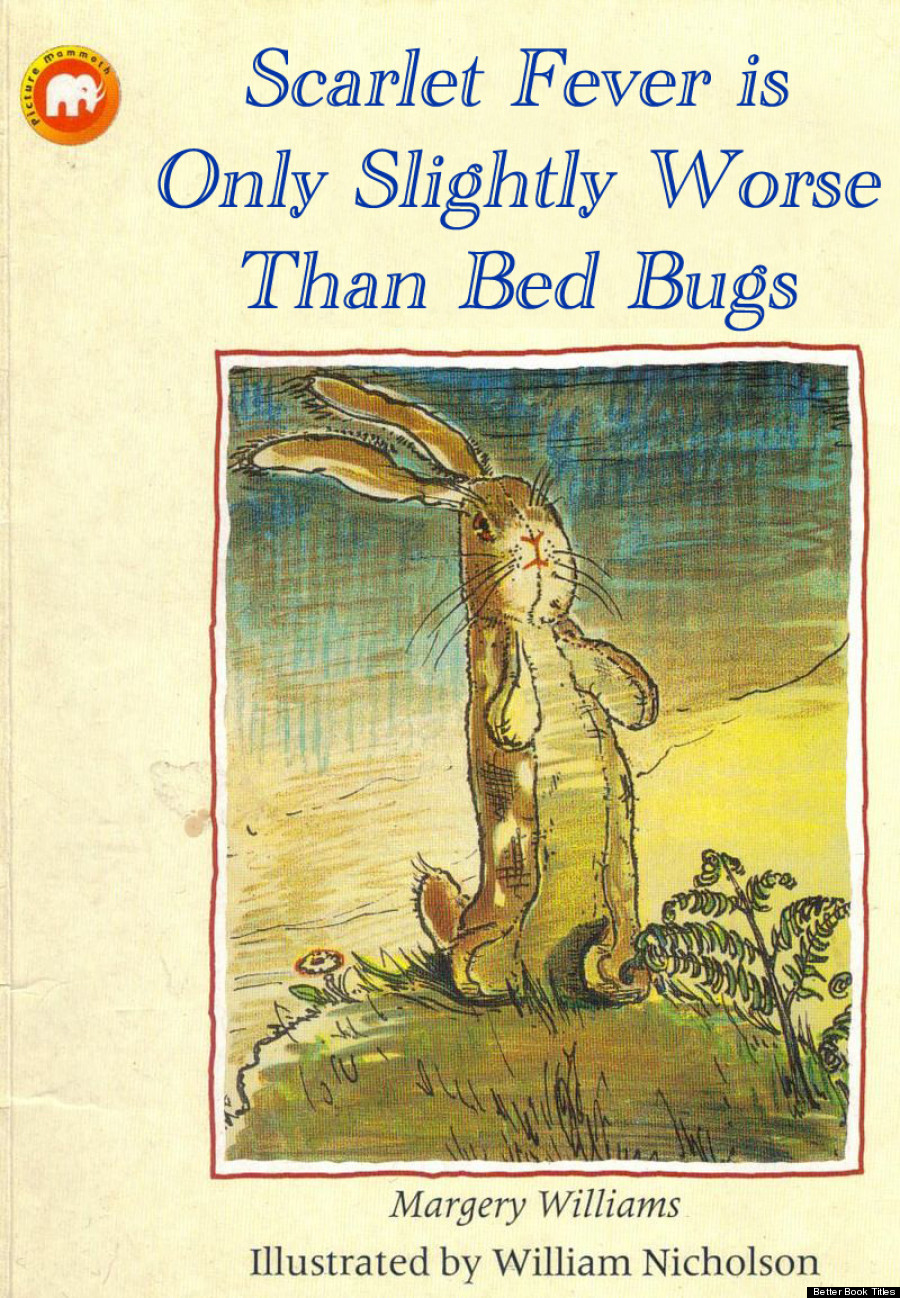
  6. And lastly, a bit of book fun: Better book titles for children's books!

Tuesday, September 10, 2013

Open Call for PhD in Literature for Children and Young People: Aarhus University, Denmark

Application Deadline: October 1, 2013

Website: http://talent.au.dk/phd/arts/open-calls/phd-opslag-125/

LITERATURE FOR CHILDREN AND YOUNG PEOPLE IN AN INTERMEDIAL PERSPECTIVE 

PhD scholarship in the field of Literature for children and young people in an intermedial perspective

The Graduate School, Arts, Faculty of Arts, Aarhus University invites applications for a PhD scholarship inLiterature for children and young people in an intermedial perspective. This scholarship is available as of 1 February 2014 for a period of up to three years (5+3) and of up to four years (4+4). The candidate who is awarded the scholarship must commence their PhD programme on 1 February 2014.
The Faculty of Arts at Aarhus University has made Literature for children and young people in an intermedial perspective a research priority.
Digital developments have led to fundamental changes in the text and media world of which children and young people are part. For instance, children and young people have simultaneous access to literature in the medium of books (books written on paper) and in the form of digital formats such as audiobooks, e-books and apps.
Developments indicate that the degree of interaction between forms of expression such as literature, films, computer games and music will increase in future. For instance, characters, plots and settings occur simultaneously in children’s literature and a range of other media. Literature for children and young people is developing in an interaction between aesthetic choices and media/market conditions. Within this overall framework, applicants are required to describe a project that poses a central research question which takes its point of departure in literature for children and/or young people in an intermedial perspective.

Monday, September 9, 2013

Childlit GSA Forum: The Paranormal and Supernatural this Friday the 13th!

First ChildLit GSA Forum of Fall 2013 

When: Friday, September 13 @ 7:00 pm - 9:00 pm
Where: Living Room Cafe @ 5900 El Cajon Blvd 
Topic of the Night: "Paranormal and Supernatural in Children's Lit"

The GSA Discussion Forums reconvene for the new school year, hoping to bring an energetic community together for lively and fright-filled discussions on spooky spirits, spine-chilling species, and more.
The GSA Forums are a chance to engage with like-minded folks on all realms and levels of Children's Lit. This month we feel like starting off with a journey into unsettling and haunting territory, and what better day then Friday (September) the 13th to do that! We hope to dive into such topics as the popular Goosebumps series, Paranormal YA's strange success, myth/folklore/legends, the influence and longevity of Frankenstein and Dracula, issues of spirituality (angels and demons galore) and yes, even the star-crossed combo of Werewolves and Vampires. We could even spend the evening talking Neil Gaiman: Coraline, Good Omens, and The Graveyard Book pretty much cover all the spook and spirits for me, that's for sure. If you're a fan of horror, come and share with us your insights on the genre or why B-rated horror films attract so many kids. Love the recent spooky kids' films like Paranorman or Frankenweenie? Come by and tell us why!

In fact, feel free to bring anything to share, whether on or off topic--the forum is meant to be a welcoming and casual gathering. But don't worry! The GSA officers will come prepared with topics too, as well as a of fun activities... and who knows, maybe another prize cupcake or more.

This Forum is open to all folks interested. That means faculty, grad students, undergrads, and you! So whether you have tons to discuss or you just feel like listening in, please drop by! It also provides an excellent opportunity to meet like-minded peers and scholars of the field.

We'll be holding the event at The Living Room Cafe from 7 pm to about 9 pm, so stop by any time and stay for as long as you like.

Looking forward to meeting up, hanging out, and exploring the paranormal with you.

For more information about the ChildLit GSA, please visit us at:
On Twitter: @SDSUChildLitGSA

CFP: Engaging the Woman Fantastic in Contemporary American Media Culture


The past thirty years have offered a growing and changing body of scholarship on images of fantastic women in American popular culture.  Collections from Marleen Barr’s Future Females (1981) and Future Females: The Next Generation (2000) to Elyce Rae Helford’s Fantasy Girls: Gender and the New Universe of Science Fiction and Fantasy Television (2000) and Sherrie Inness’s Action Chicks: New Images of Tough Women in Popular Culture (2004) have offered multifaceted commentary on ways in which contemporary media culture posits and positions “empowered” women in speculative fictions.

Engaging the Woman Fantastic in Contemporary Media Culture takes part in this tradition and brings it to the present day with emphasis on texts from the 1990s to the present and media from young adult fiction to social networks.  In particular, this edited scholarly collection, to be published in 2014 by Cambridge Scholars Press, engages with female protagonists, antagonists, and characters that challenge such simple binaries in popular literature, television, comics, video games, and other new media.  As a whole, the volume will examine how images of fantastic women address prevailing ideas of gender, race, sexuality, class, nation, and other facets of identity in contemporary American culture.

We welcome proposals on all aspects of the “Woman Fantastic” within an imaginative fictional context and originating or retaining special media resonance from the mid-1990s to the present. Submissions should be grounded in a particular critical or theoretical perspective and center on a single text and/or character. We especially seek manuscripts engaging with:
  1. social networks and internet culture
  2. utilizing postcolonial, queer, disability, or fandom studies approaches
  3. or, focusing on images of women of color and/or queer women in any medium other than film
Note:  We do not seek submissions on film, non-American texts, or DC comics.  Also, because we are most interested in publishing studies of texts that have not been written about extensively elsewhere (e.g. the Harry Potter novels), be sure to offer a unique focus or new angle if you write on academically popular texts.
To submit, send a two-page proposal with working bibliography and brief vita (as a single .doc or .rtf attachment) to ewfcollection@gmail.com by November 1, 2013.  Complete, polished manuscripts are due by January 30, 2014.  Queries are welcome.  Acceptance will be handled on a rolling basis.

Saturday, September 7, 2013

CFP: Edited Collection, Prizing Children's Literature


Kenneth Kidd & Joseph Thomas

Prizing Children's Literature: The Cultural Politics of Children's Book Awards

On June 21, 1921, publisher Frederic G. Melcher proposed to the American Library Association that a medal be given for the most distinguished children’s book of the year. He suggested it they name it in the honor of John Newbery, famed eighteenth-century English bookseller. The next year the proposal was accepted, and the ALA has awarded a Newbery Medal annually ever since. The Medal was the first such award for distinguished children’s literature, and the second literary prize on the American scene, after the Pulitzers in 1917. Children’s book awards have since mushroomed and diversified, especially from the 1960s forward, as prizing more generally became a favored strategy for commodity promotion and circulation. There are over 300 awards for English-language texts and authors alone, many of them nation- or genre-specific, most meant to recognize an individual text, but some dedicated to the author and/or a body of work. The Caldecott Medal, for instance is awarded to the best illustrated children’s book (typically a picture book, but not always), while the Laura Ingalls Wilder Award (founded in 1954) functions as a lifetime achievement award for an author or an illustrator. More recently-established awards give priority to social or political vision, such as the Coretta Scott King Award, the National Book Award for Young People’s Literature, the Pura Belpré Award, and the Jane Addams Book Award (debate remains spirited on the “identity politics” of children’s book awards). A plethora of prizes exist for young adult literature; mystery fiction has its major award (the Edgar Allen Poe Award), as do historical fiction (the Scott O'Dell Award) and North American poetry for young people (the Lion and the Unicorn Poetry Award). Many awards are regional, even local in operation or focus; in contrast, several are international, such as the Astrid Lindgren Award and the Hans Christian Andersen Medal.

Despite the clear impact of children’s book awards on publishing, education, and commodity culture, there's been relatively little scholarship on the subject. This volume will bring together existing and new work on Anglophone children’s book awards. We seek case studies of particular awards in cultural context as well as analyses of larger trends or patterns. What are the aims, ideologies, contexts, and effects of children’s book awards and perhaps particular winning titles and authors? Have children’s book awards helped to promote a public sphere of children’s literature, or are they yet another symptom of our overheated culture industry? What tensions exist in and around these awards, and the institutions (civic, commercial, educational) that devise and administer them? Are prizing-winning titles “canonical” or otherwise influential; what kind(s) of cultural capital do children's book prizes claim or embody? Do such prizes tend to reinforce nationalism, promote internationalization/globalization, both, neither? What are the consequences of English-language prizing; can we study such prizing without reinforcing the cultural, linguistic, and aesthetic hierarchies it maintains?

350-500 word chapter proposals are due by December 1, 2013. Proposals should be for original works not previously published (including in conference proceedings) and not currently under consideration for another edited collection or journal. If the essay is accepted for the collection, a full draft (5000-7000 words) will be required by June 1, 2014. Editors are happy to discuss ideas prior to the deadline.

Proposals and Final Essays should be submitted to:
Kenneth Kidd: kbkidd@ufl.edu
Joseph Thomas, Jr.: jtthomas@mail.sdsu.edu

Friday, September 6, 2013

SCBWI (San Diego Chapter) Meeting September 7 (Saturday!)

Below are several important announcements from SCBWI San Diego Chapter as they begin the 2013-14 Season:
 
FIRST, The September meeting will be held THIS Saturday, Sept. 7 from 2- 4 pm at the Hahn School of Nursing (USD), Room 106. (map)  Please note this location has been confirmed but is subject to change, so please look for the signs on Saturday to get you to the correct place.
 
Playwright and set designer Mike Buckley and children's author Patricia Morris Buckley will discuss how to bring together dialogue, character and setting to create scenes that absorb the reader and make a story something memorable long after the last page is read. Saturday's discussion will include, scene vs. narration; a 'must' list for characters; setting do's and dont's; and a chance to practice combining all three elements for greatest effect. You don't want to miss this.
 
SECOND, Each September, we update our records so we are able to get you info about chapter events and programs and to gather info that helps us plan for the chapter. This year we've created an online form to make the process quick and easy. Please paste the following link into your browser to access the online form: 
 
 
If you can complete the form prior to the meeting - that will certainly speed things up so we don't waste any of our time with Mike and Patricia.
 
THIRD, Season Tickets will be available at the meeting for $50 for SCBWI members and $70 for nonmembers. Season Tickets include the cost of monthly chapter meetings, discounts on the Spring conference and other chapter events, and a free pass to a chapter meeting for a friend, for a total savings of over $30 over the course of the year.
 
FOURTH, Critique groups will meet at the Hahn School of Nursing at noon prior to the chapter meeting. Please email Gigi for MG/YA at critique@sandiego-scbwi.org, Karen for PB/Chapter books and Nonfiction at critiquePB@sandiego-scbwi.org, or Katrin for Illustrators at draw@sandiego-scbwi.org to RSVP so they can plan ahead. Thanks.
 
FIFTH, We could use some help rearranging tables to accommodate everyone at the Hahn School of Nursing, so if you can arrive at 1:30 to help move chairs it would be appreciated and help you get a jump on registration as well.
 
Looking forward to seeing you there!

Thursday, September 5, 2013

Call for Papers for two Time Travel collections

Two collections of essays on time travel in the media will be published by McFarland, edited by Joan Ormrod (Manchester Metropolitan University) and Matthew Jones (UCL). The editors are currently seeking additional chapters to broaden these collections:

The first collection addresses time travel as a genre, including its history, narratives, tropes and cultural contexts. The second addresses the philosophical and theoretical concepts that underpin and are utilized by time travel stories. We are interested in a broad range of media formats, including but not limited to film, television, video games, new media, comics, radio, anime and manga.

The collections are aimed at:
  • undergraduate and postgraduate students in film and media, cultural studies, philosophy, social sciences, history and science programs.
  • science fiction and fantasy fandoms
We are currently inviting 500-word proposals for 5000-7000 word chapters.

We received an incredibly positive response to our first call for papers and are now seeking to fill a number of clearly defined gaps in the collections. As such, we are interested in chapters that address:
  • Philosophical, theoretical and scientific approaches to time travel
  • Time travel in various cultures:
    • manga, anime and/or broader Asian popular culture texts
    • Time travel in Bollywood and/or broader Indian culture
    • Non-Western cultures - e.g., Latin America
    • Western cultures beyond the US and the UK, such as Australia, Europe and Canada
  • Case studies of specific time travel texts within either their socio-cultural or theoretical and philosophical contexts
Proposals and a 50-word biography should be sent to timetravelcollection@gmail.com
Proposal Deadline: September 14, 2013

Wednesday, September 4, 2013

The Multicultural and Murderous in New Children's Lit Scholarship


Here are a few new reads to add to your research and collection. 

The first, Reading Diversity through Canadian Picture Books: Preservice Teachers Explore Issues of Identity, Ideology, and Pedagogy, edited by Ingrid Johnston and Joyce Bainbridge, may appeal to those interested in picture book study, multicultural studies (through a Canadian lens) and pedagogical practices. The description from the UTP site explains:

What is the value of picture books in educating a diverse society? This collection of original essays explores how preservice teachers from faculties of education across Canada engage with issues of diversity and national identity as represented in children’s picture books. Based on research drawn from education courses and student teaching experiences, the book illustrates new and culturally relevant approaches to curricula that meet the needs of increasingly diverse student bodies.

In the second book, Bloody Murder: The Homicide Tradition in Children’s Literature, Michelle Ann Abate discusses the long history of violence that prevails in children's books -- not merely an indicator of American obsession with the grim, but also a sign of the complications, severity, and seriousness that children witness and face in reality. You must read Abate's insightful and excellent interview with the Boston Globe as well. Bloody good stuff.

Tuesday, September 3, 2013

Fall 2013 Greetings from the Staff of the NCSCL!

Welcome to the Fall 2013 semester at the National Center for the Study of Children's Literature at San Diego State University! The last year has been an incredibly active one for the blog; my colleague Jill Coste and I, Alya Hameed, found great pleasure in contributing to the conversation about children's literature and sharing the wealth of activity in children's lit occurring at SDSU and San Diego at large. This year, I am happy to continue the task with my new colleague Kelsey Wadman (Jill graduated last year -- many congratulations to her!). Kelsey and I are excited to keep rolling with regular posts about all the provocative things going on in the field of Children's Literature. Along with the director of the Center, Dr. Joseph T. Thomas, Jr. (who claims to be on sabbatical this semester), interim director Dr. Phillip Serrato, and the other children's literature faculty here at SDSU, we are delighted to participate in the ongoing online exploration of children's literature.

Along with this blog, the Center is happy to continue the work started by Dr. Alida Allison, who established the Children's Literature Book Review service, which has an archive of hundreds of reviews here. Following Dr. Allison's example, we want to uphold the same level of enthusiasm for and commitment to the Center for Children's Literature as she has demonstrated; maintaining the reviews is the first step and we look forward to new experiences.

About the Bloggers:

Once again, my name is Alya Hameed, now working for my second year at the Children's Lit Center. I am also a second-year graduate student working toward an M.A. in English Literature. While at the Center I have enjoyed the wonderful opportunity to review books and participate in special events here. If you follow the blog, you've heard plenty about the SDSU ChildLit Grad Student Association and The Unjournal of Children's Literature, an organization and scholarly journal I co-founded (with a remarkable set of peers). I've presented a paper on feminine place and identity at a Southwest Popular and American Culture Conference, have interned for the Andrea Brown Literary Agency, and participated in a number of children's lit-related campus events. I've also seen my interests simultaneously broaden and find new focus; still with an eye on multicultural texts, I've found a home in researching geography and the many iterations of space in children's literature, with a penchant for maps from both fantasy and realist fiction. Feminism and of course food are still big interests too, and I hope to introduce and explore new facets of children's lit through those lenses. You might even catch a glimpse of my literary-food blog. Maybe.

And now, on to my peer and friend, Kelsey Wadman:

Hello there! Much like Alya, I am a second year M.A. candidate specializing in children's literature and am enjoying taking advantage of every opportunity SDSU has to offer. Last year I had the pleasure of serving as the ChildLit GSA's first President and co-founded the aforementioned Unjournal. This summer I took up snorkeling in La Jolla Cove, learned how to bake a strawberry rhubarb pie, and attended the 40th annual conference of the Children's Literature Association where I presented a paper on trauma in Disney's Tangled (although the best part of the conference was visiting with friends of the NCSCL, such as Kenneth Kidd, Lissa Paul, and Richard Flynn -- literally some of the nicest people you could ever meet!). My academic interests include fairy tales and trauma narratives, particularly depictions of domestic abuse in children's lit; however, I'm helplessly curious about every aspect of children's literature, from the community here in San Diego to Perry Nodelman's blog on salt and pepper shakers. I'm looking forward to sharing my quirks and finds on the blog!